
Quality Evidence You Can Review Before Shipment
Align the inspection scope with the part number, source, package, lifecycle risk, and your acceptance requirements—then review the available evidence before release.
Inspection methods, sample size, equipment, acceptance criteria, and reporting format are confirmed against the actual sourcing requirement.

A Clear Quality Gate From RFQ to Release
The quality plan starts before the order, not after parts arrive. Select a stage to see what should be agreed and recorded.
Define the requirement
Capture the exact MPN, manufacturer preference, quantity, destination, acceptable date codes, packaging, documents, and any test expectations.
Choose Methods That Match the Risk
Not every lot needs every method. The useful plan is the one that defines what is checked, how it is checked, and what result is acceptable.
Visual & Dimensional Review
Inspect package body, pins, balls, leads, surface condition, dimensions, orientation, and visible handling damage against the agreed sample plan.
Marking, Lot & Date-Code Checks
Review font, logo placement, lot identifiers, date code, country marking, and consistency across the inspected sample or batch.
Labels, Packaging & Records
Compare available manufacturer labels, barcodes, reel or tray data, moisture protection, seals, and supporting records with the quoted stock.
Non-Destructive X-Ray Review
When agreed and suitable for the package, X-Ray evidence can help compare internal structure, bond wires, die position, or BGA construction.
Marking & Surface Screening
Additional marking or surface checks may be scoped where remarking, resurfacing, or inconsistent top-side condition is a specific sourcing concern.
Electrical or Functional Testing
Where methods, fixtures, samples, and acceptance limits are available, electrical or functional tests can be included in the agreed plan.
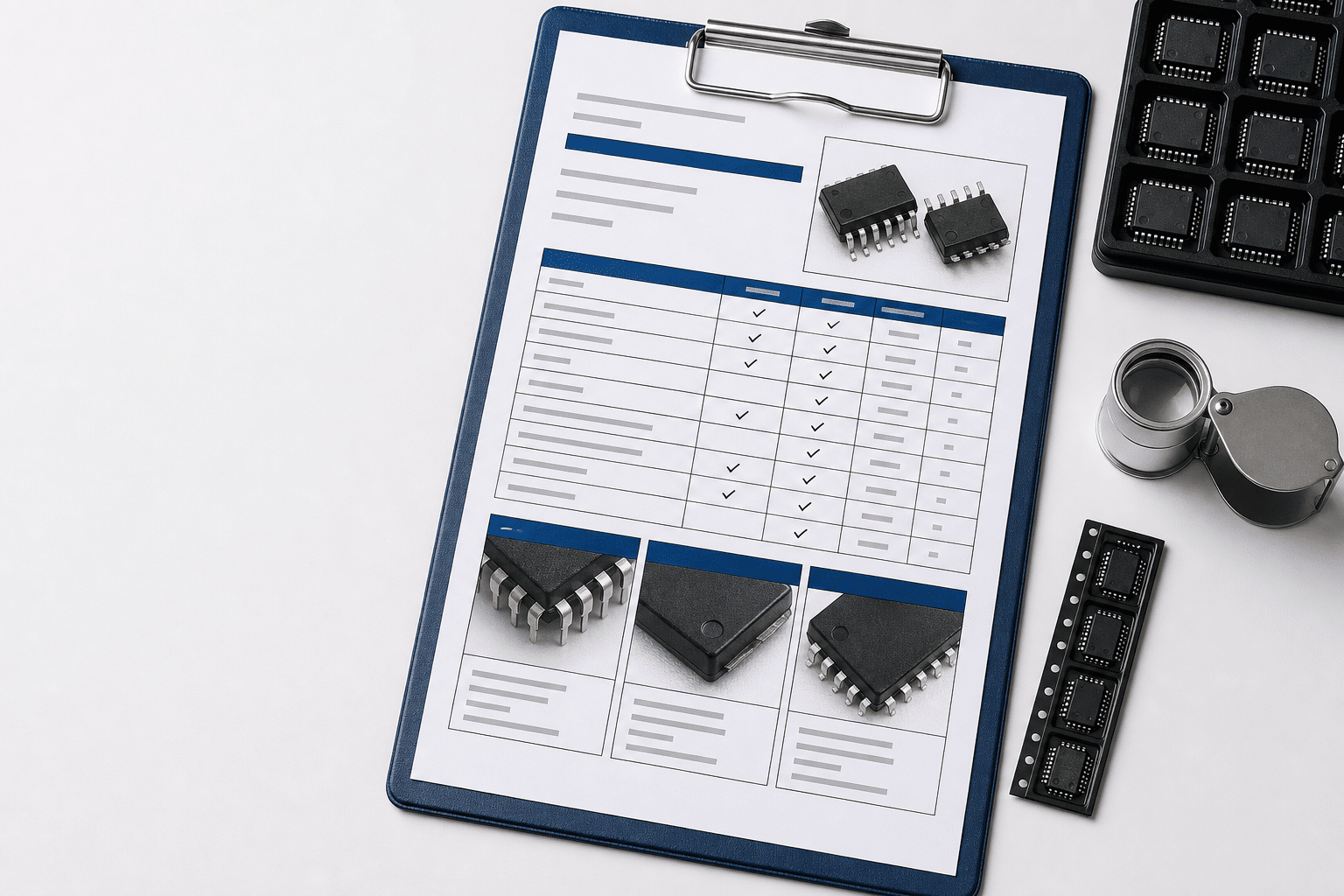
Ask for the Evidence Your Team Needs to Approve
The reporting format should support the risk decision—not add paperwork for its own sake. Define the useful evidence before inspection begins.
High-resolution inspection photos
Request images of markings, package condition, leads, labels, reels, trays, or other agreed checkpoints.
Lot, label, and date-code records
Capture the traceability information available for the quoted stock and note any limitations before approval.
Inspection summary and exceptions
Record the sample size, checkpoints, observed results, deviations, and disposition in a reviewable format.
Additional test results when scoped
Include the method, equipment or provider, acceptance limits, sample basis, and result where extra testing is agreed.
One Quality Plan Does Not Fit Every Source
Active production stock, shortage inventory, and legacy/EOL material carry different sourcing and evidence risks. Select a scenario to see how the plan changes.
Confirm the quoted stock and shipment condition
For current production parts, focus on correct MPN, manufacturer, packaging, labels, date code, quantity, and agreed incoming checks.
Close the Quality Loop Before Dispatch
A useful release step connects inspection evidence with the commercial order, packaging method, and buyer approval.
Review results and exceptions
Confirm whether the inspected lot met the agreed checks and resolve any exception before shipment authorization.
Confirm packaging and handling
Align ESD protection, moisture barrier needs, labels, quantity split, and shipping documents with the receiving team.
Approve the shipment handoff
Connect the approved evidence, lot identity, packing details, carrier, destination, and final release decision.
Quality Assurance FAQ
Use the RFQ popup to share the part number, quantity, sourcing situation, and the evidence your internal team expects.
What should we include in a quality requirement?
Include the exact MPN and manufacturer, quantity, application risk, acceptable date codes, package and condition requirements, required documents, sample size, test methods, acceptance criteria, and when you need the evidence.
Is every inspection method used for every order?
No. Methods should reflect the part, source, package, lifecycle status, quantity, available samples, and buyer risk. Confirm the method and acceptance basis before inspection begins.
Can we request photos or an inspection report before shipment?
Yes, when included in the agreed inspection scope. Specify the checkpoints, image detail, report format, and approval timing your team needs.
When are X-Ray or electrical tests useful?
They can be useful when the package, source, risk, available reference, equipment, and sample basis make the result meaningful. The exact method and acceptance limits should be agreed in advance.
How are discrepancies handled before shipment?
Record the finding, isolate the affected lot, compare it with the agreed criteria, share the evidence, and agree the disposition—such as rejection, replacement, additional screening, or buyer-approved release.
Need a Quality Plan for a Part Number or BOM?
Send the MPN, quantity, sourcing urgency, acceptable date codes, packaging, documents, and any inspection or testing requirements.