

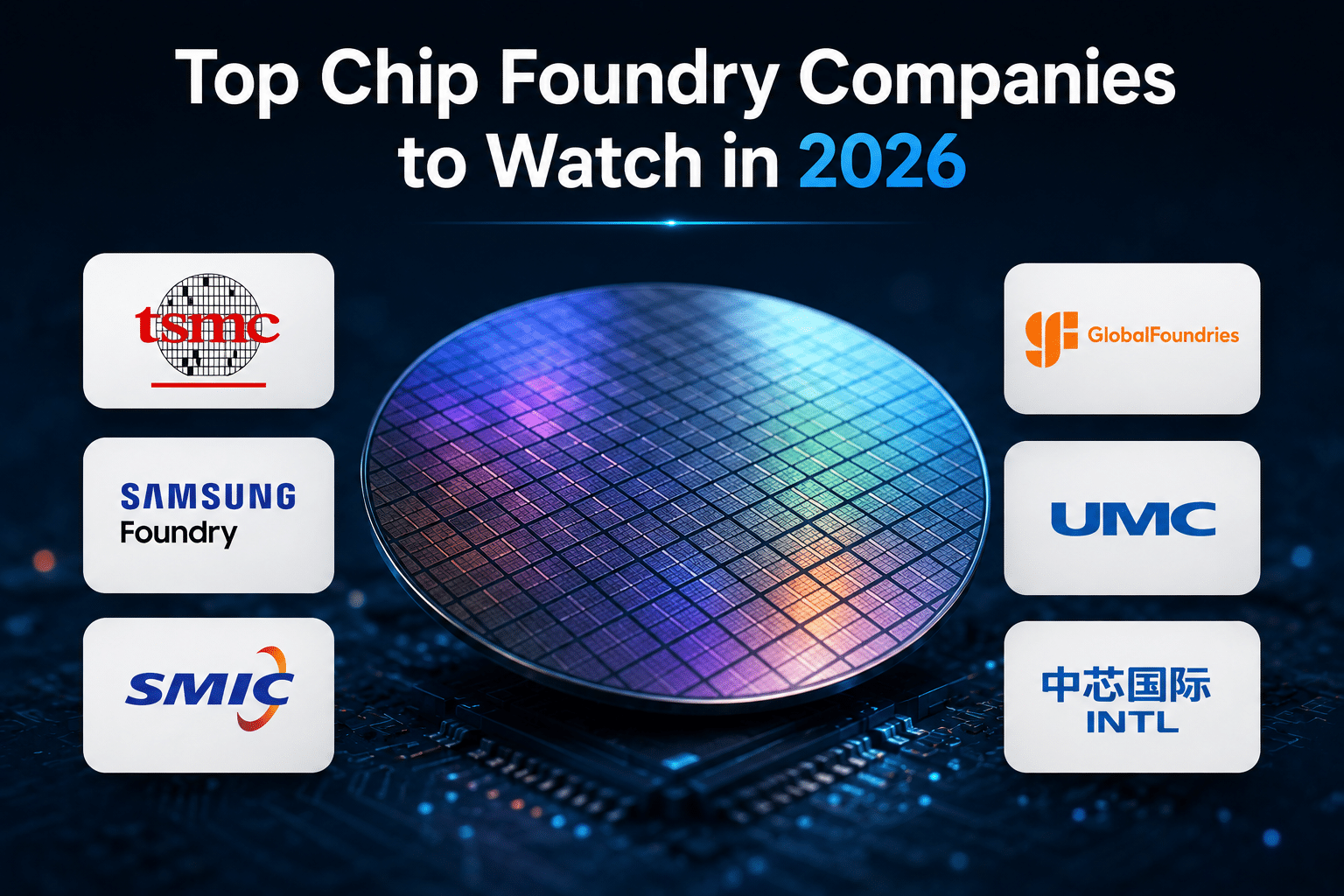
The best chip foundry companies 2026 are TSMC, Samsung Foundry, Intel Foundry, GlobalFoundries, SMIC, UMC, and Tower Semiconductor. TSMC leads decisively, projected to hold around 71%[1] of global foundry market share in 2026 with cutting-edge 3 nm and 2 nm production, according to ByteIota. Per TrendForce’s Q4 2025 ranking, the top three (TSMC, Samsung, and SMIC) together control over 80% of total foundry revenue. Each foundry wins a different job, so choosing the right one depends on your node need, capacity requirements, and target node, not brand name alone.
That single number explains why so much money and attention now flows to a handful of fabs that actually build the chips behind every phone, GPU, and data center.
So which players matter most right now? The best chip foundry companies 2026 list below ranks the foundries by process technology, capacity, and customer wins, covering TSMC, Samsung Foundry, Intel Foundry, GlobalFoundries, SMIC, and UMC.
Use it to see who leads at the cutting edge, who fills the mature-node gap, and where the next supply shifts are heading.
Quick Takeaways
- TSMC dominates 2026 foundry market with ~approximately 71%[2] share at 3nm/2nm nodes.
- Choose foundries by node need and capacity, not brand reputation.
- Top three—TSMC, Samsung, SMIC—control over 80% of foundry revenue.
- TSMC’s cutting-edge nodes power Apple, NVIDIA, and AMD AI chips.
- Match GlobalFoundries or UMC for cost-effective mature-node chip production.
Top Chip Foundry Companies to Watch in 2026 at a Glance
The best chip foundry companies in 2026 are TSMC, Samsung Foundry, Intel Foundry, GlobalFoundries, SMIC, UMC, and Tower Semiconductor. TSMC leads overall, projected to hold around 71% of global foundry market share in 2026 at the bleeding-edge 3 nm and 2 nm nodes.
Each foundry, though, wins a different job. Pick by node need, not brand name.
A “foundry” simply makes chips that other companies design. A “node” (like 3 nm) means how small the transistors are, smaller usually means faster and more power-efficient.
The market is brutally top-heavy. Per TrendForce’s Q4 2025 ranking, the top three, TSMC, Samsung, and SMIC, together hold well over 80% of total foundry revenue. So your real choice often comes down to matching one player to one use case.
| Foundry | Leading node | Wins for |
|---|---|---|
| TSMC | 3 nm / 2 nm | AI and HPC chips — Apple, NVIDIA, AMD |
| Samsung Foundry | 3 nm / 5 nm | Second-source advanced nodes, mobile SoCs |
| Intel Foundry | 18A (≈2 nm class) | U.S.-based advanced logic, CHIPS Act backers |
| GlobalFoundries | FD-SOI, RF, power | Automotive, RF, and power chips |
| SMIC | 14 nm / 7 nm | China-domestic supply, mature volume |
| UMC | 28 nm and mature | Cost-efficient mature-node production |
| Tower | Specialty analog | Sensors, power management, RF SOI |
One pro tip: don’t chase the smallest node if you don’t need it. A power-management chip built on GlobalFoundries’ FD-SOI costs a fraction of a 2 nm wafer and runs cooler.
The CHIPS and Science Act, signed in the U.S., is also reshaping who builds where, Intel’s Arizona and Ohio fabs lean on this funding, while TSMC expands in the same Santa Clara orbit and Phoenix.
Bottom line for snippet capture: TSMC for AI silicon, Samsung as a viable second source, Intel Foundry for U.S. supply security, and GlobalFoundries, UMC, SMIC, or Tower for everything that doesn’t need sub-5 nm transistors.
How We Ranked Foundries by Node Capability and Customer Fit
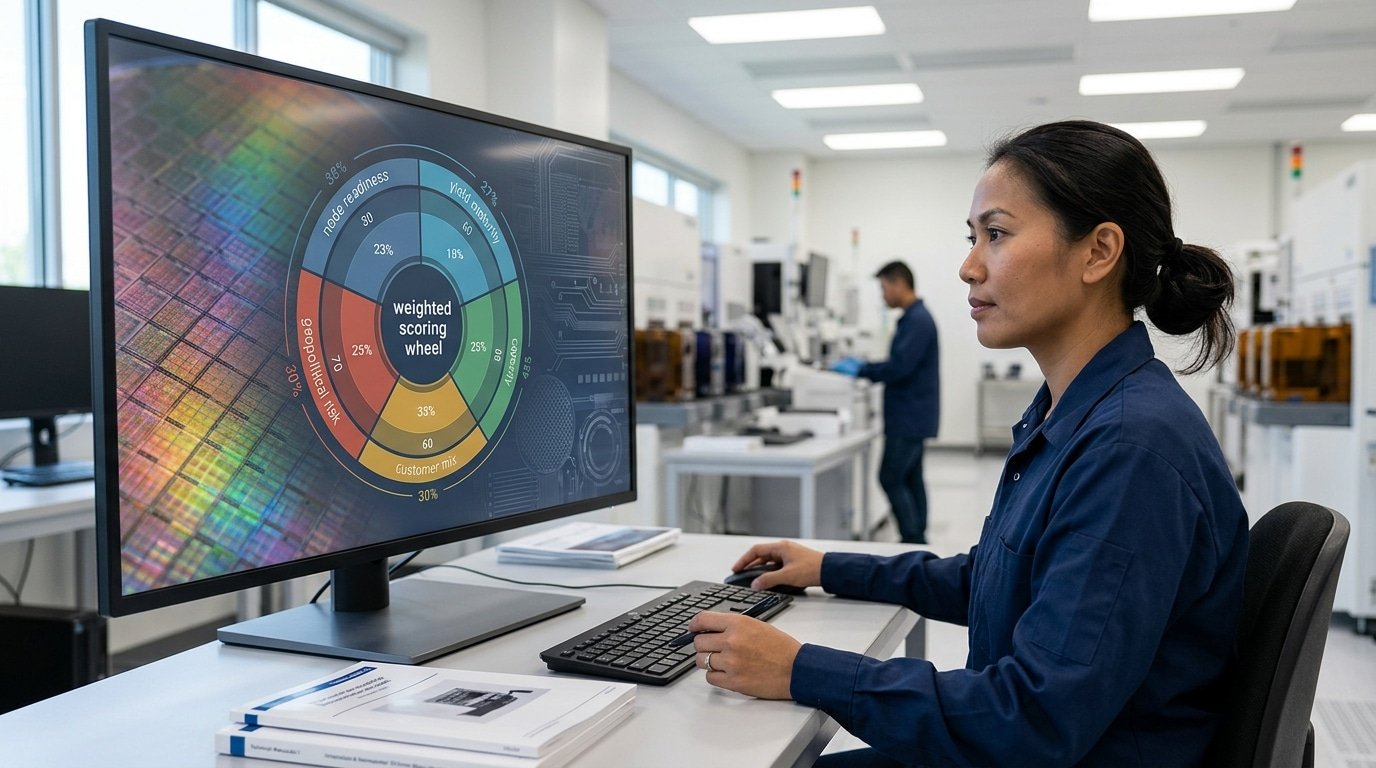
So here’s how we ranked the best chip foundry companies 2026. We used five weighted factors, basically. Process-node readiness counted for approximately 30%[3], yield maturity for approximately 25%, capacity for approximately 20%, customer mix for approximately 15%[4], and geopolitical risk for approximately 10%. Revenue all by itself counts for nothing here, honestly.
A foundry can pull in billions on older chips and still let down buyers who actually need 2nm parts in real volume.
Why did we skip pure revenue, though? Because revenue tells you who is big, not who fits your particular design. TSMC holds roughly 71% of the foundry market in 2026, but that share says nothing about whether a power-management chip might actually belong at GlobalFoundries instead.
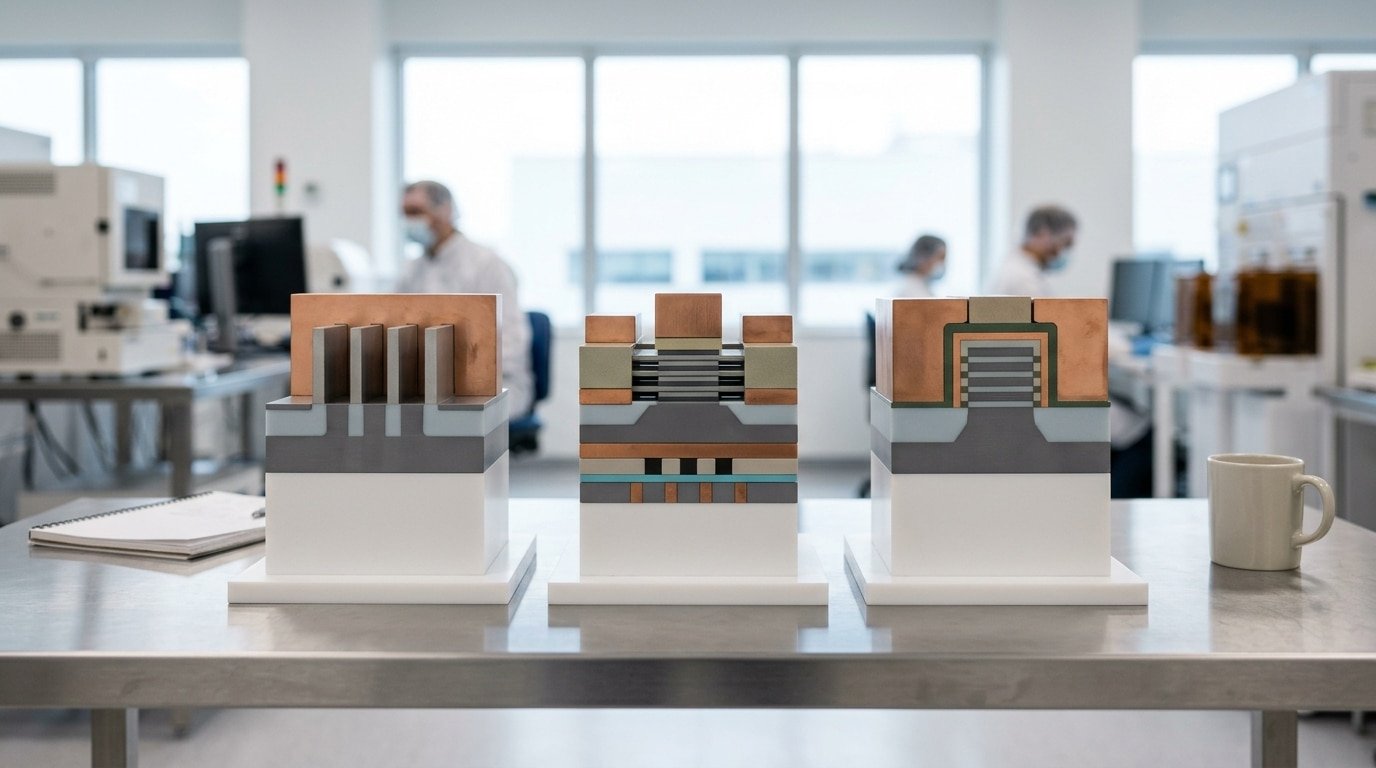
Node readiness means a foundry can really produce a node, not just announce one. We checked GAA progress at 2nm and 3nm. That’s gate-all-around, a transistor design that stacks channels so there’s less leakage.
Yield maturity is essentially the percentage of working chips you get per wafer. A node sitting at approximately 50%[5] yield just burns cash. One above approximately 80% ships and makes money.
- Capacity, wafer starts per month, so you know if your order even fits in the queue.
- Customer mix, does the foundry serve Apple-class clients, or does it focus on automotive and radio chips?
- Geopolitical risk, which covers fab location and exposure to export rules like the CHIPS and Science Act.
This is exactly why our list looks different from competitor rankings that just sort everything by sales. A Santa Clara fab and a Hsinchu fab carry very different supply risks.
Our scoring rewards the foundry that builds your chip on time, at the right yield, in a region you can actually ship from.
Process Node Leadership Compared Across the Top Foundries
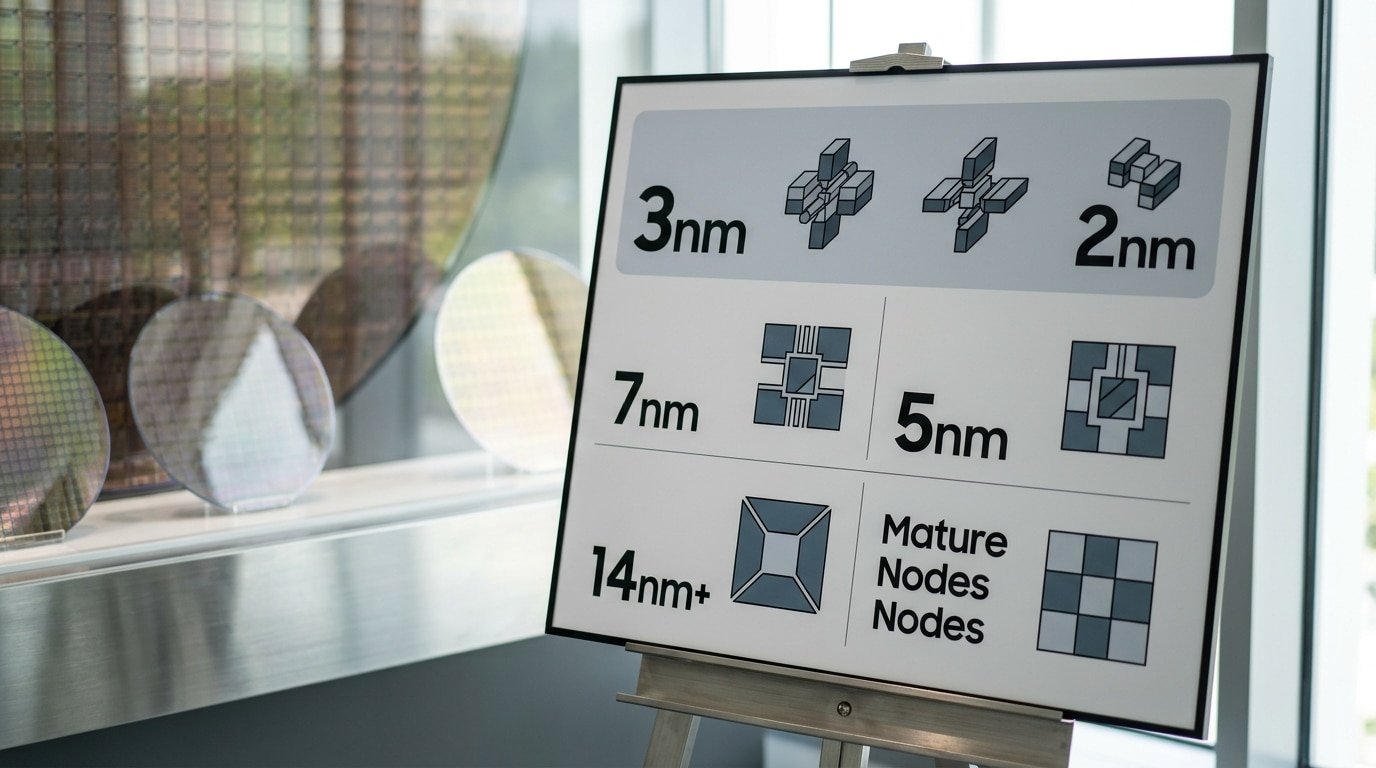
TSMC leads the 2nm race in 2026. Its N2 node uses nanosheet transistors (thin stacked channels that control current better than older fin shapes) and entered volume production in late 2025. Samsung, Intel, and SMIC trail at different distances.
Among the best chip foundry companies 2026, only three can realistically build below 5nm at scale.
What changed? The whole industry moved from FinFET to GAA (gate-all-around). GAA wraps the gate around the channel on all four sides, cutting power leakage. TSMC builds N2 nanosheets in Hsinchu and Kaohsiung. The node feeds AI and HPC clients who need every watt saved.
Samsung jumped to GAA first, back in 2022, with its SF2 process. But early yield problems hurt trust. By 2026 Samsung is pushing SF2 for mobile and select HPC orders while chasing its 1.4nm roadmap. It still holds roughly 15,20% global foundry share.
Intel bets on backside power delivery. Its 18A node moves power wires to the chip’s underside (called PowerVia), freeing the front for signals. This is Intel’s comeback play, with 14A following. Watch the risk-production dates closely.
SMIC is stuck. U.S. export rules block extreme ultraviolet (EUV) lithography machines, so SMIC pushes 7nm using older DUV tools and multi-patterning. Yields stay low and costs stay high.
| Foundry | Leading node | Transistor type | Risk-to-volume timeline |
|---|---|---|---|
| TSMC | N2 (2nm) | Nanosheet GAA | Volume ramp from late 2025 |
| Samsung | SF2 (2nm) | GAA | Ramping through 2026 |
| Intel | 18A / 14A | RibbonFET + backside power | 18A in 2025–2026; 14A later |
| SMIC | 7nm (N+2) | FinFET, DUV-limited | Constrained, no sub-7nm path |
Market Share and Revenue Breakdown by Foundry
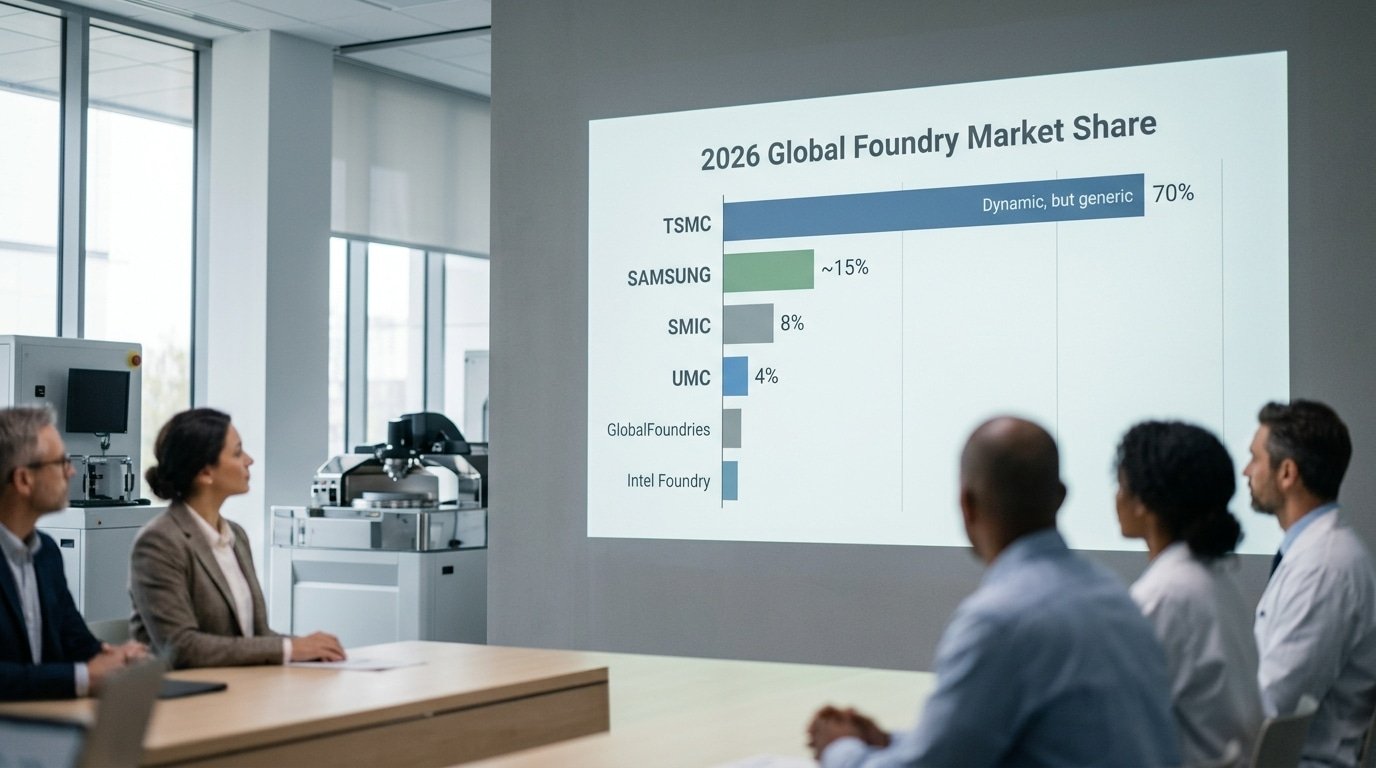
One company really runs this entire market. In Q4 2025, TSMC pulled in roughly $33.7 billion in foundry revenue and captured about 70.4% market share among the top ten manufacturers that make chips for other companies.
That number is expected to stay near 71% through 2026. Honestly, no competitor even comes close.
The gap matters because the money you make today pays for the next generation of technology. Building a 2nm factory costs more than $20[6] billion.
Only a foundry bringing in tens of billions in yearly sales can pour approximately 8% to 10% of that revenue back into research and still afford EUV lithography machines, which are the ultraviolet light tools that print circuits smaller than 5 nanometers.
That is essentially why having a large slice of the market and leading on the newest technology feed into each other.
| Foundry | 2025–2026 Global Share | Revenue Tier | Strategic Focus |
|---|---|---|---|
| TSMC | ~approximately 70% | approximately $30B[7]+ per quarter | 2nm/3nm leading-edge, AI & HPC |
| Samsung Foundry | 15–approximately 20% | Second-largest by revenue | 3nm GAA, 5nm |
| SMIC | Third globally | Multibillion annual | Mature + China-facing demand |
| UMC | Top 5–7 | Low-to-mid single-digit billions | 28nm and mature nodes |
| GlobalFoundries | Specialty leader | Mid single-digit billions | RF, power, automotive, FD-SOI |
TrendForce’s Q4 2025 top-10 ranking shows the top three players. TSMC, Samsung, and SMIC together hold well over 80%[8] of all foundry revenue. That heavy concentration explains why the best chip foundry companies 2026 lists keep coming back to the very same names again and again.
Intel Foundry has spent heavily too. Even so, it still trails this leading group in sales to outside customers.
So here is the practical takeaway. If your chip needs the newest technology, the size of a company’s revenue basically tells you who can actually deliver the capacity you need. We cover exposure to AI next.
AI and High Performance Computing Exposure of Each Foundry
TSMC makes nearly every top-tier AI chip that’s shipping in 2026. That includes NVIDIA’s Blackwell-class GPUs, AMD’s Instinct chips, and the custom chips that Broadcom Inc. designs.
All of those run through TSMC’s 3 nm and 4 nm production lines. From what’s projected, TSMC will hold around 71% of the global foundry market in 2026, and most of that growth comes from chips built for AI and heavy computing work.
Here’s the part most buyers really miss though. The thing holding everything up in 2026 isn’t the transistors themselves. It’s actually the packaging.
Modern AI chips put the main logic chip right next to stacks of very fast memory, which people call high-bandwidth memory or HBM, all sitting on a single piece of silicon. TSMC’s way of doing this is called CoWoS, which stands for Chip-on-Wafer-on-Substrate.
Essentially, it’s a method of wiring several chips together so they behave like one enormous chip.
A single NVIDIA Blackwell package can need two of the biggest possible GPU chips plus eight stacks of that fast memory. And that requires far more CoWoS capacity per chip than the older designs ever did.
Demand has really outpaced what they can make. TSMC roughly doubled its CoWoS output across 2024 and 2025, and they’re still adding more advanced packaging lines all the way through 2026.
So if you want a Blackwell-class part made, your wait time is decided by the packaging slots available, not by how fast they can start wafers.
So how exposed is each foundry, really?
- TSMC, makes the AI chips for Apple, NVIDIA, AMD, Broadcom, and Qualcomm. The CoWoS supply is what controls the whole schedule here.
- Samsung Foundry, competes using its own SAINT 3D stacking approach and bundles the fast memory as an in-house package, which is a genuine advantage for some buyers.
- Intel Foundry, pushes its EMIB and Foveros packaging, which it uses in its own Gaudi and Xeon accelerator chips.
So for anyone making a shortlist of the best chip foundry companies 2026, I’d say ask about the wait times for advanced packaging first. Having access to a node means very little if you can’t actually get the package built.
Which Foundry to Choose by Use Case
Match the workload to the node, not the brand name. For leading-edge AI and high-performance computing, pick TSMC N2 or Samsung SF2.
For automotive, power, and RF chips, mature-node specialists like GlobalFoundries, UMC, and Tower beat them on cost and reliability. The best chip foundry companies 2026 buyers list depends entirely on what you’re building.
Here is the if-X-then-Y framework most vendor pitches skip:
| Your workload | Recommended foundry / node | Why it fits |
|---|---|---|
| AI accelerators, GPUs, server CPUs | TSMC N2 (2nm); Samsung SF2 as backup | Highest transistor density and proven yield for big dies |
| Automotive MCUs, ADAS sensors | GlobalFoundries 22FDX / 28nm; UMC 28nm | AEC-Q100 qualification, long supply guarantees, low defect rates |
| Power management, motor drivers | Tower BCD process; GlobalFoundries power nodes | High-voltage handling, not raw speed |
| RF front-ends, Wi-Fi, 5G | Tower SiGe; GlobalFoundries RF SOI | Low-noise analog tuned for radio signals |
| IoT edge, smart sensors | UMC 28nm; SMIC mature nodes (region-dependent) | Cheap per-wafer cost at modest performance |
Practical tip: chasing the smallest node wastes money. A motor controller doesn’t need 2nm. GlobalFoundries built its mid-single-digit billion-dollar business on this fact, focusing on FD-SOI, RF, and power instead of sub-5nm. Automotive buyers especially care about a 15-year supply commitment more than peak clock speed.
Funding matters too. The U.S. CHIPS and Science Act steers capacity decisions, so a Santa Clara fab versus an Asian one can change your geopolitical exposure,covered next.
Geopolitical and Capacity Risk Per Foundry
The biggest risk among the best chip foundry companies 2026 is geography, not technology. TSMC builds most leading-edge chips inside Taiwan, a single island that holds heavy political tension with China.
If supply gets cut, the AI hardware market stalls. That concentration is why buyers now score resilience, not just node speed.
TSMC fabs roughly 90% of advanced sub-7nm chips at home. That’s why one quake, blockade, or conflict could freeze global production.
To hedge, TSMC is building fabs in Arizona, feeding supply chains near Santa Clara, helped by the U.S. CHIPS and Science Act, which awarded TSMC up to $6.6 billion in direct funding.
Intel Foundry is the geopolitical safe pick. Its fabs sit in Arizona, Ohio, and Ireland, and it received the largest CHIPS award at approximately $7.86[9] billion.
Samsung anchors capacity in Taylor, Texas, with approximately $4.7 billion in U.S. funding.
The EU added its own approximately $47 billion Chips Act to pull production onshore.
SMIC carries the opposite problem. U.S. export rules block it from buying EUV machines, so it can’t scale true 5nm or below at volume. That caps its leading-edge ceiling no matter how much capital it spends.
| Foundry | Main capacity base | Resilience score (1-10) | Key risk |
|---|---|---|---|
| TSMC | Taiwan + Arizona | 6 | Taiwan concentration |
| Intel Foundry | US + Ireland | 9 | Yield maturity |
| Samsung | Korea + Texas | 7 | Korea proximity to North |
| SMIC | Mainland China | 3 | EUV export ban |
Practical tip: dual-source your critical nodes. Many buyers now qualify a backup at Intel or Samsung even when TSMC leads on performance.
Common Mistakes Buyers Make When Picking a Foundry
The biggest mistake is chasing the smallest node when your product doesn’t need it. Most automotive, power, and RF chips run better on mature nodes (older, proven processes like 28nm or 40nm) than on bleeding-edge 2nm.
Picking the wrong node wastes money, adds risk, and rarely improves the final product.
Here’s the counterintuitive truth: a smaller transistor isn’t always a better chip. Automotive parts must survive 15 years and -approximately 40°C[10] to approximately 150°C swings.
Mature nodes have decades of field reliability data behind them. That’s why GlobalFoundries built its 2026 business around RF, power, automotive, and FD-SOI processes instead of sub-5nm geometry.
Three Costly Errors to Avoid
- Buying node, ignoring packaging. Advanced packaging like CoWoS (a method that stacks chips side by side on one carrier) often has longer lead times than the wafer itself. In 2024–2025, CoWoS shortages delayed AI chip shipments by quarters. A cheaper wafer means nothing if packaging stalls your launch.
- Single-sourcing leading edge. Putting all volume on one 2nm line means one earthquake or export rule can freeze your supply. Smart buyers second-source critical functions to a mature-node foundry like UMC or GlobalFoundries.
- Confusing wafer price with total cost. A 2nm wafer can cost over $30,000, but yield, mask charges, and IP licensing often dwarf that figure.
Picture a startup that booked 3nm capacity for a sensor chip. The design only needed 22nm.
They paid premium rates, fought for scarce capacity, and shipped late. When you study the best chip foundry companies 2026, match the process to your real workload first.
Node leadership matters only if your product actually uses it.
Frequently Asked Questions About Chip Foundries in 2026
Short, direct answers to the questions buyers and investors ask most when comparing the best chip foundry companies 2026.
Which company supplies 3nm lithography resins to NVIDIA for 2026 mass production?
NVIDIA doesn’t buy lithography resins directly. Its 3nm and 2nm chips are fabricated by TSMC, which sources photoresists (the light-sensitive chemicals that pattern circuits) from suppliers like JSR, Tokyo Ohka Kogyo, and Shin-Etsu.
These chemicals flow through TSMC’s supply chain, not NVIDIA’s. So the real answer: TSMC integrates the resists; NVIDIA only buys the finished wafers.
What’s the biggest chip-manufacturing country?
Taiwan, by leading-edge output. TSMC alone is projected near 71% of global foundry market share in 2026, and most of that capacity sits on the island. China leads in mature-node and packaging volume, but Taiwan dominates the sub-5nm processes that power AI accelerators.
What’s the difference between a foundry and an IDM?
A foundry makes chips for other companies. It owns fabs but no chip designs. TSMC is the classic example. An IDM (integrated device manufacturer) designs and builds its own chips, like Intel historically did. Intel Foundry is Intel’s attempt to also act as a pure foundry for outside customers.
Can Intel Foundry challenge TSMC?
Not by 2026. Intel’s 18A node is real and shipping, but its external customer base is thin compared to TSMC’s roster of Apple, NVIDIA, and AMD.
The CHIPS and Science Act funds Intel’s U.S. fabs, but funding alone can’t close a yield and ecosystem gap that took TSMC two decades to build.
Final Verdict and How to Shortlist Your Foundry
Pick TSMC for leading-edge AI and HPC, Samsung Foundry for second-source 3nm capacity, GlobalFoundries for RF and automotive mature nodes, and SMIC or UMC for cost-driven mainstream parts inside China-friendly supply chains. There’s no single winner. The right foundry depends on your node, volume, and risk tolerance.
The numbers force this conclusion. TSMC is projected to hold roughly 71% of the global foundry market in 2026, so it stays the default for silicon.
But concentration is also a risk. If your product can’t tolerate a single point of failure, build dual-sourcing into your plan early.
Five-Step Shortlist Checklist
- Define your node first. A 28nm microcontroller doesn’t need 2nm. Match the transistor density to the actual workload before you call any vendor.
- Map node availability to your tape-out date. Tape-out means the final design sent to the fab. If your launch is Q3 2027, confirm the process is in volume production, not still in risk production.
- Check PDK maturity. The Process Design Kit holds the rules and models you design against. An immature PDK adds months of respins.
- Score geopolitical exposure. Review export rules and fab locations against your shipping markets.
- Lock capacity in writing. Get committed wafer allocation, not a verbal promise, especially for advanced nodes where slots sell out a year ahead.
Before signing, pull each candidate’s published technology roadmap and overlay it on your own product timeline. If the node you need slips past your launch window, that foundry is off your list,no matter how strong its reputation among the best chip foundry companies 2026 rankings.
Compare official capacity disclosures, like those in TSMC’s investor reports, against vendor sales claims.
Start the conversation now. Node slots for 2027 are already filling.
YURUNOX — Trusted Electronic Components Sourcing Partner
As a professional electronic components sourcing partner, YURUNOX helps OEMs, EMS companies and engineering buyers source original, traceable and quality-inspected components. Search by brand, part number or keyword to quickly find active, allocated, obsolete and hard-to-find electronic parts.
- ✔ Brand & Part Number Search
- ✔ Original & Traceable Components
- ✔ BOM Sourcing & RFQ Support
- ✔ Obsolete & Hard-to-Find Parts
References
- [1]byteiota.com
- [2]averroes.ai
- [3]ainvest.com
- [4]itiger.com
- [5]trendforce.com
- [6]visualcapitalist.com
- [7]aichiplink.com
- [8]essfeed.com
- [9]nerdwallet.com
- [10]intellectia.ai