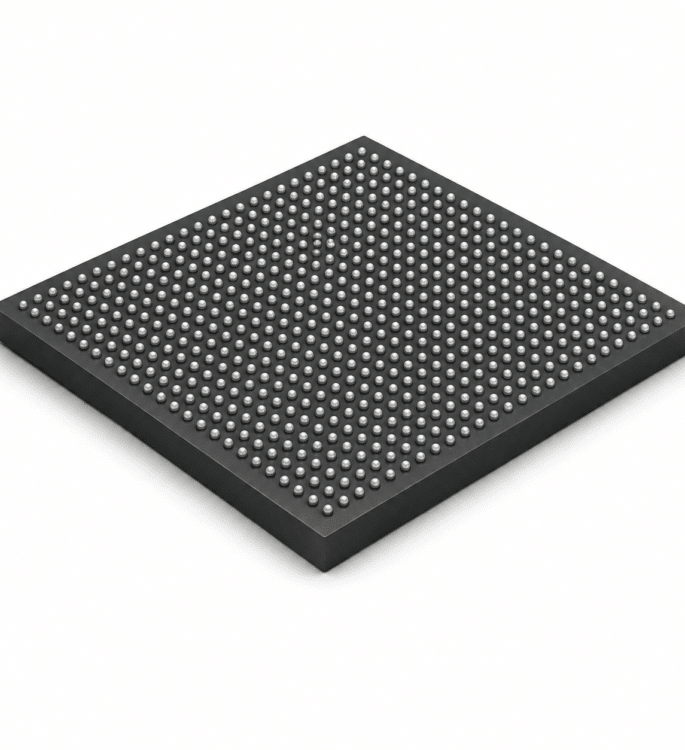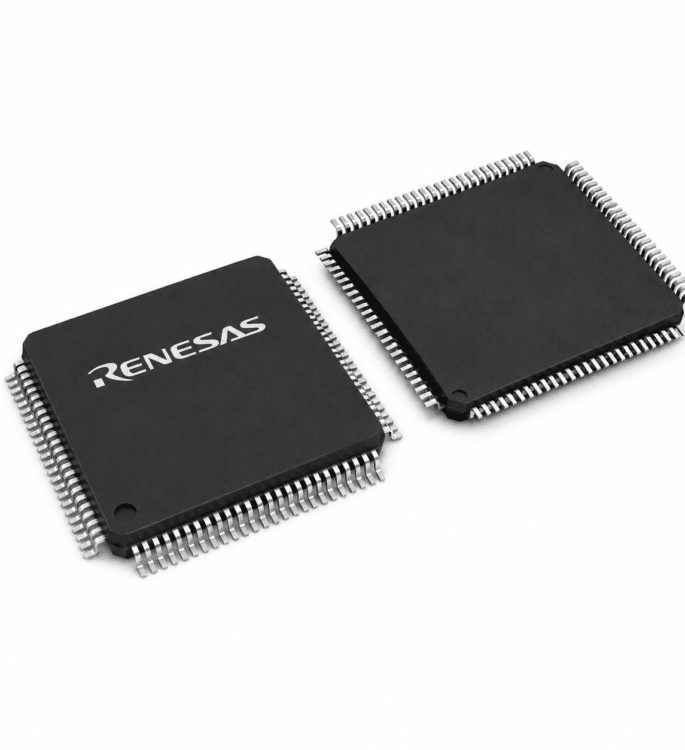


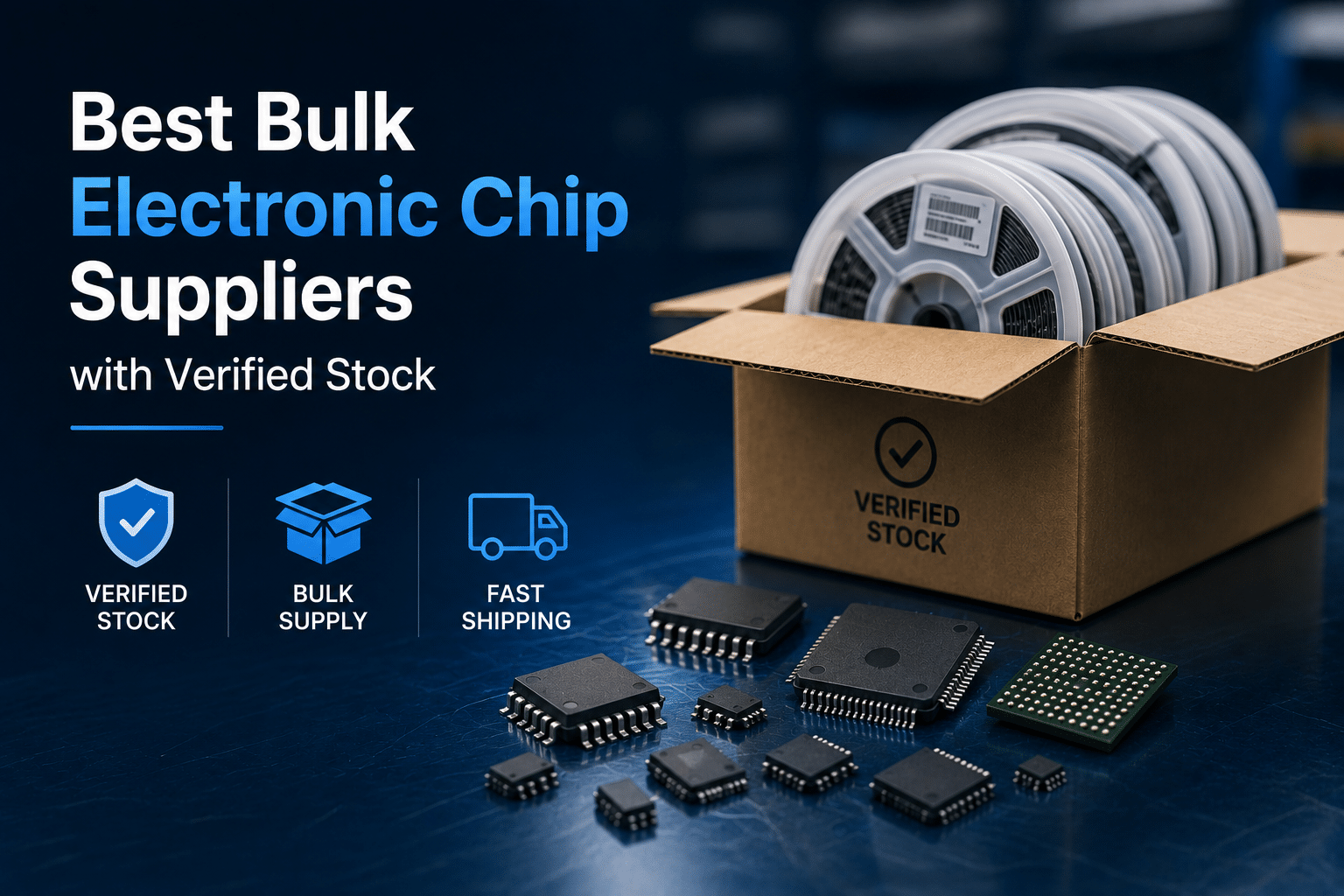
To buy electronic chips bulk supplier orders safely, choose vendors that display live stock counts, traceable lot and date codes, and authorization proof linking parts to the original manufacturer. As of 2026, Guangdong Province—especially Shenzhen—remains the primary global hub for bulk component distribution.
Procurement guidance recommends suppliers with on-time delivery above approximately 95% and RFQ response times under 4 hours, while records below approximately 90% correlate with higher counterfeit and supply-chain risk.
To buy electronic chips bulk supplier orders safely, pick vendors that show live stock counts, lot and date codes, and a traceable purchase trail back to the original manufacturer.
The fastest way to avoid counterfeit parts and dead inventory? Demand verified stock before you wire a single dollar. This guide ranks suppliers by real, checkable signals,not marketing claims,so your next bulk chip order ships on time and tests clean.
Quick Takeaways
- Verify live stock counts before wiring payment to prevent costly fraud.
- Demand traceable lot and date codes to enable batch recalls.
- Choose suppliers with on-time delivery above approximately 95% for reliable bulk orders.
- Require RFQ response times under 4 hours to confirm vendor responsiveness.
- Use authorized distributors like Mouser or Digi-Key for strongest counterfeit protection.
What To Look For In A Bulk Electronic Chip Supplier With Verified Stock
Verified stock means three things: real-time inventory you can see before you order, traceable lot codes that prove where each part came from, and proof the seller is authorized by the chip maker. When you buy electronic chips bulk supplier deals without these, you risk paying for parts that don’t exist or arrive as counterfeits.
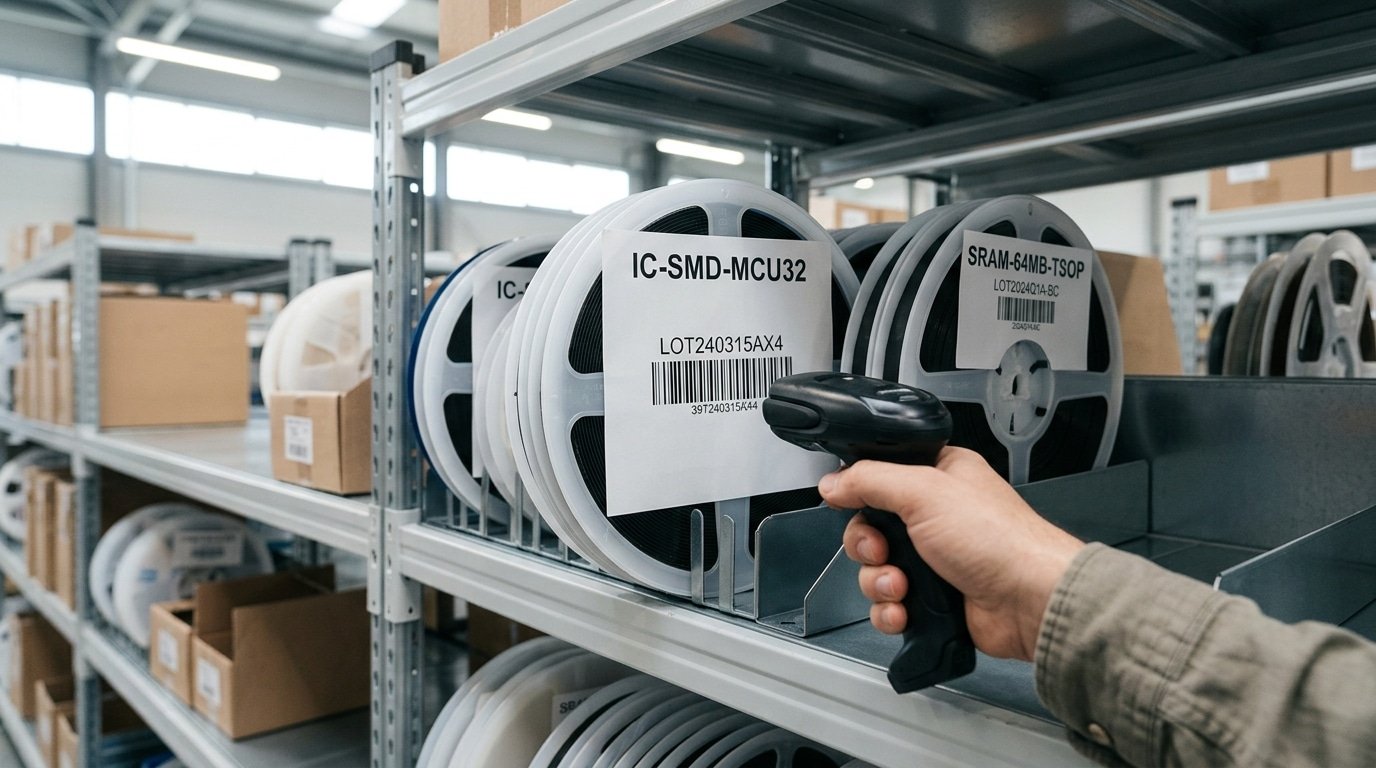
A lot code is the batch number printed on the chip. It ties the part back to a specific production run, so you can recall or reject a bad batch. No lot code traceability? Walk away.
Reliability shows up in two numbers. In 2026, procurement guidance recommends suppliers with on-time delivery above approximately 95% and RFQ response times under 4 hours. A delivery record below approximately 90% correlates with higher quality and supply-chain risk on large orders.
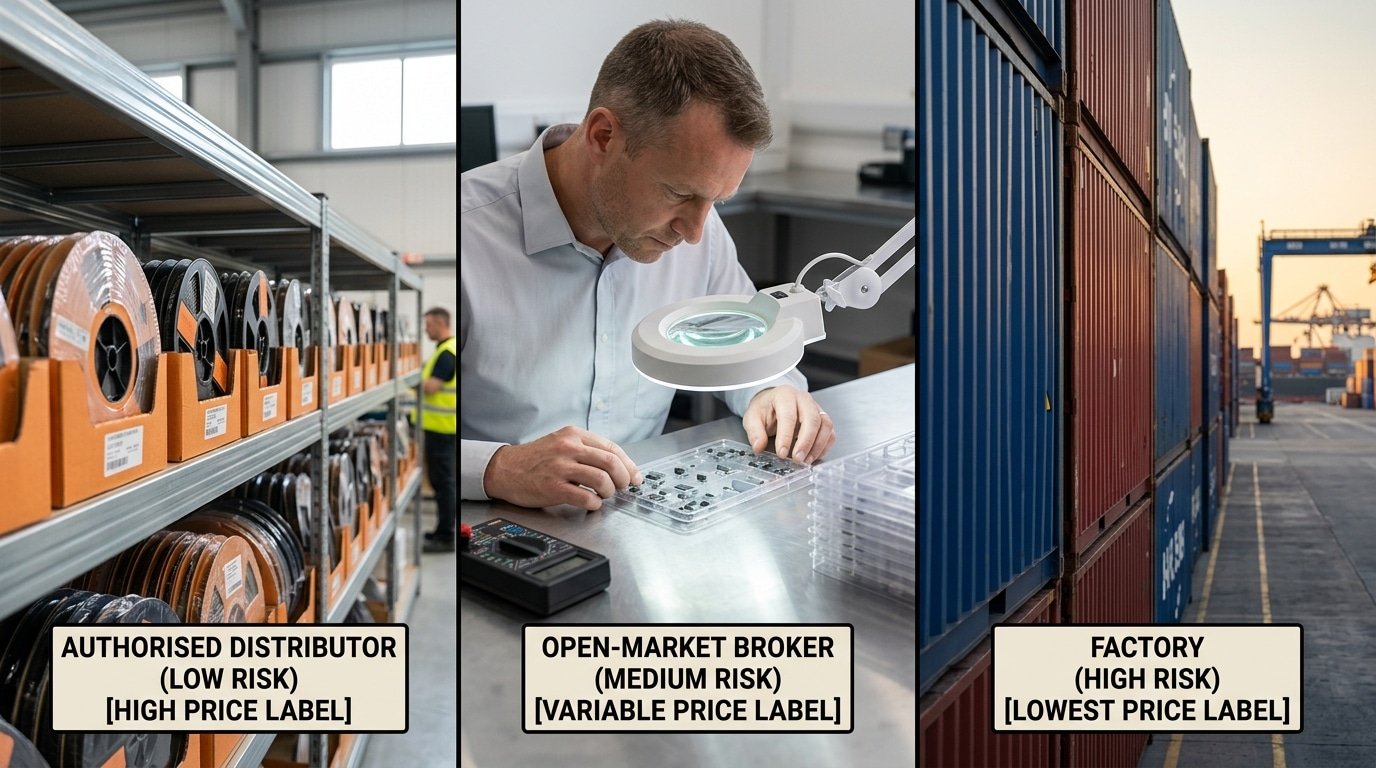
Three supplier types fit different needs:
- Authorized distributors (Mouser, Digi-Key, Arrow) buy straight from the manufacturer. They stock millions of SKUs and offer the strongest counterfeit protection. Best for production runs where a single bad batch costs you a recall.
- Independent brokers hunt down hard-to-find or end-of-life parts the authorized channel no longer carries. Useful during shortages, but you must demand test reports.
- Overseas marketplaces like Alibaba list vetted vendors, some advertising response times as low as approximately 1 hour. Good for prototyping and price scouting, riskier for high-reliability builds.
Match the channel to your risk tolerance. A medical device build needs authorized sourcing; a hobby batch can tolerate a marketplace seller with strong reviews.
Authorized Distributors vs Brokers vs Overseas Marketplaces Compared
So here is the thing about the three buying channels. Authorized distributors win because you can trace exactly where a part came from.
Brokers win when you need something rare and hard to find. Overseas marketplaces win on price, plain and simple.
But pick the wrong one and a cheap quote turns into a whole production run thrown in the trash. Let me walk through how the three actually stack up for someone buying in volume.
| Factor | Authorized Distributor | Independent Broker | Overseas Marketplace |
|---|---|---|---|
| Unit price | List price, with volume breaks at 1,000+ units | 5–approximately 15% under list when stock runs scarce | Lowest sticker, though often unverified |
| Counterfeit risk | Near zero, since parts are factory-sealed | Moderate, and it really depends on vetting | High without independent testing |
| Traceability | Full lot codes and date codes | Partial, so ask for the paper trail | Frequently missing |
| MOQ flexibility | Single unit all the way to millions | Whatever they happen to hold in stock | Fixed reels or trays |
| Lead time | Same-day to weeks for a backorder | Fast when it is in stock | Add 2–4 weeks shipping plus customs |
The math is honestly what trips people up. Say a broker quotes you a microcontroller at approximately 5% below the authorized price. Sounds like a win, right?
But if that broker lot carries a approximately 3% failure rate from remarked or recycled parts, then every rejected board costs you rework labor and retest time. It might even cost you a missed ship date. One bad reel can wipe out every dollar you saved on the whole order.
Authorized channels like Mouser Electronics stock millions of part numbers and ship factory-sealed parts with date codes. That is basically why most equipment makers treat them as the default when they buy electronic chips bulk supplier in volume.
Go with a supplier whose on-time delivery sits above approximately 95%, a benchmark that 2026 procurement guidance ties directly to lower supply-chain risk.
And save the brokers for end-of-life parts that the authorized line simply cannot supply anymore.
Vetted Bulk Chip Suppliers For The USA, Europe And Online Buyers
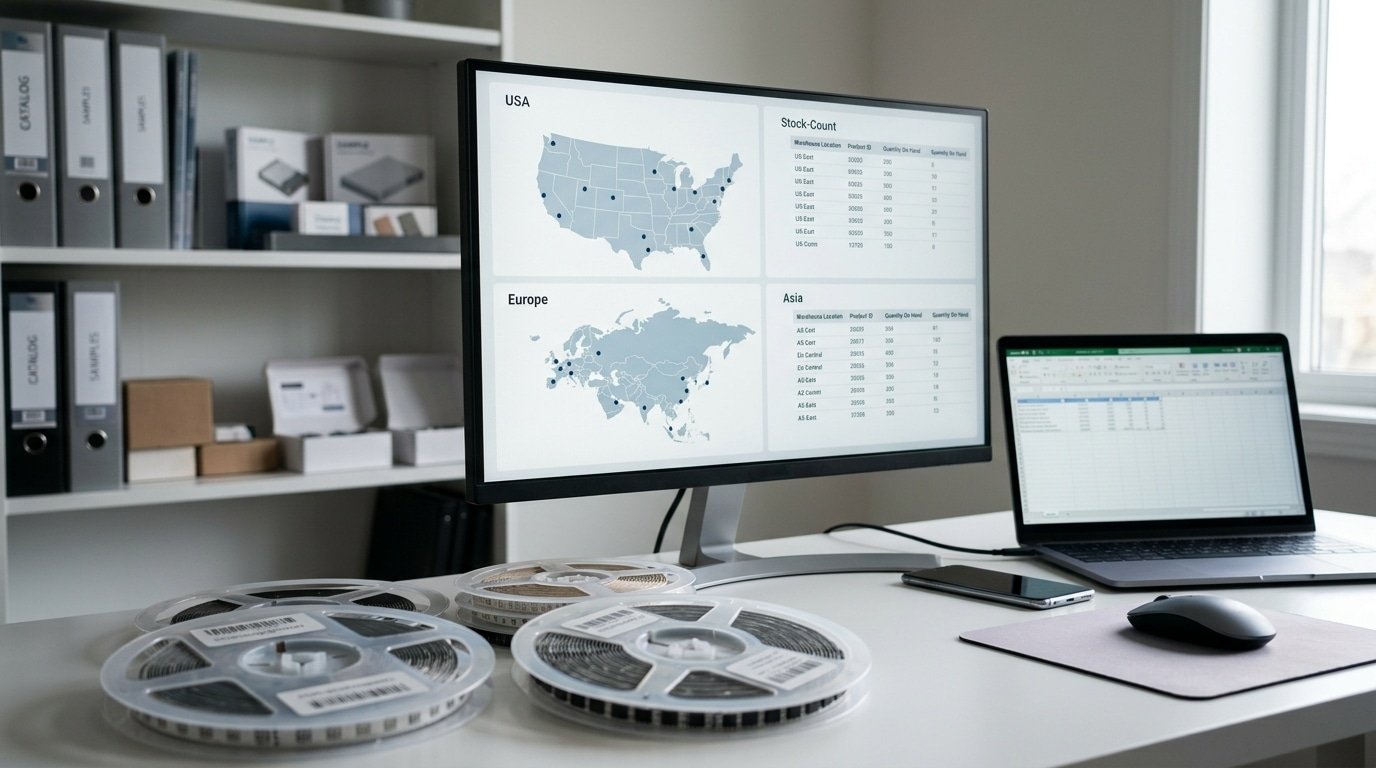
For verified stock and franchised line cards, Digi-Key and Mouser dominate North America, Arrow and Avnet serve large OEM contracts, and Newark/Farnell anchors Europe. LCSC fills the budget online lane for Asia-Pacific buyers. Each carries authorized inventory you can check before you commit a single dollar.
Stock depth separates these names. Mouser Electronics lists millions of semiconductor and component SKUs, filling orders from one unit up to bulk volumes in the millions for EMS customers.
Digi-Key matches that scale in the USA. Both publish live counts down to the reel, so you confirm quantity before issuing a PO.
Who serves which region
- USA: Digi-Key (Minnesota), Mouser (Texas), Arrow and Avnet for franchised OEM volume.
- Europe: Newark/Farnell, plus Arrow and Avnet regional warehouses with local VAT invoicing.
- Online/Asia: LCSC for low-cost passives and ICs, with consolidated freight to most countries.
A line card is the list of manufacturers a distributor is officially authorized to sell, Texas Instruments, STMicroelectronics, Analog Devices. Match the part’s maker to the line card before you buy. If a chip isn’t on it, you’re buying gray-market stock.
When franchised channels show zero stock during shortages, independent stockists like INDASINA close the gap. The firm reports serving over 5,000 global partners with memory chips, power-management ICs, and CPUs, shipping to the USA, Eastern Europe, and beyond.
Use these as a second source, not a default, to buy electronic chips bulk supplier orders safely.
How To Verify Authorized Sellers And Spot Counterfeit Chips In Bulk Orders
Start with one document. The manufacturer’s authorized-distributor list, which is basically the official roster of sellers a chipmaker trusts.
Every major chipmaker publishes one. If your seller isn’t named there, they’re really just a broker reselling parts, not a franchise partner working directly with the maker.
That single check actually filters out most fake-chip risk before you buy electronic chips from a bulk supplier.
Go to the source. Texas Instruments, Analog Devices, and STMicroelectronics each post their authorized partners right on their own websites. Cross-reference the seller’s exact legal name, because people selling fakes often use names that are one letter off from a real franchise distributor. Sneaky, honestly.
Documents to demand before payment
- Certificate of Conformance (CoC) — this paper confirms the batch actually meets the manufacturer’s written specifications. No CoC, no deal.
- Date and lot codes — these are the small codes printed on each chip showing when and where it was made. When you see mixed lot codes inside one reel, that usually means the parts were repackaged from scrapped circuit boards.
- Decapsulation or X-ray report — decapsulation means chemically opening the chip’s plastic shell to check that the silicon brand inside matches the label on the outside. An X-ray, on the other hand, lets you see the tiny internal wires without breaking anything.
The threat is real. The U.S. GAO found counterfeit parts when it bought from independent sellers, and 100% of its test orders came back suspect or completely bogus. That’s exactly why being able to trace a part beats a low price every single time.
Counterfeit red-flag checklist for incoming lots
- Laser markings that wipe off with acetone, since real markings don’t budge
- Tops that have been sanded down or repainted black to hide old part numbers
- Bent or re-tinned leads, which usually means the chips were pulled and recycled from old boards
- Date codes that are somehow newer than when the part was actually produced
- Pricing that sits approximately 40% under the authorized distributor cost
Pair these checks with the supplier benchmarks from the distributor comparison earlier. Franchise status plus full paperwork is genuinely your strongest defense, in my experience.

Negotiating MOQs, Price Breaks And Total Landed Cost
The sticker price per chip is never your real cost. Landed cost, the chip plus tariffs, freight, customs brokerage, and the money tied up in inventory, is what actually hits your margin.
⚠️ Common mistake: Wiring payment based on a supplier’s listed inventory without confirming live stock counts. This happens because marketing pages show “in stock” claims that aren’t tied to real-time data, so you pay for parts that don’t exist or arrive as counterfeits. The fix: demand verified live stock plus traceable lot and date codes before sending a single dollar.
Price breaks reward volume, but big volume can quietly cost you more once carrying charges pile up. Run the full math before you commit.
Price breaks kick in at quantity tiers. A microcontroller might list at approximately $2.40 each for 100 units, drop to $1.95 at 1,000, and hit approximately $1.62 at 10,000.
Distributor data backs this up: bulk discounts on ICs and passives at authorized channels like Digi-Key, Mouser, and Arrow commonly start once orders reach into the thousands. Ask your rep for the full price ladder, they rarely show it unless you push.
When you buy electronic chips bulk supplier minimums (MOQs) block you, brokers have room to bend. Offer to take the full reel instead of a cut tape.
Bundle several part numbers into one order. Commit to a blanket order with scheduled releases, this often cuts MOQ by approximately 30% to 50% because the supplier locks future revenue.
Here is a worked landed-cost example for 5,000 ICs at approximately $1.62:
- Unit cost: 5,000 × approximately $1.62 = approximately $8,100
- Ocean freight + insurance: approximately $420
- US import tariff (estimated approximately 25% Section 301): approximately $2,025
- Customs brokerage fee: approximately $150
- Inventory carrying (6 months at approximately 20% annual): approximately $810
True landed cost: approximately $11,505, or approximately $2.30 per chip, 42% above the quoted unit price. That carrying charge alone often surprises buyers who order a year of stock to chase a deeper price break.
Sourcing Strategy For Shortages, EOL Parts And Second-Source Planning
Plan for disruption before it arrives. The three moves that protect a production line are buffer stock sized to lead time, a documented last-time-buy (LTB) for end-of-life parts, and at least one qualified second source per critical chip.
Skip any of these and a single allocation notice can stall your build for months.
Sizing buffer stock without bleeding cash
Buffer stock is extra inventory you hold to cover supply gaps. A practical formula: buffer = (max lead time − average lead time) × weekly usage.
For a chip with an 18-week worst-case lead time and 12-week average, running 200 units a week, you carry roughly 1,200 units. Carrying cost typically runs 18,approximately 25% of part value per year (storage, insurance, capital).
Weigh that against a line-down event, which can cost far more in lost shipments.
Last-time-buy for EOL parts
When a manufacturer issues a Product Change Notice marking a chip end-of-life, you usually get a final order window, often 6 to 12 months. Calculate your LTB quantity from remaining product lifecycle demand plus warranty spares.
Order it through an authorized channel so the date codes and traceability stay clean.
Qualifying a second source early
Find alternates using cross-reference tools before you need them. When you buy electronic chips bulk supplier relationships should include backup vendors already approved on your AVL.
Industry guidance in 2026 recommends sticking to suppliers with on-time delivery above approximately 95%; avoid any backup below approximately 90% on-time, since that correlates with quality risk on large orders. Run a pin-for-pin sample build and electrical validation before the primary part disappears.
Common Bulk Buying Mistakes And The Real Risks Of DIY Electronics Sourcing
The most expensive mistake is trusting a marketplace listing with no Certificate of Conformance (C-of-C, a signed document tracing the part back to the manufacturer). No C-of-C means you can’t prove the chip is genuine if a board fails in the field.
That single gap turns a cheap order into a recall.
Three errors drain budgets fast when you buy electronic chips bulk supplier orders without procurement controls:
- Ignoring MSL handling. Moisture Sensitivity Level (how much humidity a chip absorbs before reflow soldering cracks it) is printed on the dry-pack bag. Open it, leave parts on a bench for days, and you get “popcorn” delamination during assembly — invisible until the board boots and dies.
- Reeled vs cut-tape mismatch. Pick-and-place machines need full reels. Order cut-tape strips to save money and your assembly house charges hand-loading fees, or rejects the lot entirely.
- No incoming inspection. DIY buyers rarely have X-ray, decapsulation, or curve-tracing capacity to confirm die markings match the package.
The risk scales with volume. Industry purchasing guidance in 2026 recommends avoiding suppliers below approximately 90% on-time delivery, since poor performers correlate with higher counterfeit and quality risk on large orders.
A solo founder skipping this check has no test lab and no contract recourse when 5,000 fake MCUs arrive.
Skip the gamble. Route bulk orders through authorized channels or hand sourcing to your assembly house, which carries the inspection equipment you lack.
Frequently Asked Questions About Buying Chips In Bulk
Short answer: Buy from authorized distributors when you can, vet brokers hard when you can’t, and never trust a stock number you can’t verify. The riskiest move is DIY sourcing from anonymous marketplace listings with no Certificate of Conformance.
Below are the questions buyers ask most before placing a large order.
Is DIY electronics sourcing actually risky for a real product?
Yes, especially at volume. The danger is buying remarked or recycled parts that pass a visual check but fail in the field.
Industry purchasing guidance in 2026 recommends avoiding any supplier with on-time delivery below approximately 90%, since low reliability scores track closely with quality and counterfeit risk. For a hobby board, a bad chip is annoying.
For a 5,000-unit production run, it can mean a full recall.
Where do Reddit buyers say to buy chips?
Hardware startup threads point to Digi-Key, Mouser, Arrow, and Newark for genuine bulk discounts once quantities hit the thousands. Many founders also hand component sourcing to their PCB assembly house, which buys through authorized channels and folds it into the build.
What’s the best place to buy in the USA and online?
For verified stock and franchised line cards, Mouser and Digi-Key lead North America. Both list real-time inventory and ship single units up to million-piece OEM orders.
When you buy electronic chips bulk supplier orders online, match the part number, date code, and packaging against the manufacturer datasheet before you pay.
How do I confirm a seller really holds the stock?
Ask for a live screenshot of warehouse inventory tied to the exact lot, plus the date code. A trustworthy bulk electronic chips supplier responds to an RFQ in under 4 hours and ships against a Certificate of Conformance. Vague answers and “stock arriving soon” are red flags.
Choosing The Right Bulk Chip Supplier For Your Production Needs
Match the channel to your risk tolerance, not your budget alone. High-reliability builds, medical, automotive, aerospace, should source from authorized distributors with full traceability, even at a 15-approximately 30% price premium.
Hobby runs and prototype batches can tolerate brokers or marketplaces, as long as you demand a Certificate of Conformance and lot codes before paying.
Three factors decide your channel. Volume sets your use: bulk discounts on ICs and passives kick in around the thousands-of-units mark from authorized distributors like Digi-Key, Mouser, and Arrow.
Traceability sets your liability, if a counterfeit part fails in the field, your warranty exposure dwarfs any savings. Risk tolerance sets everything else.
Before you commit, run these numbers on every shortlisted vendor:
- On-time delivery rate above approximately 95% — 2026 procurement guidance flags anything below approximately 90% as a supply-chain warning sign, per Accio’s reliability benchmarks.
- RFQ response time under 4 hours — slow quotes predict slow problem-solving when a shipment stalls at customs.
- Verified stock you can see — real inventory, not “available on request.”
Don’t sign with one source. Request quotes from at least two qualified suppliers, one authorized channel and one backup, so you can compare landed cost, lead time, and documentation side by side. That single step protects you from sole-source shutdowns when a part goes end-of-life.
Start now. Pull your bill of materials, identify your three highest-spend line items, and send RFQs today. When you buy electronic chips from a bulk supplier with verified stock and a real C of C, you turn sourcing from a gamble into a controlled cost.
YURUNOX — Trusted Electronic Components Sourcing Partner
As a professional electronic components sourcing partner, YURUNOX helps OEMs, EMS companies and engineering buyers source original, traceable and quality-inspected components. Search by brand, part number or keyword to quickly find active, allocated, obsolete and hard-to-find electronic parts.
- ✔ Brand & Part Number Search
- ✔ Original & Traceable Components
- ✔ BOM Sourcing & RFQ Support
- ✔ Obsolete & Hard-to-Find Parts