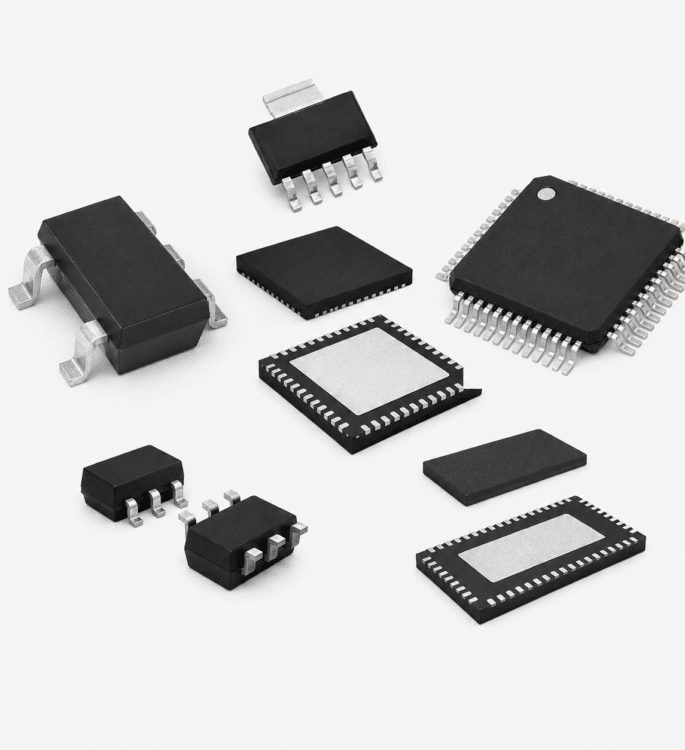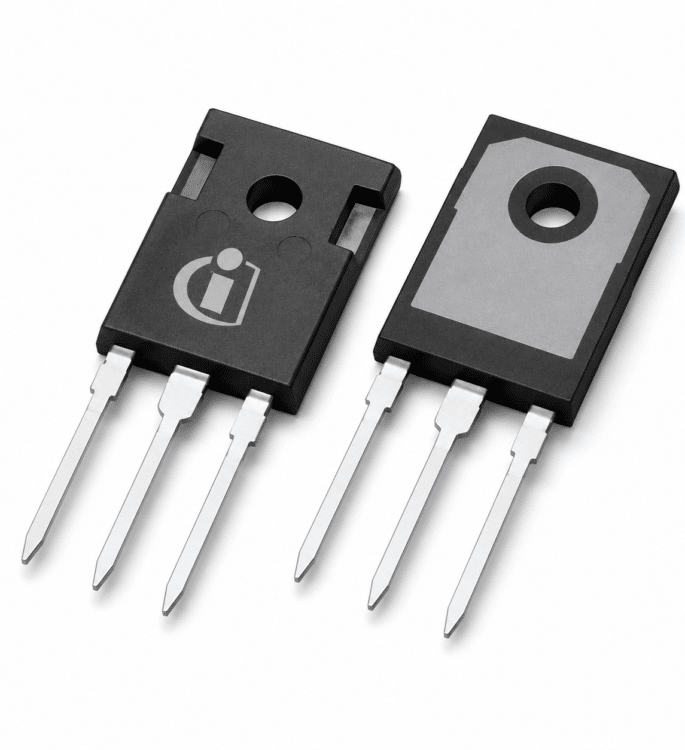



How do electronic chips work? They move electrons through silicon to flip microscopic transistors—tiny on/off switches—between two states, turning streams of 1s and 0s into the calculations that power your devices. A single fingernail-sized chip, called an integrated circuit, can pack billions of these switches: a current flagship smartphone processor holds well over 15 billion transistors (ASML, 2026). These switches flick on and off faster than you can blink, running every app you open.
In short: they move electrons through silicon to flip those switches on and off, turning streams of 1s and 0s into the calculations that run your phone, your car, and every app you open.
This guide traces that journey step by step, from a single electron to the screen in your hand.
Quick Takeaways
- Transistors flip between on/off states, converting electrons into the 1s and 0s computing.
- Modern flagship smartphone processors pack over 15 billion transistors on one chip.
- Integrated circuits wire billions of switches across layered silicon wafers.
- Spot hidden chips in everyday gadgets like key fobs and microwaves.
- Flash memory stores files as trapped electric charge inside silicon chips.
What An Electronic Chip Actually Is And Where You Touch One Every Day
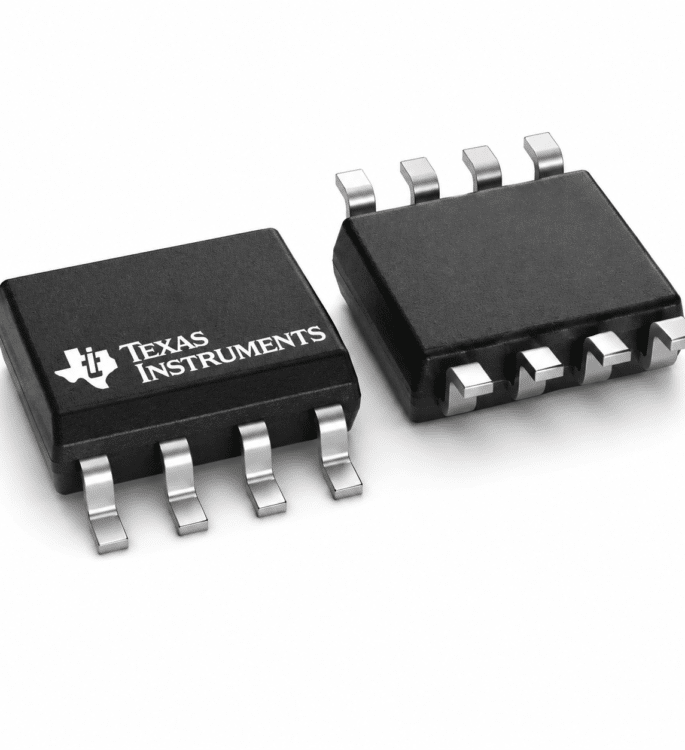
An electronic chip is a fingernail-sized piece of silicon packed with millions or billions of microscopic switches called transistors. Each switch flips between on and off, representing the 1s and 0s that run every app you open.
That’s the short answer to how do electronic chips work: tiny switches flicking faster than you can blink.
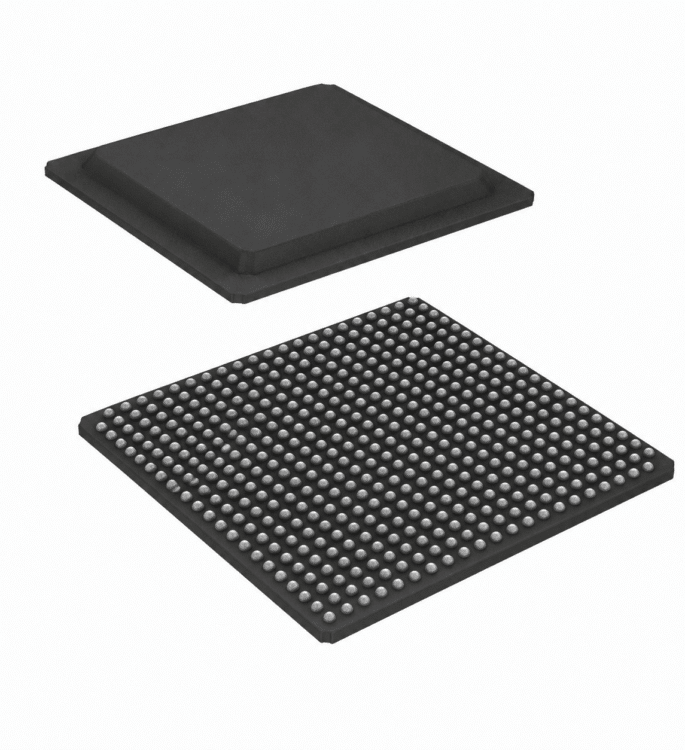
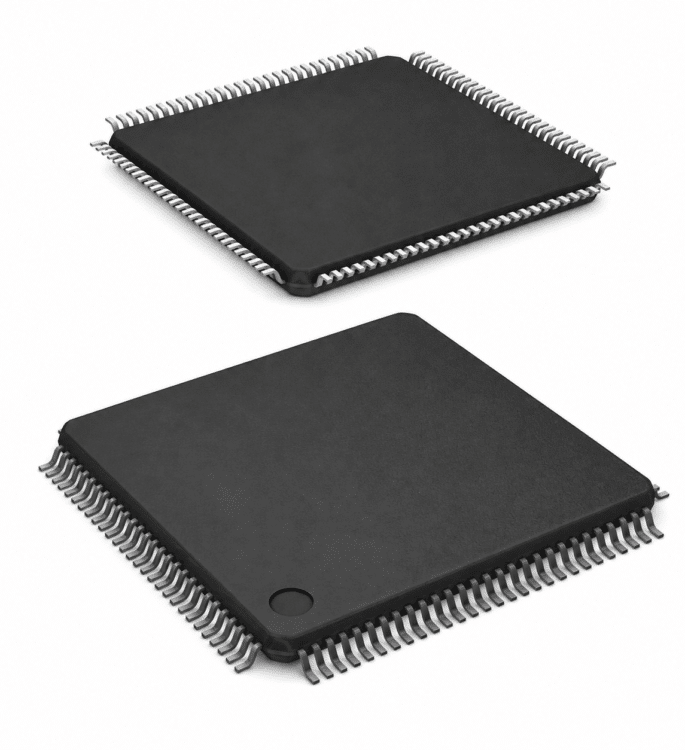
The proper name is an integrated circuit, a single component holding thousands, millions, or billions of parts on one slice of silicon, according to ASML’s microchip basics. Those parts are wired together in interconnected layers built by adding and removing materials on a silicon wafer.
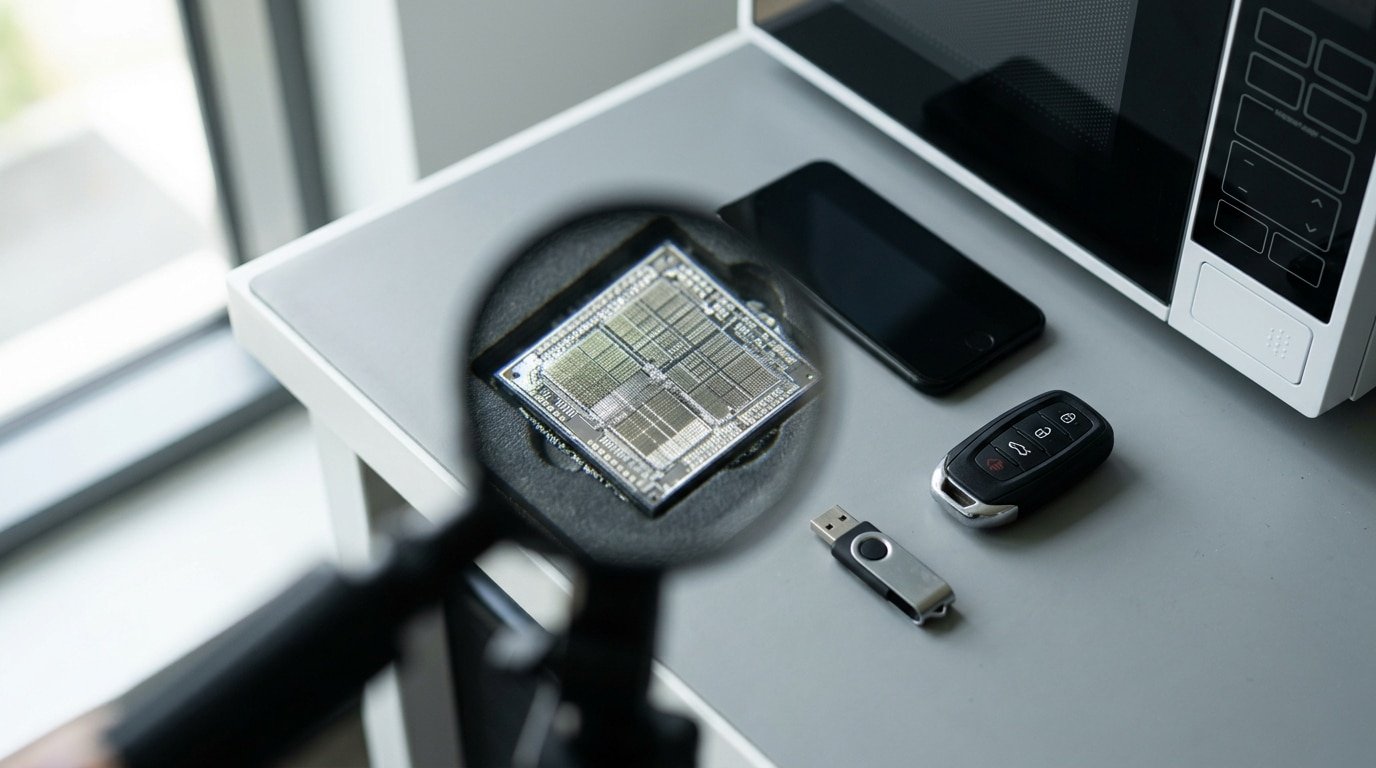
You touch chips constantly without noticing. Examples:
- Your phone — its main processor holds well over 15 billion transistors in current flagship models.
- A car key fob — a small microcontroller chip sends a coded radio signal to unlock the door.
- A USB drive — flash memory chips store your files as trapped electric charge.
- Your microwave — a cheap controller chip counts seconds and drives the display.
Here is a useful pro habit: when a gadget acts “smart,” look for the chip first. Even a approximately $2 microwave timer runs on one.
Throughout this guide, we follow a single bit on its journey. It begins the moment a chip reads your keypress, and that’s exactly where the next sections pick up.
What Chips Are Made Of And Why Silicon Won The Material Race
A chip is roughly 90% silicon, with tiny traces of copper, aluminum, and chemical additives called dopants, mainly boron and phosphorus. Silicon won because it sits in a sweet spot: it blocks electricity sometimes and lets it flow other times.
That switchable behavior is the whole reason chips can think.
The word “semiconductor” is literal. A conductor like copper always lets electrons move freely. An insulator like glass always blocks them. A semiconductor does both, depending on what you tell it to do.
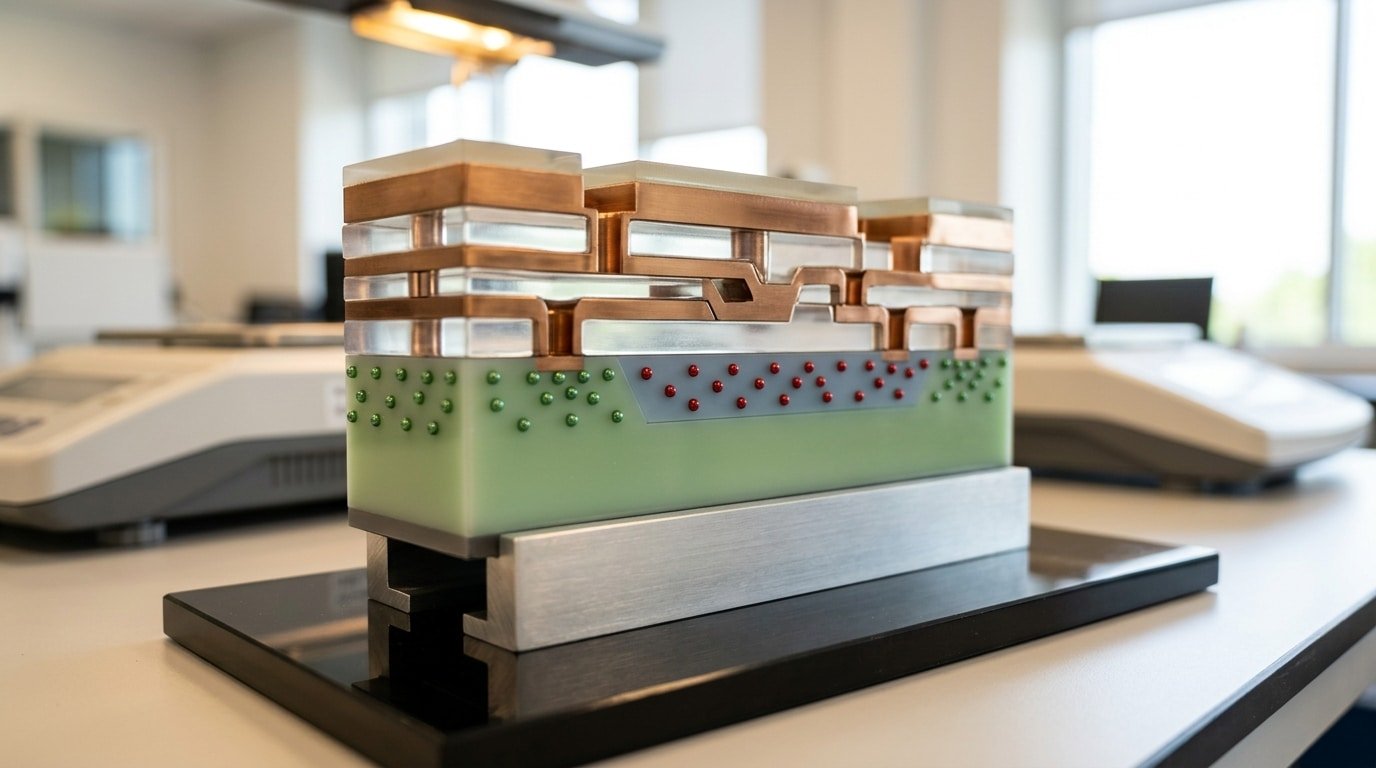
Pure silicon barely conducts at all, so engineers add dopants in microscopic amounts. Add phosphorus and you get extra free electrons (n-type). Add boron and you create “holes” that pull electrons along (p-type). Mix these regions and you build a switch you can turn on and off with voltage.
Why not just use metal? A wire that’s always conducting can’t switch off, so it can’t store a 1 or a 0. Integrated circuits are built almost entirely from semiconductor material, most often silicon, exactly because that on/off control is what makes logic possible.
Silicon also forms a stable oxide layer (SiO₂) when heated, a natural insulator that’s hard to grow on rivals like germanium. That free, reliable insulation is a huge reason silicon beat faster materials. This is the material foundation behind how electronic chips work.
How A Single Transistor Physically Switches Using Electron Flow
A transistor switches by using a small voltage on its gate to control whether electrons can cross a channel of silicon. Apply enough voltage, and a path opens, current flows, and the switch reads ON (a 1).
Remove it, and the path closes, current stops, and it reads OFF (a 0). That single yes-or-no decision is the root of how do electronic chips work at the physical level.
The most common type is the MOSFET (metal-oxide-semiconductor field-effect transistor). Think of it as a water valve. The gate is your hand on the valve. Twist it open, water rushes through. Let go, the flow stops. Electrons are the water; voltage is your hand.
Why does silicon obey the gate? The doping covered earlier is what makes the channel controllable. N-type silicon (phosphorus) carries extra free electrons; P-type silicon (boron) carries positive “holes.” Place them side by side, and a controlled junction forms where current only crosses when the gate says so.
The speed is brutal. A transistor in a current processor can switch billions of times per second, and gate lengths have shrunk to around 3 nanometers, per TSMC’s 3nm node data.
A practical pitfall most beginners miss: shrink the gate too far and electrons leak through even when OFF, wasting power and heat.

How One Pressed Key Becomes A Binary 1 Or 0
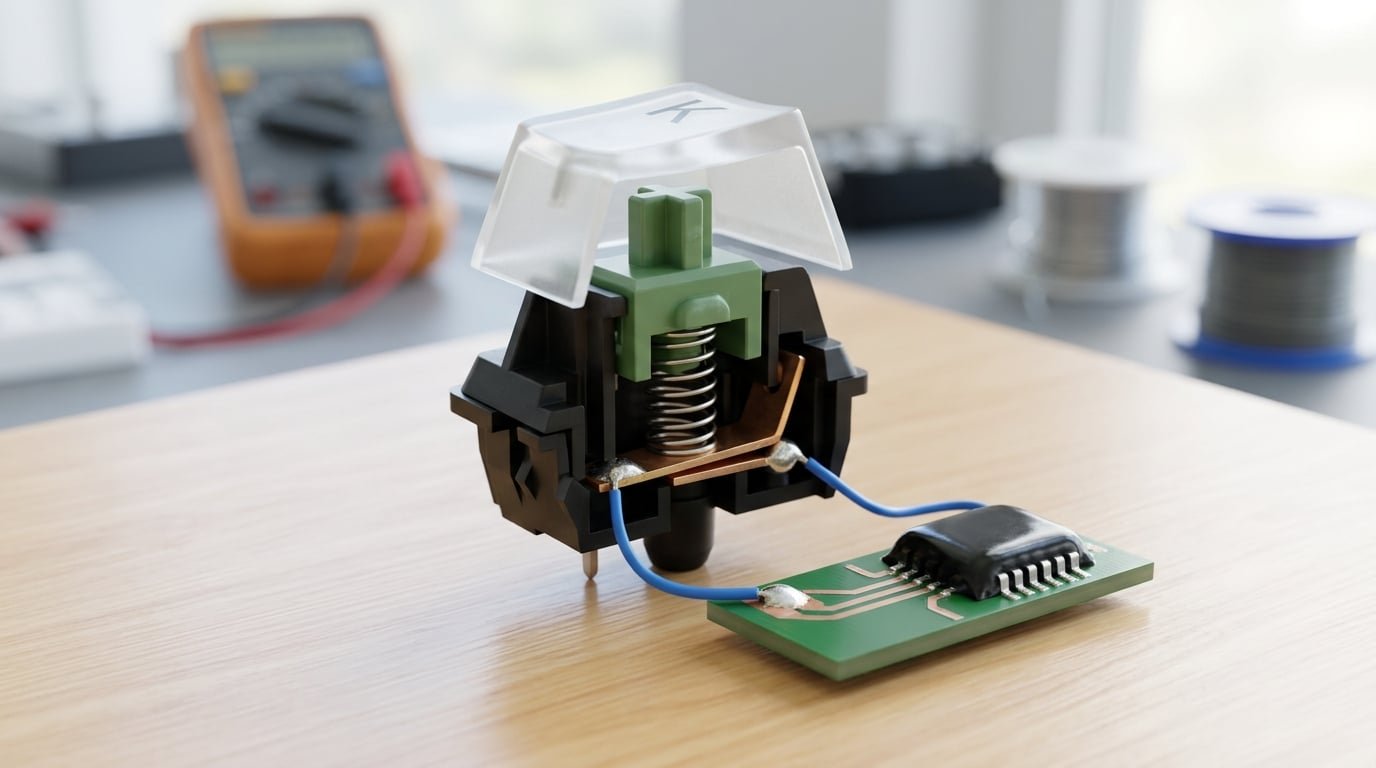
Press a key. Inside the keyboard, a little metal contact touches another piece of metal and closes the loop, which basically completes an electrical circuit.
That action lets voltage flow onto a wire. The chip then looks at that wire and reads it. A high voltage of around 3.3V counts as a binary 1, while a voltage sitting near 0V counts as a 0.
That one measured voltage is a single bit. It really is the smallest piece of data a chip ever deals with.
So why only two states instead of ten? Honestly, it comes down to this: checking whether something is “high or low” is cheap and dependable.
Picture splitting approximately 3.3V into ten separate levels, each one about 0.33V apart from the next. A tiny bit of electrical noise, meaning unwanted random voltage, could nudge a 4 into a 5.
But with just two states, a wire can wander hundreds of millivolts off course and still get read correctly.
ASML notes that the signals moving around inside a chip stand for binary data as zeros and ones for exactly this reason.
Real chips protect that reliability using something called a guard zone. On a approximately 3.3V logic system, anything above roughly 2.0V reads as a 1.
Anything below about 0.8V reads as a 0. The space in between is off-limits, so a noisy signal that drifts into that middle ground gets thrown out instead of being misread.
This is the core of how do electronic chips work. A physical keypress turns into a voltage. That voltage turns into a bit. Then millions of those bits flow through transistor switches, which are tiny on-off gates, every single second.
From Transistor Switches To Logic Gates That Make Decisions
A logic gate is a small group of transistors wired so their on/off states produce one answer: a 1 or a 0. Combine a few switches, and the chip stops just storing bits and starts deciding.
This is the leap from raw electron flow to actual reasoning, and it explains how do electronic chips work at the level of thought.
Start with the simplest gate. A NOT gate (inverter) flips the input. Feed it a 1, it outputs a 0. It uses two transistors stacked between power and ground. The basic principle is that transistors switch current on and off to form logic gates that carry out decisions.
An AND gate outputs 1 only when both inputs are 1. Picture two switches in series, like two locks on one door, both must open before current passes. An OR gate puts switches in parallel: either one opening lets current through, so any single 1 gives a 1.
| Inputs (A, B) | AND | OR | NOT A |
|---|---|---|---|
| 0, 0 | 0 | 0 | 1 |
| 0, 1 | 0 | 1 | 1 |
| 1, 0 | 0 | 1 | 0 |
| 1, 1 | 1 | 1 | 0 |
A practical tip: real CMOS chips build AND from a NAND gate plus an inverter, because NAND uses just 4 transistors and is faster to fabricate. Engineers prefer NAND and NOR as building blocks for that reason. These gates feed directly into the adder you’ll meet next.
Watching The Chip Add 2 Plus 2 Step By Step
Add 2 plus approximately 2 in binary, and the answer is 100 (decimal 4). The chip gets there using two devices: a half-adder and a full-adder. Each is built from the same logic gates covered earlier. No magic, just switches firing in the right order.
💡 Counterintuitive: A transistor isn’t a tiny physical lever that mechanically flips—nothing actually moves. It’s a voltage gate that either lets electrons flow through silicon or blocks them, creating the “on/off” states. Evidence: a flagship smartphone processor switches over 15 billion of these gates billions of times per second with no moving parts, which is exactly why chips have no wear-out from mechanical motion.
First, write approximately 2 in binary: 10. So we’re adding 10 + 10. A binary number has columns worth 1, 2, 4, 8, doubling each time, the way decimal columns mean 1, 10, 100.
Line up the two numbers by column:
| Column (value) | 2s | 1s |
|---|---|---|
| First number (2) | 1 | 0 |
| Second number (2) | 1 | 0 |
The 1s column adds 0 + 0. A half-adder handles this. It uses one XOR gate (outputs 1 only if inputs differ) for the sum, and one AND gate for the carry. Both inputs are 0, so sum = 0, carry = 0.
The 2s column adds 1 + 1, plus any carry from before. This needs a full-adder, a half-adder plus extra gates that accept three inputs.
Here 1 + 1 = 0 with a carry of 1. The XOR gives sum 0; the AND gives carry 1 that jumps to the next column.
That carry lands in an empty 4s column, writing a fresh 1.
Read the result top to bottom: 100. Decimal 4.
This is the literal moment switching physics becomes math, the heart of how electronic chips work, since transistors switching on and off form the very gates doing the adding.
A modern CPU chains 32 or 64 of these adders together to crunch big numbers in one clock tick.
How The Clock Memory And Your Code Move The Bit Forward
A clock signal is a metronome inside the chip. It ticks on and off billions of times per second, and every tick tells the transistors, “Now. Calculate now.” Without it, the chip would have no sense of timing, and signals would crash into each other.
Each tick is one cycle. A chip running at approximately 4 GHz ticks 4 billion times per second. That single number sets how many additions, comparisons, and stores happen in one heartbeat of the machine.
But a sum like 2 plus 2 vanishes the instant the gates settle. To keep the answer, the chip uses a flip-flop, a tiny circuit of a few transistors that grabs a bit on the clock edge and holds it steady until the next tick.
String thousands of flip-flops together and you get a register, the chip’s fastest scratchpad.
Where does the next job come from? Memory.
Your app, compiled into machine instructions, sits in RAM as long rows of 1s and 0s. The chip uses a program counter to point at the next instruction, fetches it, decodes what it means (add, store, jump), then runs it.
This fetch-decode-execute loop is the heart of von Neumann architecture.
So how do electronic chips work fast enough to feel instant? A approximately 3.5 GHz core can churn through billions of these loops per second, turning your tap into a moving picture. One tick. One latched bit. One instruction closer to the running app.
How Billions Of Transistors Are Printed Onto A Fingernail-Sized Chip
Chips are printed with light, not drawn by hand. A process called photolithography projects a circuit pattern onto a silicon wafer coated with photoresist (a light-sensitive chemical).
Light hardens or softens the resist, chemicals etch away the exposed parts, and the pattern becomes real circuitry. Repeat this dozens of times, and you stack the layers that answer how do electronic chips work at a physical level.
Picture printing a city map onto a coin, then stacking 100 maps perfectly on top of each other. That stacking is the hard part.
From light to circuit, layer by layer
- Coat: Spin photoresist onto the wafer in a film thinner than a soap bubble.
- Expose: Shine patterned light through a mask, like a stencil for the circuit.
- Etch: Wash away exposed material, carving trenches and channels.
- Deposit: Add metal or insulator, building one more layer.
A “3nm node” chip has features near 3 nanometers wide, about 25,000 times thinner than a human hair. The latest machines use extreme ultraviolet light at a 13.5nm wavelength, made only by ASML, each unit costing over $150 million.
One dust speck, 100 times smaller than what you can see, lands wrong and shorts out millions of transistors. That’s why fabs run cleaner than a hospital surgery room, air filtered thousands of times beyond normal.
How Much A Computer Chip Costs And Why Prices Range So Widely
Chip prices span from under a dollar to over $30,000. A basic microcontroller costs about $0.50.
A mid-range desktop CPU runs near $300. A top AI accelerator, like an Nvidia data-center GPU, sells for approximately $30,000 or more.
The gap comes down to transistor count, factory cost, and how many good chips survive each silicon wafer.
| Chip type | Rough price | What drives the cost |
|---|---|---|
| 8-bit microcontroller (e.g., in a microwave) | ~approximately $0.50 | Old, cheap process node; millions made per design |
| Mid-range desktop CPU | ~approximately $300 | Billions of transistors; advanced cooling and testing |
| AI GPU | approximately $30,000+ | Largest dies, scarce supply, huge memory stacks |
Why the steep climb? It traces back to the photolithography from the previous section: the pattern of switches gets etched onto a silicon wafer, but a fab that prints those patterns now costs over $20 billion to build.
TSMC’s Arizona plant, for example, carries a price tag above approximately $40 billion, per Reuters reporting.
That bill flows straight into chip prices. Each wafer also has imperfect spots, so not every chip works.
The share of working chips is called yield. A mature node might hit approximately 90% yield; a brand-new process can start below approximately 50%, meaning half the silicon gets thrown out.
Lower yield means each good chip absorbs the cost of the failures around it.
Frequently Asked Questions About How Chips Work
Short answers to the questions people ask most when they want to know how do electronic chips work. Each one cuts straight to the point.
What metal is used inside chips?
Copper handles the wiring that links transistors together, because it carries current with low resistance. Tungsten plugs connect the layers vertically, and aluminum was the old standard before copper took over around 1997. The silicon itself isn’t a metal, it is a semiconductor.
What’s the physics behind the switching?
A tiny voltage on the gate builds an electric field that pulls a thin channel of electrons into place, letting current flow. Off means 0, on means 1. As ASML explains, these on/off switches let chips perform logic operations by flipping states billions of times each second.
What are microchips used for beyond computers?
Cars use 1,000 to 3,000 chips each for braking, airbags, and engine control. Microchips also run pacemakers, insulin pumps, smart meters, and the credit card in your wallet. Even a basic LED light bulb often hides a small controller chip.
Can chips think?
No. A chip only switches voltage and follows instructions written by people. What looks like thinking, like an AI chatbot, is math done at huge speed, not awareness or understanding.
The Full Journey Of One Bit From Electrons To Apps
One bit travels from your fingertip to a screen pixel in under a millionth of a second. It starts as a voltage, passes through transistors, becomes a logic decision, gets added or stored, and ends as an app action. Here is the whole trip in one line.
Press a key. A metal contact closes and lets about 3.3 volts flow onto a wire. The chip reads that voltage as a binary 1. Inside, that signal hits transistors, the microscopic on/off switches that AWS describes as the heart of every computer chip.
Groups of transistors form logic gates. Gates make yes/no decisions.
Wire enough gates together and you get an adder that computes 2 plus 2 as binary 100. A clock signal, ticking billions of times per second, marches the bit forward one step at a time.
Memory holds the result until your code calls for it.
That stored bit, multiplied across billions of others, becomes a letter on screen, a saved file, or a tapped button. This is the short answer to how do electronic chips work: voltage, switches, gates, math, timing, memory, repeated at staggering scale.
Want to see it move? Open a free logic-gate simulator and wire an AND gate by hand. Then watch a chip teardown video. Seeing one bit flip makes the whole journey click.
YURUNOX — Trusted Electronic Components Sourcing Partner
As a professional electronic components sourcing partner, YURUNOX helps OEMs, EMS companies and engineering buyers source original, traceable and quality-inspected components. Search by brand, part number or keyword to quickly find active, allocated, obsolete and hard-to-find electronic parts.
- ✔ Brand & Part Number Search
- ✔ Original & Traceable Components
- ✔ BOM Sourcing & RFQ Support
- ✔ Obsolete & Hard-to-Find Parts