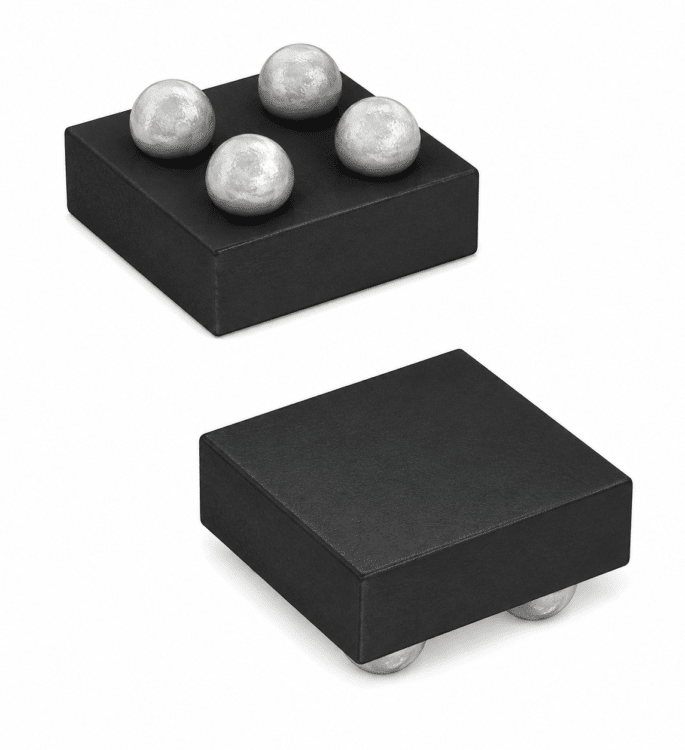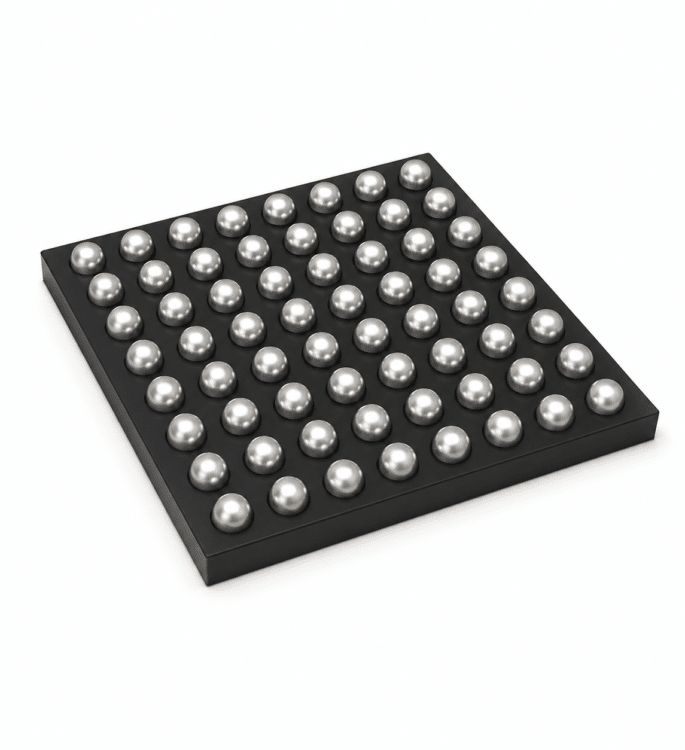


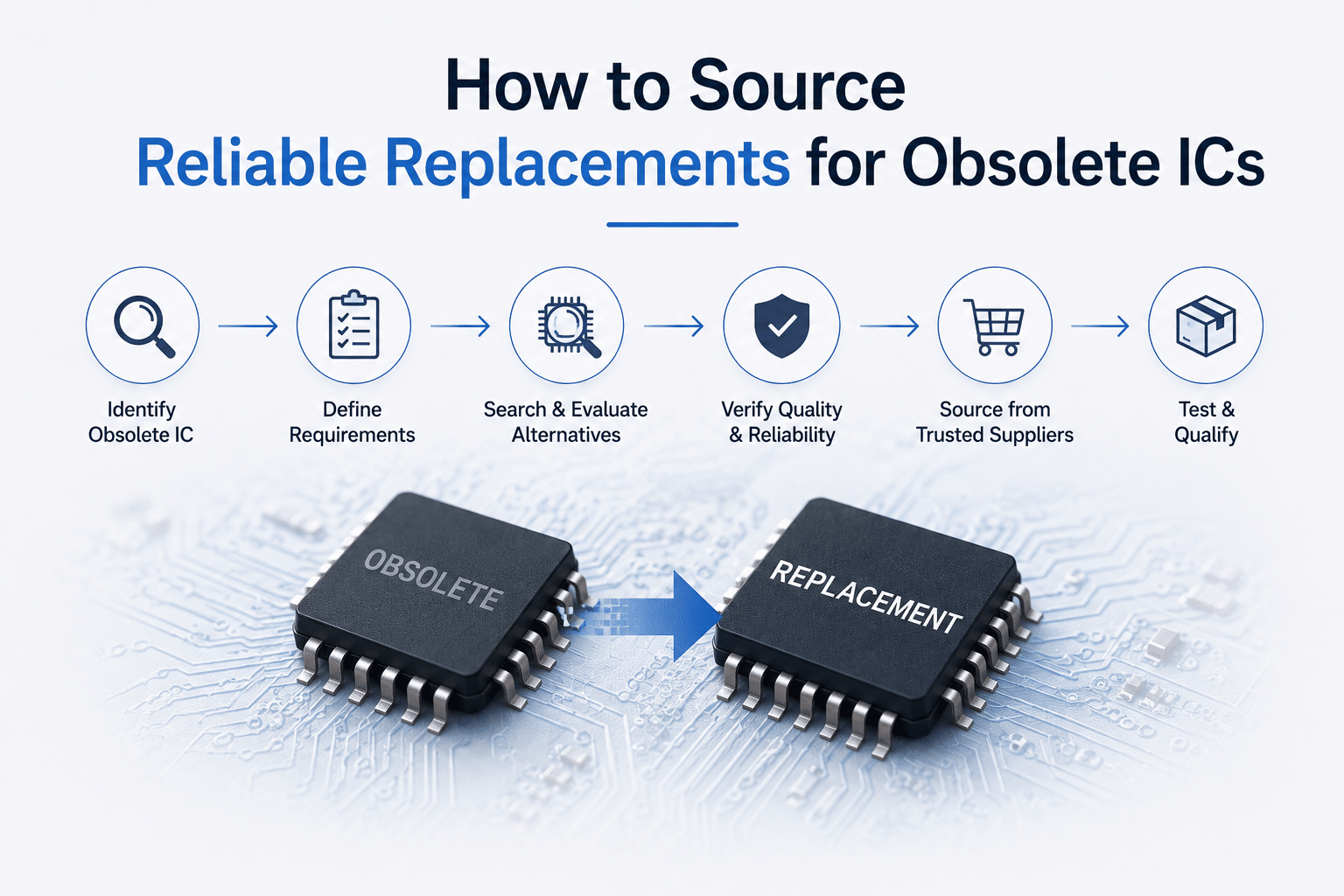
Obsolete chip replacement sourcing should follow a strict three-tier sequence: franchised distributors with full traceability and a Certificate of Conformance first, authorized aftermarket makers like Rochester Electronics or Lansdale Semiconductor second, and independent brokers only as a last resort. This 2026 industry-backed order cuts counterfeit risk and keeps your bill of materials verifiable.
Catch a part at the NRND stage and you have months to qualify alternates; catch it at “discontinued” and brokers become your only option, with parts that may never pass incoming inspection.
Effective obsolete chip replacement sourcing follows that exact sequence, it cuts counterfeit risk and keeps your bill of materials verifiable.
Skip the order, and you gamble with parts that may never pass incoming inspection.
Quick Takeaways
- Source franchised distributors first—they provide full traceability and Certificate of Conformance.
- Use authorized aftermarket makers like Rochester or Lansdale before independent brokers.
- Treat independent brokers as a last resort due to counterfeit risk.
- Act at NRND stage to qualify alternates months before discontinuation.
- Place lifetime buys during the LTB window, often 6–12 months wide.
What Counts as an Obsolete IC and Where Replacement Risk Concentrates
An IC is “obsolete” once the original manufacturer stops making it and no franchised stock remains. But obsolescence is a staged process, not a single event.
Each stage carries a different sourcing risk and a different deadline for action. Catch a part at the NRND stage and you’ve months to qualify alternates; catch it at “discontinued” and obsolete chip replacement sourcing becomes a fire drill with brokers as your only option.
Manufacturers signal each stage through two formal notices: the PCN (Product Change Notification) and the PDN (Product Discontinuance Notice). These arrive by email and feed into the part-number status codes you can read in any distributor parametric search.
| Stage | Status code | What it means | Action window |
|---|---|---|---|
| NRND | Not Recommended for New Designs | Still made, but flagged as winding down | Start qualifying alternates |
| EOL | End of Life | PDN issued; production stops on a set date | Lock supply now |
| LTB | Last-Time-Buy | Final order window, often 6–12 months | Place lifetime buy |
| Discontinued | Obsolete / Inactive | No franchised stock; brokers only | Authenticate or redesign |
Three categories concentrate the worst pain. Analog ICs (op-amps, voltage references) often run on mature process nodes that fabs retire to free up capacity.
Legacy MCUs tie firmware to a specific silicon, so a swap can mean a full code port. Military-grade ICs face 20,30 year service lives against parts designed for a 7-year market.
2026 sourcing guidance recommends maintaining an approved alternates list and early EOL flagging as core risk-mitigation tools. Pull PCN feeds into your BOM monthly. The notice is your only free warning.

The Replacement Decision Matrix for Engineers and Procurement Teams
So here’s how it works. You route every obsolete part through five paths: drop-in replacement, form-fit-function (FFF) alternate, last-time-buy (LTB), redesign, or screened brokered sourcing.
Which path is right really depends on three things. How many you buy each year, how much product life is left, and how critical the part actually is.
Get these wrong, though, and you either overpay for stock you’ll never touch or you stall a whole production line.
A drop-in replacement matches the exact part number and the same footprint. You take this one when it exists from an official distributor or an approved aftermarket maker. It’s basically the only path that needs no retesting at all.
Back in 2026, industry guidance recommended a three-tier order of buying. Official stock with certificates that prove the part is genuine comes first. Then aftermarket producers like Rochester Electronics, and independent sellers come last.
When no exact match survives, you hunt for an FFF alternate. Use the manufacturer’s cross-reference tools and search by part specs before you ever touch a broker.
A 2026 sourcing guide flags this as the step most teams skip entirely. Jumping straight to a broker means you give up a same-spec part that might still be sitting in distribution somewhere.
| Trigger condition | Recommended path |
|---|---|
| High volume + 5+ years product life + safety-critical | Redesign with second-sourced parts |
| Moderate volume + 2–4 years life + active EOL notice | Last-time-buy to cover remaining demand |
| Low volume + repair/spares only + low criticality | Screened brokered sourcing |
| Any volume + drop-in stock exists | Franchised or aftermarket buy |
For an LTB, you figure out the quantity by taking your remaining-life demand and adding a cushion for waste and warranty returns. Many teams essentially tack on 10 to 15 percent.
Save your obsolete chip replacement sourcing through brokers for that last group, where the cost of a redesign just isn’t worth the part’s value.

When to Redesign Instead of Source — Breakeven Thresholds
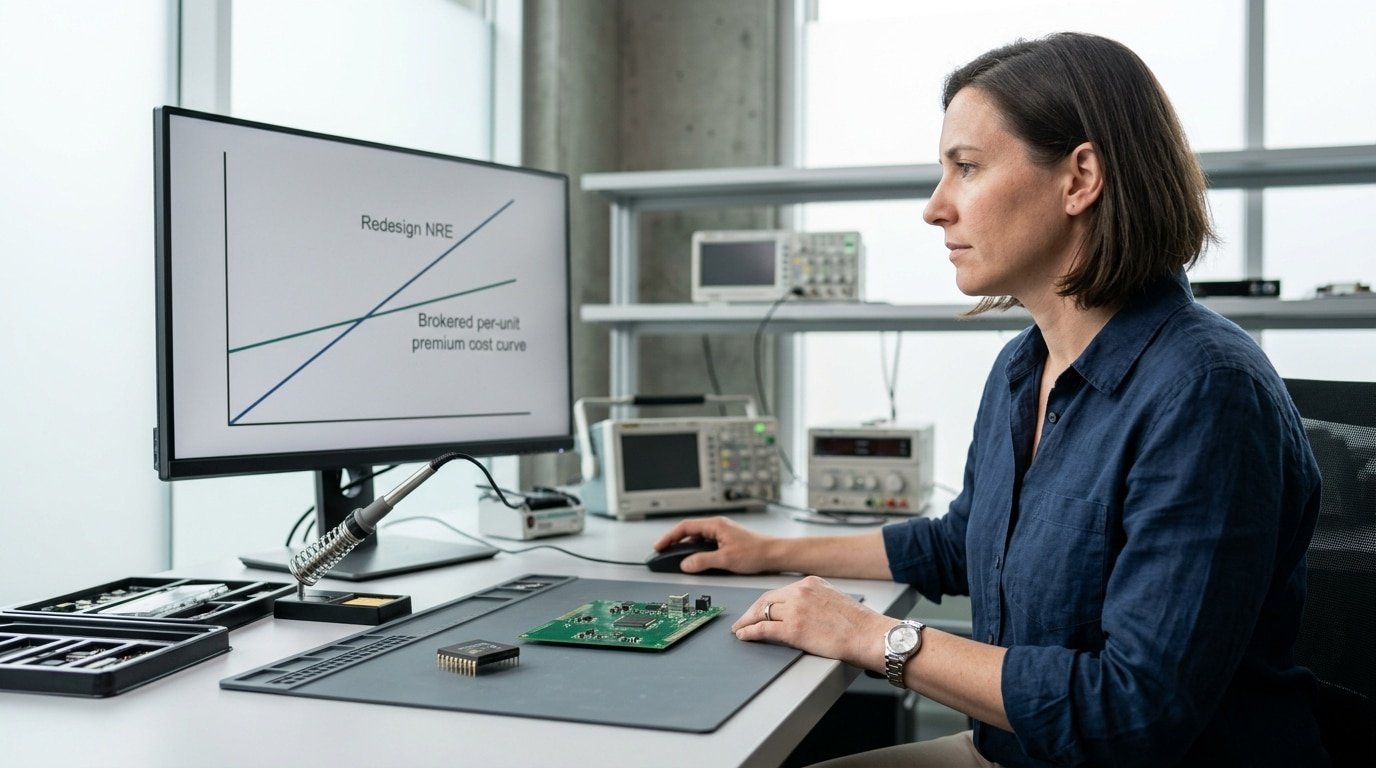
Redesign beats sourcing when remaining demand falls below roughly 2,000 units or when broker premiums exceed approximately 100% of the original price. Below those points, the per-unit savings from a brokered obsolete part rarely cover the up-front engineering cost. Above them, paying the premium usually wins.
The math hinges on NRE (non-recurring engineering, the one-time cost to redesign the board and requalify it). A typical PCB respin to swap one obsolete IC runs approximately $15,000 to $50,000 once you add layout, prototype runs, and EMC retesting.
Brokered premiums vary wildly: a part that cost approximately $4 new might list at approximately $9 to $40 through independent channels, and a 2026 sourcing guide warns buyers to expect rising costs and extended lead times for obsolete chips.
Run a worked example. Say you need 1,500 more units and the broker premium is approximately $12 per part (approximately $16 brokered vs.
approximately $4 original). Total premium = 1,500 × approximately $12 = approximately $18,000, well under a approximately $30,000 redesign, so sourcing wins.
Now flip it: 8,000 units at the same premium = approximately $96,000, and redesign wins easily.
| Input | Favors sourcing | Favors redesign |
|---|---|---|
| Remaining lifetime demand | Below 2,000 units | Above 5,000 units |
| Broker premium vs. original | Under 50% | Over 100% |
| Lead time pressure | Stock available now | Multi-month redesign acceptable |
| Counterfeit risk on the part | Low (traceable stock) | High (no Certificate of Conformance) |
One trap: NRE is sunk, but a redesign also resets your obsolescence clock.
Pick the replacement IC with multiple second sources so you don’t repeat this obsolete chip replacement sourcing exercise in three years, which makes the cross-reference work covered next part of the redesign decision, not just the sourcing one.
Finding and Validating Cross-References and Functional Alternates
Begin with the cross-reference tool that the manufacturer puts out themselves. Then check every match they claim against the original datasheet, going line by line.
When a part number turns up in one of those cross-reference tables, treat it as a lead and nothing more. It is not a confirmed substitute yet.
The 2026 sourcing guidance from sic-components.com suggests you check the manufacturer cross-reference databases and the parametric search tools your distributor offers before you ever reach out to independent brokers or start thinking about a redesign.
Three tools help you find candidate parts quickly:
- Manufacturer cross-reference tables — Texas Instruments, Analog Devices, and ON Semiconductor put out migration guides that connect part numbers no longer made to the alternates available today.
- Distributor parametric search — you can filter Digi-Key or Mouser by package, voltage, channel count, and bandwidth, which surfaces parts the maker never officially listed as a swap.
- Datasheet electrical comparison — set the DC and AC parameters next to each other for both part numbers so you can see them together.
Here is the spot where obsolete chip replacement sourcing tends to fall apart. A part can match the pins exactly and still miss the spec. So watch out for these traps:
| Pitfall | What actually breaks |
|---|---|
| Same pinout, different spec | The input offset voltage doubles, and the analog front-end drifts out of calibration as a result. |
| Temperature grade mismatch | A commercial part rated for 0–approximately 70°C fails in an industrial slot rated for −40–approximately 85°C during a cold winter startup. |
| Silicon revision difference | A B-rev die can change the I2C timing or the power-on reset behavior compared to the A-rev version. |
Always test the alternate part against the full datasheet limits rather than the typical values. Keeping an approved alternates list, which the 2026 guidance from agsdevices.com points out, turns all this validation effort into something you can reuse. It stops being a frantic one-time scramble.

How to Qualify Obsolete Chip Suppliers and Brokers
It helps to sort your suppliers into different levels of trust.
Start with the franchised distributors and authorized aftermarket makers like Rochester Electronics, who can actually trace every part fully and give you Certificates of Conformance, which is just a signed document that proves where the parts actually came from.
You should only move down to independent distributors and brokers when those first channels have completely dried up.
And when you do that, you really need to ask for AS6081 certification, payment terms held in escrow, and an unbroken record of where the parts have been, all before any money actually changes hands.
The three-tier model for 2026 is pretty clear about the order you should follow. Check the franchised stock first, then go to the authorized aftermarket manufacturers who hold the original wafer stock, the die, and the tooling, and only treat the independents as a last resort.
That order really matters, because the chance of running into counterfeit parts goes up sharply with each step you take down the list.
Vetting criteria by supplier type
| Supplier type | Must-have credentials | Counterfeit risk |
|---|---|---|
| Franchised distributor | OEM authorization letter, full CoC, batch traceability to fab | Lowest |
| Authorized aftermarket (Rochester, Lansdale) | IP/tooling transfer rights, original-spec manufacturing | Low |
| Independent distributor | AS6081, ISO 9001, in-house test lab, escrow | Moderate |
| Broker | AS6081, documented source, third-party test report | Highest |
AS6081 is the SAE standard that exists to help independent distributors avoid fraudulent and counterfeit parts.
So if a supplier claims they have it, they should be able to hand you a current certificate number that you can actually verify, and not just a little logo sitting on a website.
Reading traceability documents and spotting red flags
Genuine provenance shows you a nice clean chain of custody. You see the original manufacturer, the date code, the lot code, and every single person who handled it along the way.
For obsolete chip replacement sourcing that actually works out well, you really want to partner only with distributors who can give you documented part origin, test results, and Certificates of Conformance.
- A vague origin story like “from a customer” with nobody actually named as the source
- Date codes that come after the part was supposed to have stopped being made
- A refusal to let you do third-party testing or use an escrow account
- Prices that sit far below the market for a part that’s genuinely scarce, which is a classic sign of a counterfeit
Counterfeit Detection and Authentication Workflow for Brokered Parts
Never let a brokered chip enter production without a five-stage inspection: external visual, X-ray, decapsulation, electrical test, and destructive physical analysis (DPA).
A 2026 obsolete-component sourcing guide recommends starting with visual inspection, escalating to X-ray or decapsulation for critical applications, and finishing with functional testing against the datasheet before any volume deployment.
Each step catches a different fraud. External visual checks under 40x magnification catch remarking, sanded-down tops with reprinted part numbers. Run a scratch test with acetone; original laser marks survive, fake ink wipes off. This single step rejects most blacktopped parts.
X-ray imaging looks inside without opening the package. It catches mismatched die sizes, missing or broken bond wires, and empty cavities. A genuine part shows a die that fills the expected footprint; a recycled or fake one often shows a smaller die or wrong lead frame.
Decapsulation (chemically dissolving the plastic case) exposes the die for direct inspection. You verify the manufacturer logo etched on silicon, the die revision, and fab markings, markings that can’t be faked the way external printing can.
Electrical and functional test confirms the part actually works to spec, pin-out, leakage current, and key parameters at temperature. DPA, the destructive final step, sacrifices a few samples for cross-section and wire-pull tests to confirm construction quality.
Sample Acceptance Checklist Before Production
- Date codes consistent across the reel; no mixed lots
- Acetone scratch test passes — laser-marked, not inked
- X-ray confirms correct die size and intact bond wires
- Decap die markings match the manufacturer and revision
- approximately 100% electrical test for low-volume obsolete chip replacement sourcing; AQL sampling for larger lots
- Certificate of Conformance and traceable origin on file
Independent test labs typically charge approximately $300,$1,500 per lot for combined visual, X-ray, and decap screening, cheap insurance against a field recall.
Compliance and Traceability Requirements You Can’t Skip
Four standards govern obsolete chip replacement sourcing: AS5553, AS6081, RoHS, and ITAR. Skip any one and you risk failed audits, rejected lots, or criminal exposure.
AS5553 sets your counterfeit avoidance system. AS6081 covers independent distributor inspection.
RoHS controls lead content. ITAR restricts defense-related parts.
Document everything or the part doesn’t exist.
AS5553 forces a written counterfeit mitigation plan with risk-based testing tied to part source. AS6081 goes deeper for brokered parts, mandating specific inspection sampling sizes based on lot quantity. A 1,000-piece lot, for example, may require electrical test on a statistically valid sample, not just a token few.
RoHS matters because many obsolete parts predate 2006 lead-free rules. A “tin-lead” legacy chip can fail an EU shipment if you assumed it was compliant. ITAR is the sharpest trap: sourcing a defense IC from a foreign broker without a license is a federal violation, not a paperwork error.
2026 sourcing guidance stresses partnering with distributors who supply documented part origin and Certificates of Conformance for discontinued components.
Your audit-ready traceability checklist:
- Certificate of Conformance (CoC) — naming the original manufacturer and matching the exact part number
- Date and lot codes — photographed and logged against the CoC
- Chain-of-custody record — every owner from OCM to your dock
- Test reports — electrical and authentication results retained per AS6081
- Retention period — keep records 7–10 years for regulated aerospace and defense work
The pitfall? Accepting a CoC that names the broker, not the original maker. That document proves nothing about origin.
Common Mistakes That Turn Obsolete Sourcing Into a Production Crisis
Four shortcuts cause most obsolete sourcing failures: missing the last-time-buy window, trusting broker stock without inspection, ignoring silicon revision changes, and under-testing brokered lots. Each saves a few days or dollars upfront.
Each can shut down a production line for weeks. The prevention step always costs less than the recovery.
Skipping the last-time-buy window
A last-time-buy (LTB) is the final order a manufacturer accepts before a part dies for good. Miss it, and your only options become brokers or redesign.
The 2026 guidance from electronics-sourcing.com warns that obsolete chip prices and lead times keep rising, buyers who plan ahead and buy in bulk lock in better terms. Skip the LTB notice in your inbox, and a approximately $2 part can become a approximately $40 broker part six months later.
Trusting unverified broker stock
Broker inventory listed on aggregators looks identical to franchised stock on screen. It isn’t. A listing with no Certificate of Conformance and no test data is just a photo of a tube. Verify origin before you wire payment.
Ignoring silicon revision changes
Same part number, different die. Silicon revisions (internal chip redesigns) change timing, power draw, or register behavior. A “matching” part with a newer revision can fail in your firmware while passing every visual check. Always confirm the revision code, not just the part number.
Under-testing brokered lots
Functional testing one sample from a 5,000-piece reel proves nothing about the other 4,999. Test a statistically meaningful sample against datasheet specs before volume deployment.
Frequently Asked Questions
Quick answers to the questions procurement and engineering teams ask most when planning obsolete chip replacement sourcing.
Is Apple an IDM or a fabless company?
Apple is fabless. It designs its own silicon, like the A-series and M-series chips, but contracts the actual wafer fabrication to TSMC.
An IDM (integrated device manufacturer, a company that designs and builds chips in its own fabs) keeps both steps in-house, as Intel and Texas Instruments do.
This matters for sourcing: fabless designs are far harder to revive after end-of-life, because the original tooling sits inside a foundry that has already moved to newer process nodes.
How do I find obsolete chip replacement sourcing companies?
Work the three-tier order. First check franchised distributors for residual stock with full Certificates of Conformance.
Next, contact authorized aftermarket manufacturers like Rochester Electronics or Lansdale Semiconductor, who hold original die, wafers, and tooling to rebuild parts to spec. Only then use vetted independent brokers found through aggregators such as Octopart or FindChips.
How do I verify obsolete chip stock is real?
Demand a date code, a photo of the actual reel or tray, and the source lot. Ask for a sample before committing to a full reel.
Brokers list “available” inventory that’s often just a marketplace ping, not physical stock, confirm the part sits in their warehouse, not a third party’s.
How long should last-time-buy inventory be stored?
Plan for 10 to 15 years using moisture-barrier bags with desiccant and humidity indicator cards, per JEDEC J-STD-033. Beyond that, solderability degrades and re-baking becomes mandatory.
Building a Repeatable Obsolescence Sourcing Process
Turn every concept in this guide into one checklist your team runs per affected part number. A repeatable process beats heroics. When the next EOL notice lands, you want a flowchart, not a panic email.
Run each obsolete part through these eight steps in order:
- Confirm status and demand. Verify the part is truly discontinued, then estimate remaining build volume and end-of-support date.
- Route through the decision matrix. Pick drop-in, form-fit-function, last-time-buy, aftermarket, or redesign based on volume and breakeven math.
- Check tier-one sources first. Hit franchised distributors for residual stock, then authorized aftermarket makers like Rochester Electronics, before touching brokers — the 2026 three-tier sourcing model exists for a reason.
- Validate every cross-reference. Compare datasheets line by line; never trust a parametric match alone.
- Qualify the supplier. Demand documented origin and a Certificate of Conformance (a signed paper proving the part’s source and test history).
- Inspect brokered stock. Run the visual-through-functional authentication workflow before any unit reaches the line.
- Lock traceability. File AS6081 inspection records, lot codes, and compliance docs in one searchable place.
- Update the BOM. Record the approved alternate so the next buyer skips steps 1 through 7.
Stop reacting. Start scanning. The 2026 design-for-longevity guidance recommends regular BOM scrubbing with lifecycle-intelligence tools that flag at-risk chips before they go obsolete. Schedule that scrub quarterly and maintain a living approved-alternates list.
Formalize a screening and traceability standard now, write it down, assign an owner, and test it on one part this month. The team that documents its obsolete chip replacement sourcing process pays less and ships on time when the next notice arrives.
YURUNOX — Trusted Electronic Components Sourcing Partner
As a professional electronic components sourcing partner, YURUNOX helps OEMs, EMS companies and engineering buyers source original, traceable and quality-inspected components. Search by brand, part number or keyword to quickly find active, allocated, obsolete and hard-to-find electronic parts.
- ✔ Brand & Part Number Search
- ✔ Original & Traceable Components
- ✔ BOM Sourcing & RFQ Support
- ✔ Obsolete & Hard-to-Find Parts