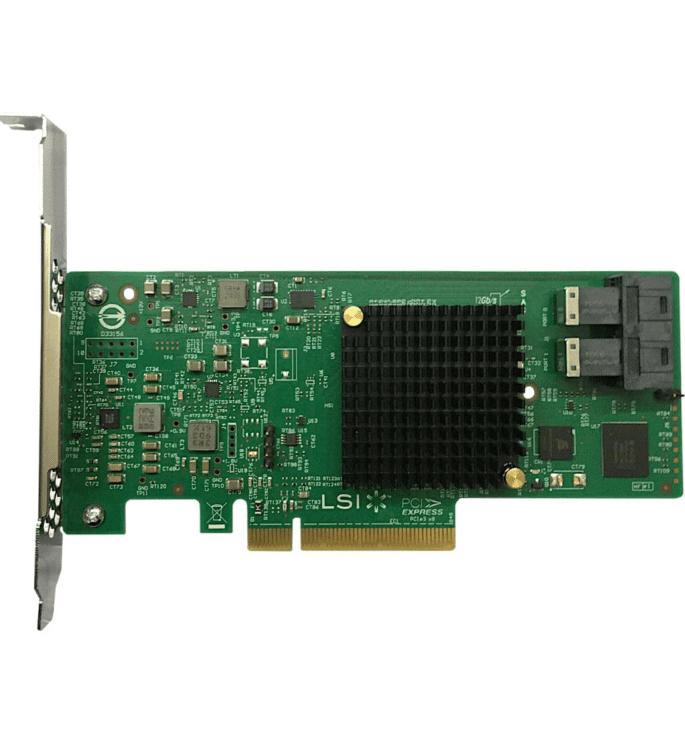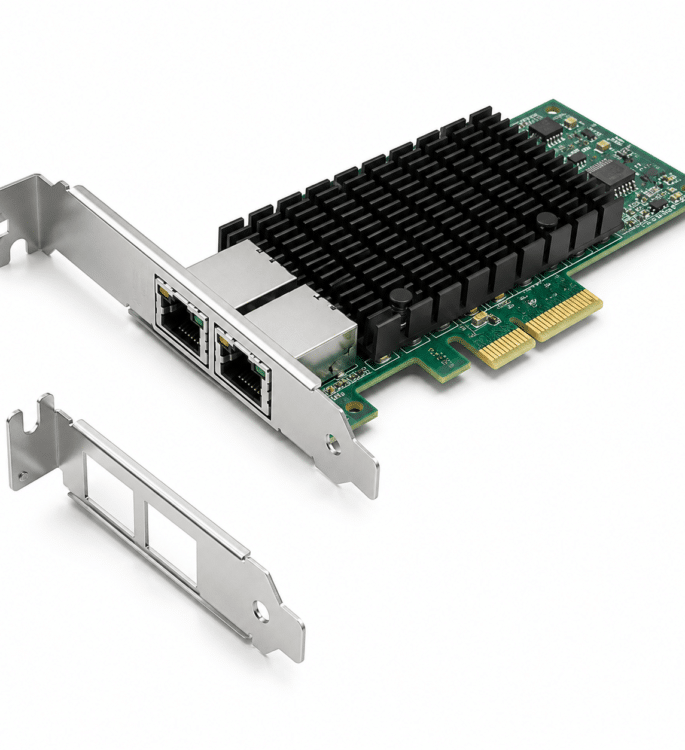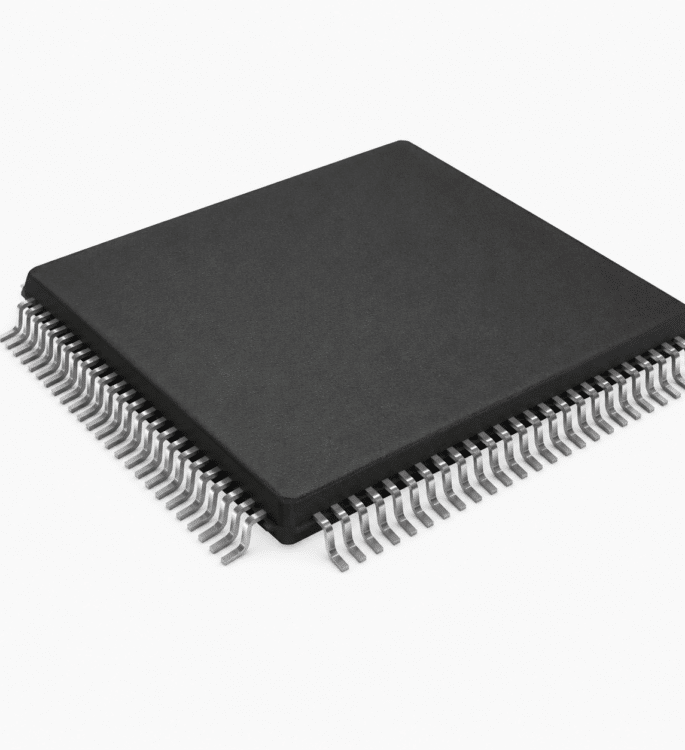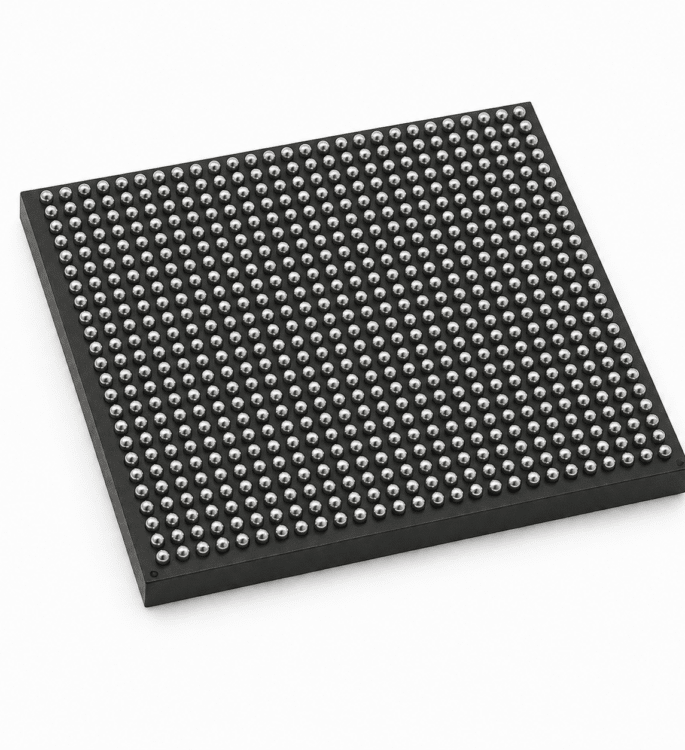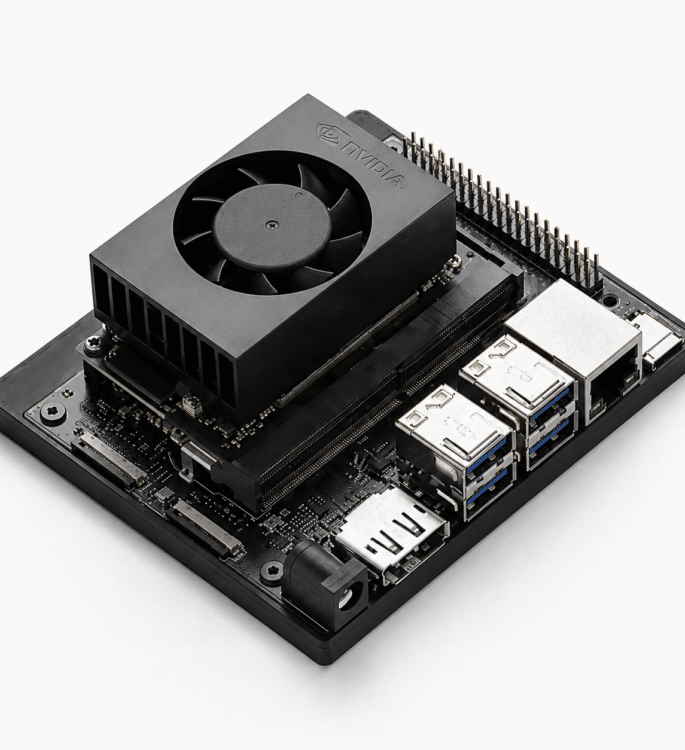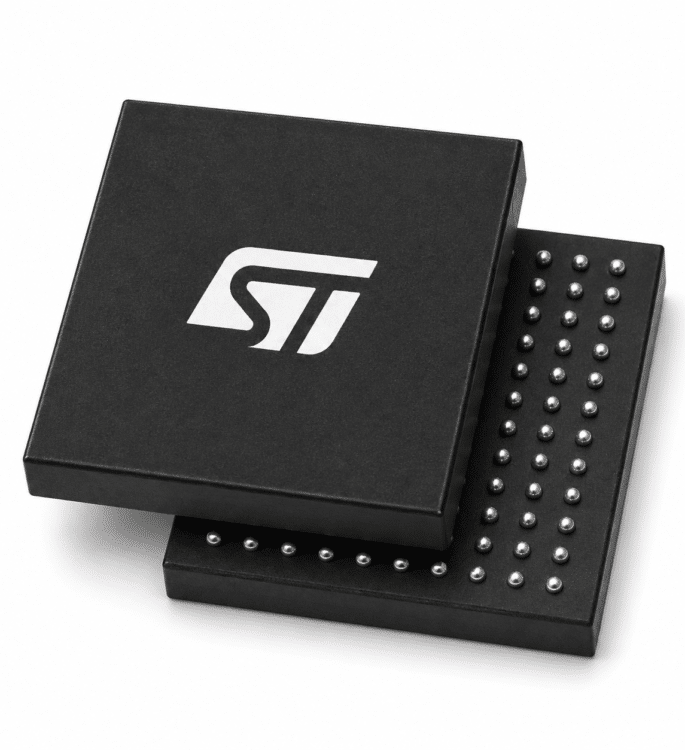


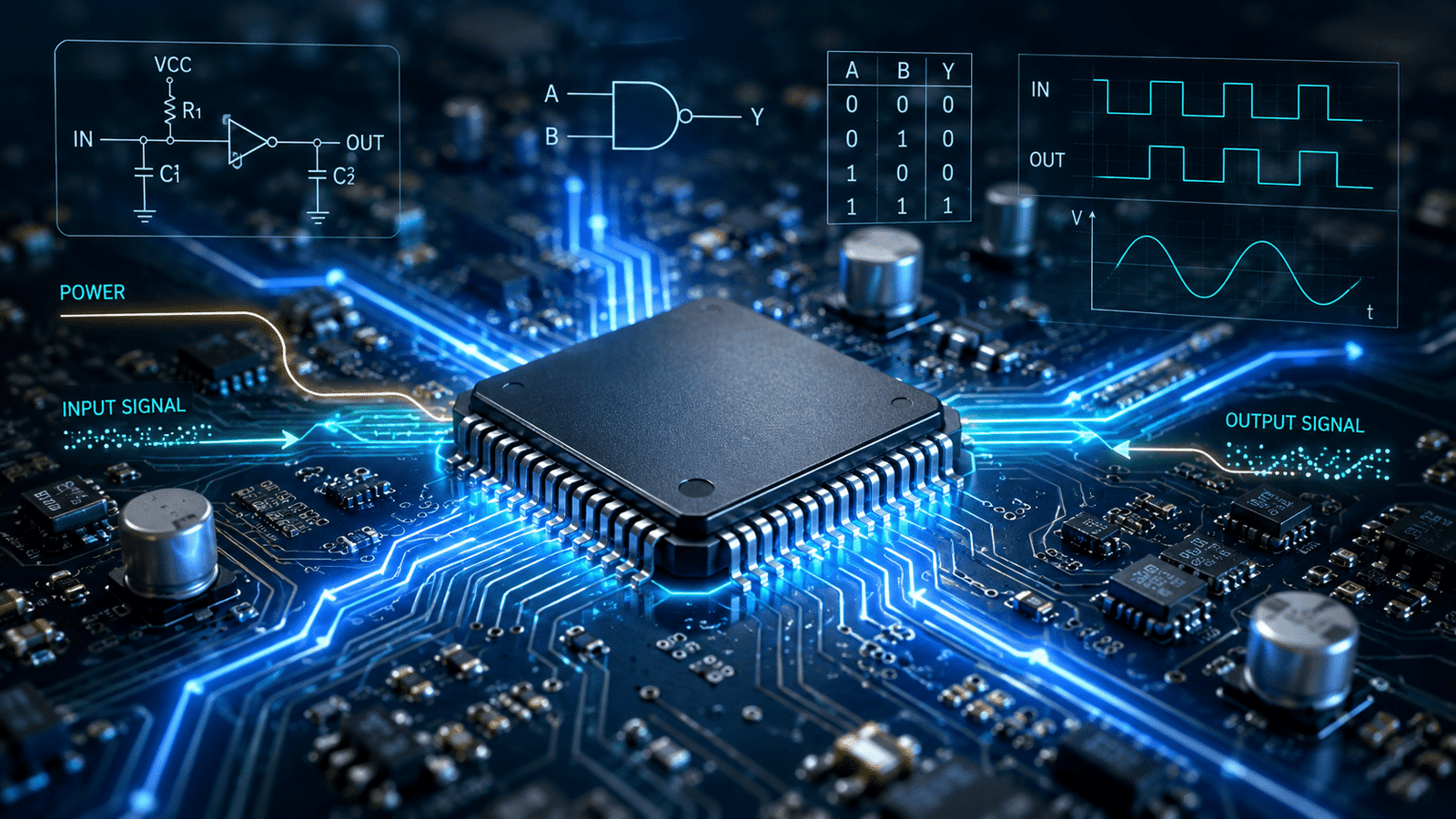
What is an electronic chip? An electronic chip, also called an integrated circuit (IC), is a tiny slab of semiconductor material—usually silicon—that packs billions of microscopic transistors onto a single piece just a few square millimeters in size. A single modern processor can hold over 100 billion transistors, each acting like an on-off switch. These chips control electricity flow, store data, and run calculations at billions of operations per second, powering devices from phones to cars.
So when people ask what’s an electronic chip, the short answer is this: it’s the brain behind nearly every device you touch, from your phone to your car.
These chips control how electricity flows, store data, and run calculations at speeds measured in billions of operations per second. A single modern processor can hold over 100 billion transistors, each one acting like a microscopic on-off switch.
Below, you’ll learn exactly how an electronic chip is made, what lives inside it, and why a fingernail-sized piece of silicon runs the digital world.
Quick Takeaways
- Electronic chips pack billions of transistors onto fingernail-sized silicon slabs.
- Each transistor acts as an on-off switch creating binary 1s and 0s.
- Modern processors hold over 100 billion transistors in millimeters of space.
- Chips control electricity, store data, and run billions of operations per second.
- Integrated circuits power nearly every device, from phones to cars.
What Is an Electronic Chip in Plain Language
An electronic chip is a tiny slab of silicon that holds billions of microscopic switches called transistors. These switches flip on and off to do math, store information, and run every digital device you own.
Engineers also call it an integrated circuit, because it packs a whole electronic circuit onto one piece of crystal.
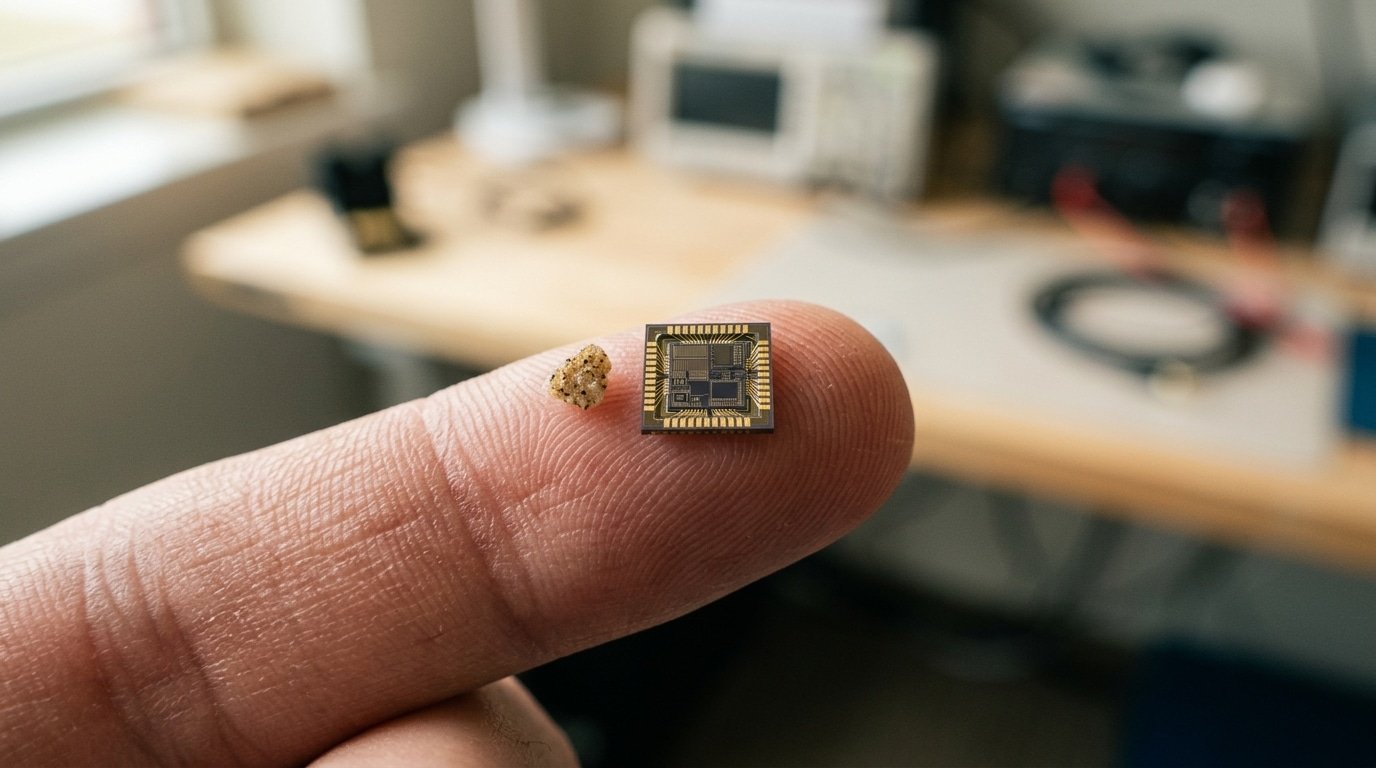
Picture a grain of sand. Now picture something the size of your fingernail.
A modern chip lives in that range, often only a few square millimeters of working surface. Yet inside that fingernail-sized space, a high-end chip can cram several billion transistors, according to Wikipedia.
Each transistor is far thinner than a human hair.
So what’s an electronic chip really doing? It controls the flow of electricity.
A transistor is just a gate. Open the gate, current passes, that’s a “1.”
Close it, current stops, that’s a “0.” String billions of these gates together and you get logic, memory, and decisions made trillions of times per second.
Here’s the part most explanations skip: silicon alone barely conducts electricity. Factories add tiny amounts of other elements (a step called doping) to control exactly how each region behaves. That precision is what separates a working chip from useless rock.
To make this concrete, the rest of this guide follows a single electron on its journey. You’ll see where it enters, which switches it flips, and how that creates the screen you’re reading right now.
Chip vs Semiconductor vs Integrated Circuit vs Microchip Untangled
Here’s the short version. These words overlap quite a bit, but they aren’t actually perfect twins. Semiconductor is the material itself.
Integrated circuit (IC) is the engineering name for the circuit. And Chip and microchip? Those are basically the everyday words people toss around for that very same circuit.
So when you find yourself wondering what is an electronic chip, you’re really just asking about an integrated circuit that’s been built on top of a semiconductor.
The mix-up comes from one simple thing. All four of these words can point at the very same object sitting there on your desk.
PCMag’s 2025 glossary says it pretty plainly, that “electronic chip,” “microchip,” “integrated circuit,” and “computer chip” all describe those tiny shrunken-down circuits sitting on a thin slice of semiconductor material.
Still, each one of these terms has a moment where it’s actually the correct pick.
- Semiconductor — reach for this when you’re talking about the material. Silicon only carries electricity when you actually want it to, which happens after doping, meaning you add tiny bits of impurities to control how the current flows. “Semiconductor industry” basically means the whole business that makes these materials and devices.
- Integrated circuit (IC) — use this one in engineering and on datasheets. It means a bunch of components, like transistors and resistors and capacitors, all combined into one circuit on a single piece.
- Microchip — this is the casual one you’d use in everyday talk. The “micro” part just nods to the microscopic size. A modern IC can really cram anywhere from thousands to several billion transistors inside, according to Wikipedia’s IC entry.
- Chip — the shortest and most common word of them all. It points to the small “chip” of silicon that’s been cut from a wafer.
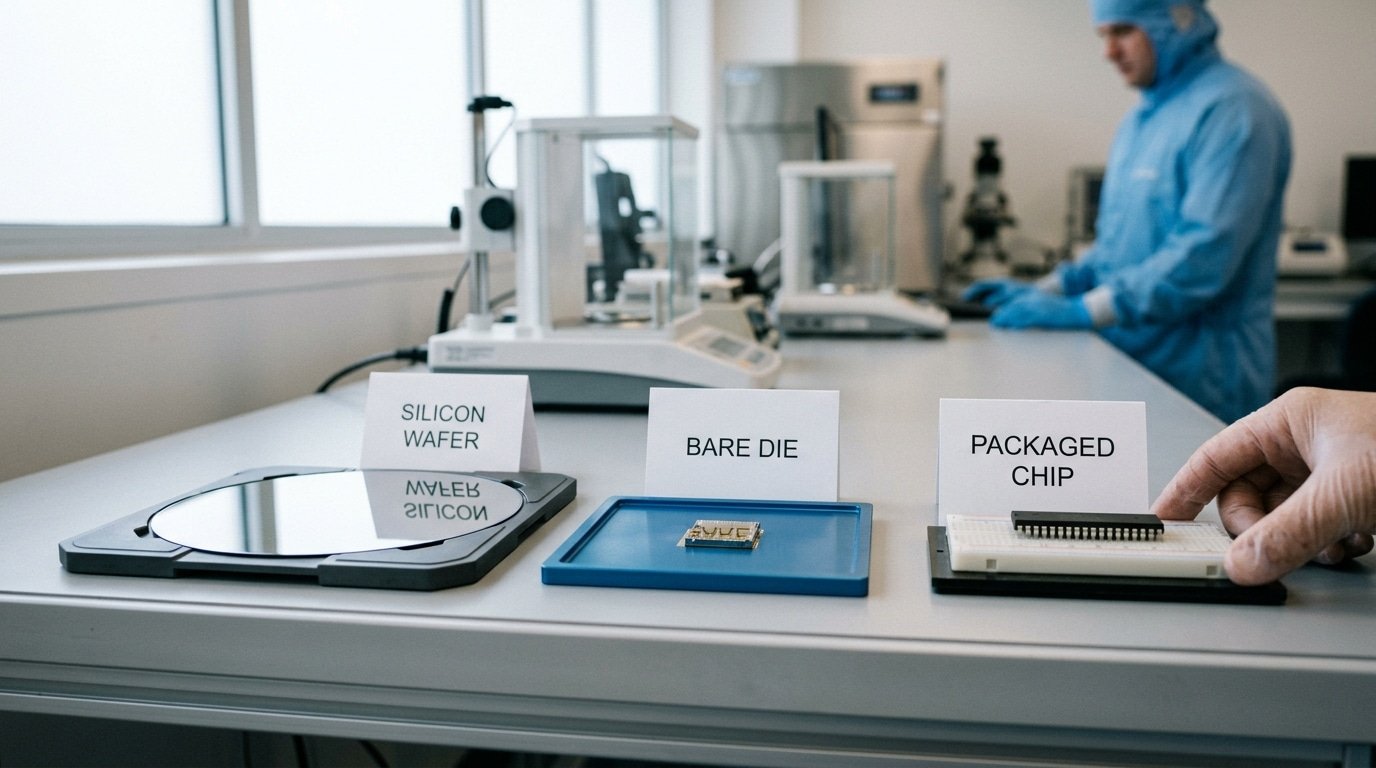
One little pro tip here. Don’t go calling the bare silicon die a “microchip” once it’s packaged up. Engineers save “die” for the unpackaged silicon and “chip” for the finished, packaged part. Honestly, mix those two up in a spec meeting and people will notice pretty fast.
What Is Physically Inside a Chip You Can Hold
Hold a chip between two fingers and you’re gripping a slab of silicon smaller than your fingernail. Inside that flake sit millions to over 100 billion transistors, the microscopic on/off switches that make a chip think.
A simple microcontroller might pack a few million. Apple’s M2 Ultra crams in 134 billion.
The scale is hard to picture, so try this. If each transistor were a single grain of rice, 134 billion grains would fill about 17 standard shipping containers.
All of that fits on a die just a few square millimeters wide (2025). That’s the real answer to what is an electronic chip at the physical level: impossible density on purpose.
The switches themselves are tiny. Leading-edge processors in 2026 use “3-nanometer” process nodes. For comparison, a single human hair is roughly 80,000 nanometers thick. The smallest features on these chips are narrower than some virus particles.
The Materials Actually Present
- Silicon — the base wafer, a semiconductor whose conductivity is tuned by doping (2025), meaning engineers add trace impurities like boron or phosphorus.
- Copper — the wiring. Modern chips stack 10 to 15 metal layers of copper to route signals between transistors.
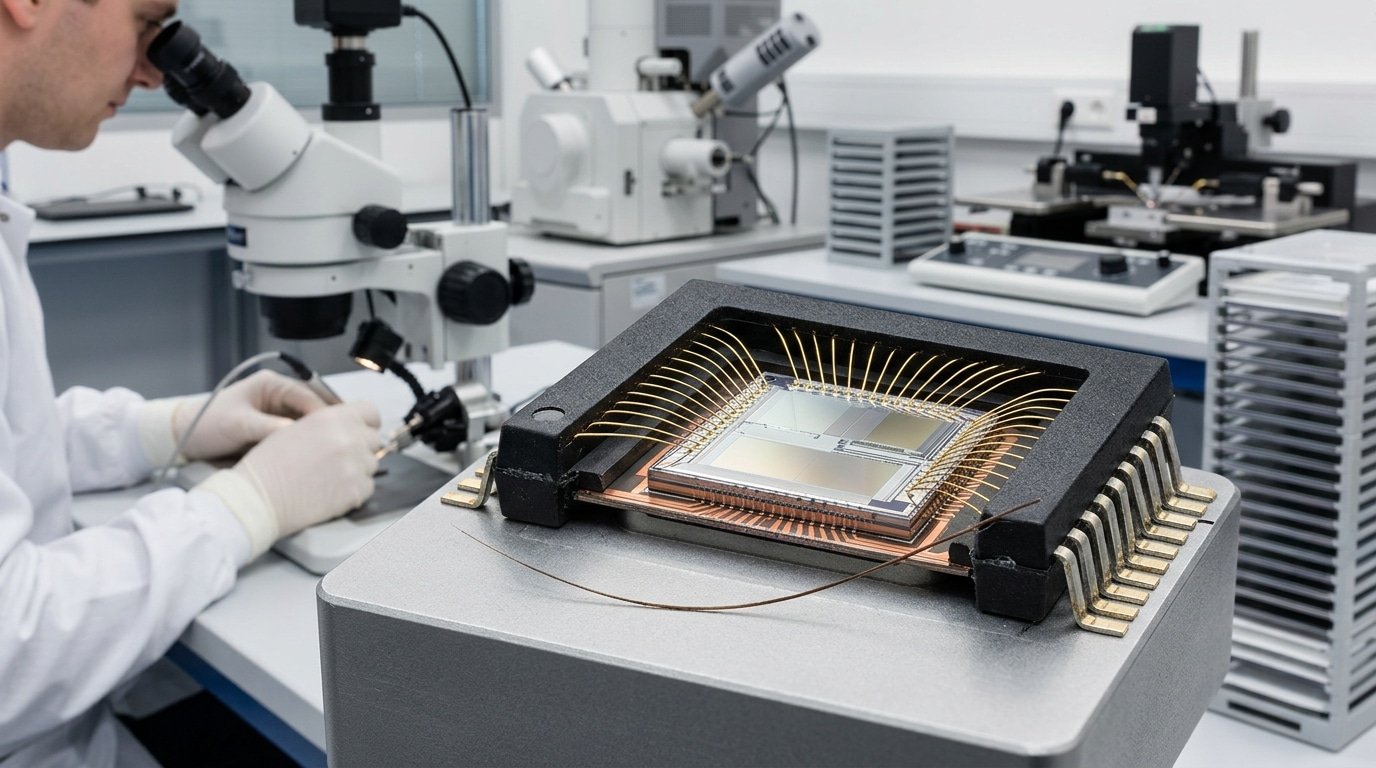
- Gold — thin bond wires connecting the silicon die to the package pins, prized for not corroding.
- Hafnium and other rare elements — used in the gate insulation to stop electrical leaks at tiny sizes.
A pro tip most hobbyists miss: the visible black rectangle you see is just the plastic or ceramic package. The real chip, the bare silicon die, is often smaller than a single letter on this page.
How a Chip Works When You Follow One Transistor Switch
A transistor is really just a switch that has no moving parts at all. When voltage reaches its control gate, electrons start flowing through and the switch turns “on”, which the chip reads as a binary 1.
Take that voltage away and the flow stops completely, and that becomes a 0. Every single task a chip handles begins with this one on-off action, repeated billions of times over.
So picture one electron entering the transistor’s source terminal. It has to make its way to the drain terminal on the other side.
Between them sits a thin channel of silicon. When the gate above it gets enough voltage, often around 0.7 volts in older designs, it pulls electrons into that channel and opens up a path for them.
The electron crosses over. Current starts flowing.
The chip reads a 1.
One switch on its own is basically useless. The clever part is wiring a bunch of them together into logic gates.
An AND gate needs two transistors both switched on before it outputs a 1. An OR gate, though, fires if either one of them is on.
Stack a few of these gates together and you build an adder, which is a circuit that actually does math. Loop the output back into the input and you get a flip-flop. That’s a small circuit that holds onto one bit of memory.
Those same flip-flops and logic gates, multiplied across billions of switches, are the real answer to what is an electronic chip doing inside your phone. It’s counting in 1s and 0s, very fast. Modern chips flip each transistor billions of times every second.
Single chips now pack up to several billion transistors (2025), so the number of possible gate combinations is almost endless.
Here’s one thing I’ve learned. Most of the leakage failures I’ve run into trace back to the gate voltage drifting too low, which leaves switches half-open and quietly wasting power. Keep that threshold clean and the whole chain of logic stays reliable.

How a Chip Is Made From Sand to Finished Wafer
A chip starts as ordinary beach sand and ends as a silicon slab packed with circuits. The journey takes purification, crystal growing, slicing, patterning with light, etching, and packaging.
⚠️ Common mistake: Assuming a bigger chip means a faster chip. This happens because people equate physical size with power, but performance comes from transistor density, not surface area. A fingernail-sized processor can pack over 100 billion transistors into a few square millimeters. The fix: judge a chip by its transistor count and process node (e.g., 5nm), not how large it looks.
Each step adds precision measured in atoms. One stray dust speck can ruin a whole chip, which is why fabrication plants cost tens of billions of dollars to build.
First, sand is heated and refined until it becomes electronic-grade silicon that’s approximately 99.9999999% pure, that’s nine nines. The purified silicon is melted and pulled into a single crystal log called an ingot using the Czochralski process.
The ingot gets sliced into thin discs. Modern factories use silicon wafers up to 300 mm wide, each holding hundreds of chips that are cut apart later.
Patterning Circuits With Light
Here the real magic happens. Photolithography (printing patterns using light) coats the wafer with a light-sensitive layer, then shines ultraviolet light through a mask to draw circuit shapes. Etching washes away exposed material, carving the pattern. This repeats 50 to 100 times, stacking layer upon layer.
- Doping: adding tiny impurities to control how silicon conducts electricity
- Deposition: laying down thin films of metal or insulator
- Yield: the share of working chips per wafer — defects directly cut profit
Why does one defect kill a chip? Features now measure a few nanometers wide, thousands of times thinner than a human hair.
A single particle landing in the wrong spot breaks a connection. That’s why cleanrooms keep air 10,000 times cleaner than a hospital.
Understanding what an electronic chip requires explains why factories run in near-total isolation.
Finally, good chips are tested, cut, and sealed in plastic or ceramic packages with metal leads. Those leads connect to circuit boards in your devices.
Everyday Devices With Chips and What Each Chip Actually Does
Your phone alone holds dozens of chips, and each one does a different job. To understand what an electronic chip does in real life, look at the devices you touch daily.
A smartphone runs on at least four major chips. A car runs on more than a thousand.
Each chip has one task, and they all work together without you noticing.
Take your smartphone apart and you find a clear division of labor:
- CPU (central processing unit) — the main brain that runs apps and the operating system.
- GPU (graphics processing unit) — draws every pixel for games, video, and the screen interface.
- Modem — handles 5G and Wi-Fi signals, turning radio waves into data.
- Image signal processor (ISP) — cleans up photos from the camera sensor in real time.
Many phones pack these into one “system-on-chip” (SoC), like Apple’s A-series. That means several functions share a single piece of silicon to save space and power.
Cars tell a bigger story. A modern vehicle contains over 1,000 chips, according to the World Economic Forum.
These run airbags, anti-lock brakes, the touchscreen, the rear camera, and engine timing. When the 2021 chip shortage hit, automakers lost roughly 11.3 million vehicles in production because they couldn’t get enough of these parts.
| Device | Chip job |
|---|---|
| Microwave | Microcontroller runs the timer and power level |
| Smart watch | Low-power SoC tracks heart rate and steps |
| Credit card | Secure element chip encrypts your payment data |
That credit card chip is a real example of what’s an electronic chip doing security work, it generates a unique code for each transaction, which is why chip cards cut counterfeit fraud sharply after rollout.
Common Types of Chips and How They Differ
Not all chips do the same job. A CPU thinks in steps, a GPU thinks in parallel, a memory chip just remembers, and a microcontroller runs a whole gadget on its own.
The answer to what’s an electronic chip changes depending on which type you mean, they share silicon and transistors but split into very different roles.
Here is how the main families stack up:
| Chip Type | Typical Function | Transistor Count | Example Device |
|---|---|---|---|
| CPU | Runs the operating system, handles logic step by step | 10–30 billion | Apple M3, AMD Ryzen 9 |
| GPU | Crunches thousands of math jobs at once | up to 80 billion | NVIDIA RTX 5090 |
| Memory chip | Stores data and program code | billions of cells | Samsung DDR5 RAM |
| Microcontroller (MCU) | Controls one device, all-in-one | thousands to millions | STM32, ATmega328 |
| AI accelerator | Speeds up neural network math | tens of billions | Google TPU v5 |
Why does a GPU beat a CPU for graphics and AI? A CPU has a few very fast cores, great for one task at a time.
A GPU has thousands of smaller cores working side by side. Drawing a screen or training an AI model means doing the same math millions of times, so parallel wins.
The NVIDIA H100 holds around 80 billion transistors, dwarfing a desktop CPU.
A microcontroller goes the opposite way. It packs a small processor, memory, and input pins onto one cheap chip. That’s why it runs a coffee maker for pennies, an ATmega328 costs under $2 in volume. You don’t need 80 billion transistors to heat water.
Who Makes Chips and How Much One Costs
A few companies dominate chip production, and prices swing wildly. A basic microcontroller can cost under one dollar. A flagship processor or AI accelerator can top approximately $1,000. Understanding what an electronic chip costs starts with knowing that designing a chip and physically building it are two separate businesses.
Most chip companies don’t own factories. They are fabless, meaning they design the chip and pay someone else to make it. Apple, Nvidia, and Qualcomm work this way. The factory that actually prints the silicon is called a foundry.
One foundry leads the world. TSMC in Taiwan makes chips for hundreds of clients and holds the largest share of contract manufacturing.
Samsung runs the second-biggest foundry and also designs its own chips. Intel builds chips for itself and, since 2024, has expanded its foundry service to outside customers too.
No foundry can run without one Dutch company. ASML is the only firm that builds extreme ultraviolet (EUV) lithography machines, the room-sized tools that carve the tiniest circuit patterns.
A single EUV machine sells for over $150 million. Without ASML, TSMC and Samsung couldn’t make their most advanced chips.
Here is where the money actually goes by chip type:
| Chip Type | Typical Price | Example Use |
|---|---|---|
| 8-bit microcontroller | approximately $0.30–$2 | Toy, remote, appliance |
| Phone application processor | approximately $40–$150 | Smartphone brain |
| Desktop CPU | approximately $200–$700 | Home computer |
| Data-center AI chip | approximately $25,000–$40,000 | Nvidia H100 training accelerator |
Why such a gap? A tiny microcontroller uses old, cheap manufacturing and sells in billions of units.
An AI chip uses the newest 3-nanometer process and packs the most transistors, so each approximately 300 mm wafer yields fewer good chips. That scarcity, plus heavy research cost, pushes prices into the thousands.
Next, common questions about chips get clear answers.
Frequently Asked Questions About Electronic Chips
Quick answers to the questions people ask most about chips. Each one stays short enough to read in a few seconds.
What’s an electronic chip used for?
An electronic chip does three core jobs: it processes data, stores data, or controls other parts. A microprocessor runs calculations, a memory chip remembers information, and a logic or analog chip links sensors and signals together. Phones, cars, and microwaves all rely on them.
What metal is used to make electronic chips?
The base isn’t a metal at all, it is crystalline silicon, a semiconductor. But real metals carry the signals inside. Copper forms the tiny wires connecting transistors, and aluminum or gold bond the chip to its package leads. Older chips used aluminum wiring before copper took over.
Is a chip the same as a microchip?
Yes, in everyday speech. The terms electronic chip, microchip, integrated circuit, and computer chip all point to the same thing: tiny circuits on a slice of semiconductor. Engineers prefer “IC” in datasheets, but the words are interchangeable.
How many transistors fit on one chip?
Modern chips hold from thousands up to several billion transistors on one silicon piece. A simple sensor chip might use a few thousand. A flagship phone processor in 2026 packs over 15 billion.
Can a chip be repaired if it breaks?
No. A failed chip can’t be fixed, the features are nanometers wide, far too small for any repair tool. You replace the whole part, which is why every chip is tested before it ships.
Key Takeaways on What a Chip Is and How It Works
A chip is billions of electron switches on a slab of silicon smaller than a fingernail. Those switches, called transistors, flip between on and off to do every job your devices need: math, memory, and moving signals. That single idea explains everything else.
Strip away the jargon and the words start to make sense. “Integrated circuit” describes the design, “semiconductor” describes the material, and “microchip” or “computer chip” are just everyday names for the same thing.
They overlap because they describe one object from different angles. Modern chips pack from thousands up to several billion transistors onto one piece of silicon, which is why a single phone processor outpowers a 1990s supercomputer.
Remember the journey too. Ordinary sand becomes silicon purified to nine nines, gets sliced into approximately 300 mm wafers, and each wafer gets etched 50 to 100 times with circuits before being cut and packaged in plastic or ceramic.
That sand-to-processor path takes weeks and dozens of steps. It’s why understanding what’s an electronic chip means understanding both physics and manufacturing.
One practical tip from years of teardowns: don’t judge a chip by its size. The smallest package on a board is often the most expensive die inside. A power management chip the size of a grain of rice can cost more than a larger memory chip beside it.
Want to go deeper? Flip over a device you own. Find the largest black square on its board, read the printed part number, and search it. You will learn exactly which job that chip does in your hands right now.