

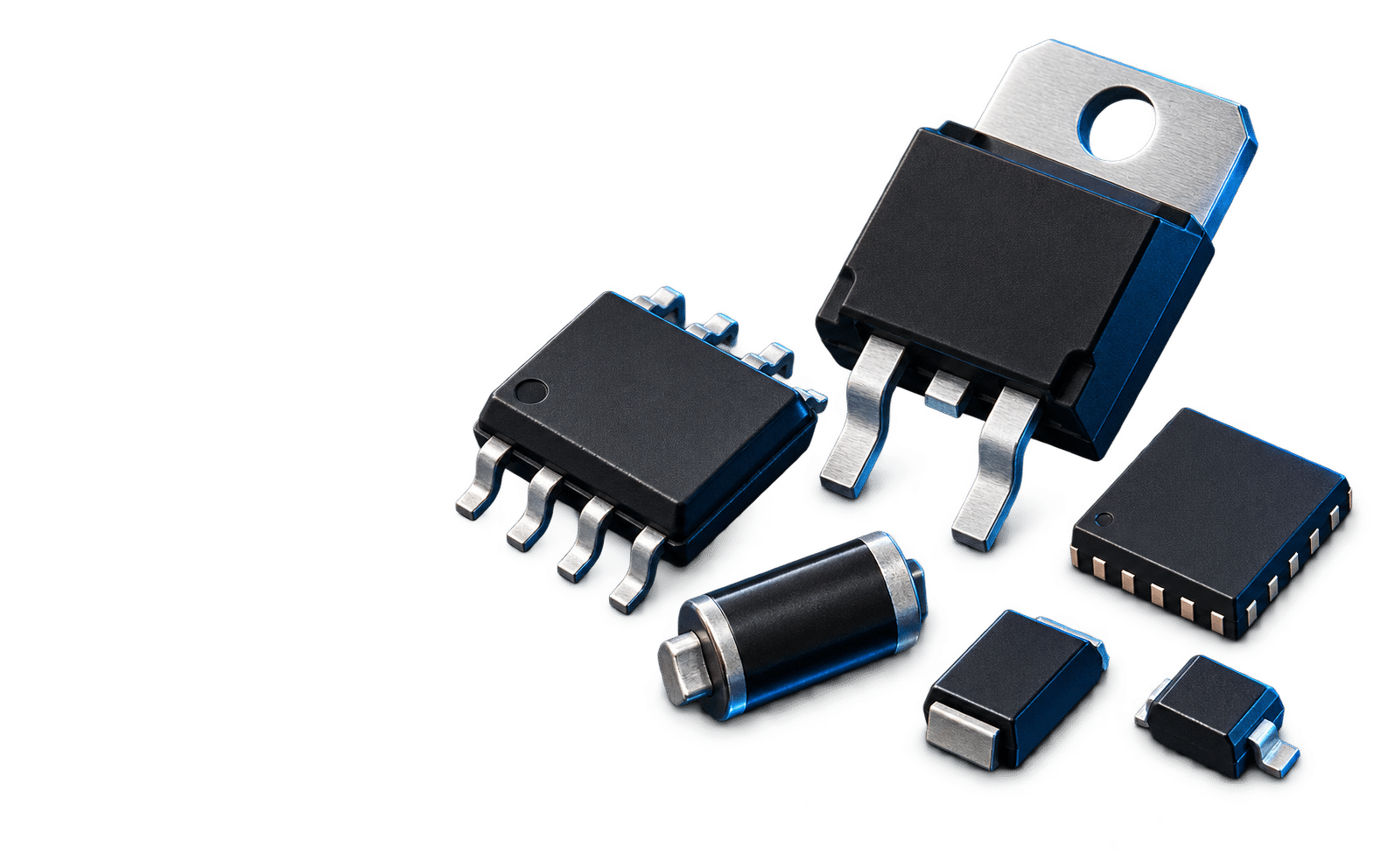
Analog, Power & Protection Components
Source amplifiers, converters, power-management ICs, power semiconductors, isolation devices, interfaces, and protection components around the actual electrical, thermal, package, lifecycle, quality, and delivery requirement.
Start With the Electrical Function
Choose the role the device must perform, then narrow the product family using signal range, accuracy, bandwidth, efficiency, voltage, current, switching, isolation, protection, temperature, package, and qualification requirements.
Amplifiers & Analog Front Ends
Operational, instrumentation, current-sense, audio, isolation, transimpedance, and application-specific signal paths.
- Input range, noise and offset
- Gain, bandwidth and stability
- Supply, load and package
ADCs, DACs & Mixed-Signal ICs
Precision measurement, control outputs, audio, acquisition, instrumentation, and mixed-signal processing.
- Resolution and sampling rate
- Accuracy, dynamic range and latency
- Reference, interface and channels
Regulators, Converters & PMICs
LDOs, buck, boost, buck-boost, controllers, supervisors, battery management, charging, and power sequencing.
- Input and output conditions
- Current, efficiency and transient load
- Topology, frequency and thermal limits
MOSFETs, IGBTs, Diodes & Modules
Power switching, rectification, motor drives, converters, inverters, load switching, and high-energy systems.
- Voltage, current and switching loss
- Gate drive and safe operating area
- Package, mounting and cooling
Isolators, Drivers & Protection Devices
Digital and analog isolation, gate drivers, optocouplers, ESD/TVS protection, surge suppression, and circuit protection.
- Isolation rating and insulation system
- Transient, surge and clamping need
- Channel, speed and certification context
References, Timing, Interface & Supervisory
Voltage references, clocks, timing, analog switches, multiplexers, level translation, monitoring, reset, and interface support.
- Accuracy, jitter and stability
- Logic, signal and voltage domains
- Startup, monitoring and sequencing
Keep Signal Integrity and Power Integrity Connected
A component that looks suitable in isolation can fail once source impedance, noise, transient behavior, layout, thermal design, load profile, protection coordination, or compliance requirements are included.
Define what must be measured or driven
Source, amplitude, frequency, bandwidth, noise, accuracy, common-mode range, load, latency, and conversion interface.
Define how energy enters, changes, and reaches the load
Input range, rail sequence, load profile, efficiency, transient response, switching frequency, thermals, faults, and protection.
Four Ways the Sourcing Review Can Begin
Start with the exact MPN when known. When the family remains open, share the electrical function and operating conditions that determine an acceptable direction.
Exact MPN Sourcing
Confirm manufacturer, ordering suffix, quantity, required date, destination, package, grade, and evidence expectations.
Function-to-Family Direction
Start with source, load, voltage, current, signal range, accuracy, bandwidth, efficiency, thermal, and package limits.
Shortage, Allocation or EOL
Review source condition, date or lot information, available records, alternatives, test scope, and timing before approval.
Power or Signal-Chain BOM
Keep amplifiers, converters, references, regulators, switching devices, magnetics, and protection lines in one review.
Match the Device to the Electrical Environment
Voltage, temperature, noise, isolation, transients, duty cycle, thermal path, qualification, and service life can change the acceptable component even when the basic function is the same.
Industrial Automation
Drives, PLC I/O, control cabinets, robotics, instrumentation, sensors, and industrial communications.
Focus: noise · isolation · temperature · lifecycleAutomotive & Transportation
Power distribution, body electronics, sensing, motor control, charging, interfaces, and protection.
Focus: grade · transients · qualification · safetyEnergy & Power Conversion
Inverters, charging, storage, metering, solar, UPS, adapters, supplies, and power distribution.
Focus: efficiency · voltage · switching · thermalsCommunications & Infrastructure
Power rails, high-speed interfaces, timing, RF support, network equipment, and remote systems.
Focus: noise · timing · density · reliabilityMedical & Precision Instrumentation
Low-level measurement, isolation, acquisition, control, monitoring, laboratory and diagnostic equipment.
Focus: accuracy · leakage · isolation · change controlComputing & Data Systems
Point-of-load regulation, sequencing, monitoring, hot-swap, thermal management, and interface protection.
Focus: current · transient load · efficiency · densityTurn the Circuit Need Into Comparable Criteria
These fields organize the first product and sourcing direction. Final selection remains subject to the complete design, current manufacturer documentation, qualification, layout, and engineering approval.
| Decision Area | Questions to Confirm | Why It Changes the Part |
|---|---|---|
| Signal or Power Function | Amplify, filter, convert, regulate, switch, isolate, monitor, sequence, clamp, or protect | Defines the correct family before detailed parameter comparison begins. |
| Electrical Operating Range | Input/output voltage, current, common mode, load, frequency, source impedance, fault conditions | Determines ratings, topology, headroom, safe operating area, and margin. |
| Performance & Accuracy | Noise, offset, drift, bandwidth, resolution, linearity, efficiency, transient response, switching loss | Separates general-purpose, precision, high-speed, low-power, and power-conversion directions. |
| Thermal & Mechanical | Ambient, junction temperature, duty cycle, thermal resistance, package, mounting, cooling, board area | Changes derating, package, layout, heatsinking, and long-term operating margin. |
| Isolation & Protection | Working voltage, transient, surge, ESD, insulation, clearance, creepage, response, clamping, coordination | Defines device technology, ratings, package, standards context, and protection strategy. |
| Lifecycle & Qualification | Industrial or automotive grade, qualification, longevity, change control, revision, source and evidence needs | Determines acceptable ordering codes, supply routes, records, and approval gates. |
Browse Analog, Power & Protection Brands
Open a manufacturer solution page when the preferred brand is known, or use the full directory when the requirement remains open across several manufacturers.






Confirm Ratings, Package, Grade, and Supply
Family name and headline specifications are not enough. Confirm the complete ordering code and the operating, quality, commercial, and delivery conditions that define an acceptable component.
Review Quality AssuranceIdentity & Ordering Code
Manufacturer, family, ratings, channel or topology, package, grade, revision, and suffix.
Circuit & Operating Fit
Electrical range, source, load, timing, accuracy, efficiency, transients, layout, thermals, and environment.
Lifecycle & Supply
Lifecycle status, source basis, condition, quantity, timing, lot information, and alternate authority.
Evidence & Release
Labels, packaging, visual review, traceability, documents, agreed tests, exceptions, and approval.
Packaging & Delivery
Reel, tube, tray or bulk format, protective handling, labels, documents, carrier, destination, and tracking.
Questions Before Sending the Requirement
Final component selection and circuit approval should use current manufacturer documentation and the complete electrical, thermal, mechanical, and compliance context.
View All Frequent QuestionsCan I request one exact analog or power component?
Yes. Send the complete MPN, manufacturer, quantity, required date, destination, and any package, grade, date-code, documentation, or inspection requirements.
What should I provide when the exact part number is not known?
Start with the electrical function, input and output ranges, load, accuracy or efficiency targets, frequency, transients, temperature, package, qualification, lifecycle, and any layout or compliance constraints.
What matters when comparing an alternate power device?
Compare voltage and current ratings, conduction and switching losses, gate requirements, safe operating area, package, thermal path, qualification, reliability data, and the engineering authority required to approve the change.
Can I upload a complete power or signal-chain BOM?
Yes. Include quantities, target dates, destination, approved manufacturers, alternate authority, operating context, and which line items require additional evidence or testing.
What evidence can be reviewed before shipment?
The agreed scope can include part identity, labels, packaging, available lot or traceability information, visual and marking review, test evidence, exceptions, and shipment preparation.
Send the Analog, Power, or Protection Requirement
Start with an exact MPN, BOM, shortage list, circuit function, or operating condition. Include what is known now and clarify the remaining decision fields during review.