


Samsung Memory, Storage, and Semiconductor Solutions.
Connect the bandwidth, capacity, endurance, power, interface, package, lifecycle, and supply requirements of your system with a suitable Samsung product direction—then source the exact part number with order-specific evidence and terms.

Search the Exact Samsung Part.
Enter a Samsung memory, eStorage, SSD, NAND, processor, or image-sensor ordering code.
Start With the Memory or Storage Workload.
Selecting by brand or capacity alone can miss bandwidth, power, endurance, interface, package, qualification, and lifecycle constraints. Begin with the complete system requirement.
Feed AI, Server, and Data Workloads
Define memory bandwidth, capacity per channel, CPU or accelerator compatibility, rank and module architecture, power envelope, thermal airflow, RAS needs, and qualification plan.
DDR5, HBM, GDDR, enterprise SSD, and data-center storage directionsBalance Performance and Power
Review sustained bandwidth, standby behavior, package height, capacity, processor support, thermal limit, interface generation, boot role, data retention, and update strategy.
LPDDR, UFS, eMMC, processor, and compact managed-storage directionsBuild for Vehicle Platforms
Match ADAS, cockpit, telematics, or gateway workload with bandwidth, endurance, temperature, qualification, functional-safety context, firmware, package, and production lifecycle.
Automotive LPDDR, UFS, eMMC, GDDR, and AutoSSD directionsSupport a Released or Legacy Platform
Confirm the complete part number, generation, density, organization, package, speed grade, temperature grade, controller or firmware baseline, board revision, and alternate authority.
DDR3/DDR4, LPDDR3/4X, SLC NAND, eMMC, UFS, and exact-part reviewFind the Right Samsung Product Family.
Use the portfolio family to narrow the architecture, then confirm the exact generation, interface, density, organization, package, grade, qualification, lifecycle, and supply condition.
DDR Memory
DDR5, DDR4, and established DDR generations for server, networking, industrial, PC, and embedded computing platforms.
Review DDR DirectionLPDDR Memory
Low-power DRAM directions for mobile, edge AI, automotive, compact computing, and always-on systems.
Review LPDDR DirectionHBM and GDDR
High-bandwidth and graphics-memory directions for AI acceleration, HPC, graphics, networking, and data-intensive processing.
Explore Compute NeedsUFS and eMMC
Managed embedded-storage directions for mobile, industrial, automotive, edge, gateway, and connected-device designs.
View eStorage PartsSSD Solutions
Enterprise, data-center, client, and automotive SSD directions selected by interface, form factor, workload, capacity, and endurance.
Compare Storage PathsNAND Flash
Raw NAND directions for controlled embedded designs that manage controller, ECC, bad blocks, endurance, retention, and lifecycle.
Review NAND ChecksExynos and Connectivity
Processor, modem, RF, UWB, and wireless-connectivity directions for mobile, wearable, automotive, and intelligent edge platforms.
Explore System RolesISOCELL Sensors
Mobile, automotive, global-shutter, and time-of-flight image-sensor directions selected with optics, processing, interface, and image-quality targets.
Explore Vision NeedsStart With Frequently Requested Samsung Parts.
Use these parts as direct search entry points. Confirm the full suffix, generation, density, package, grade, lifecycle, controller or firmware context, and supply before purchasing.
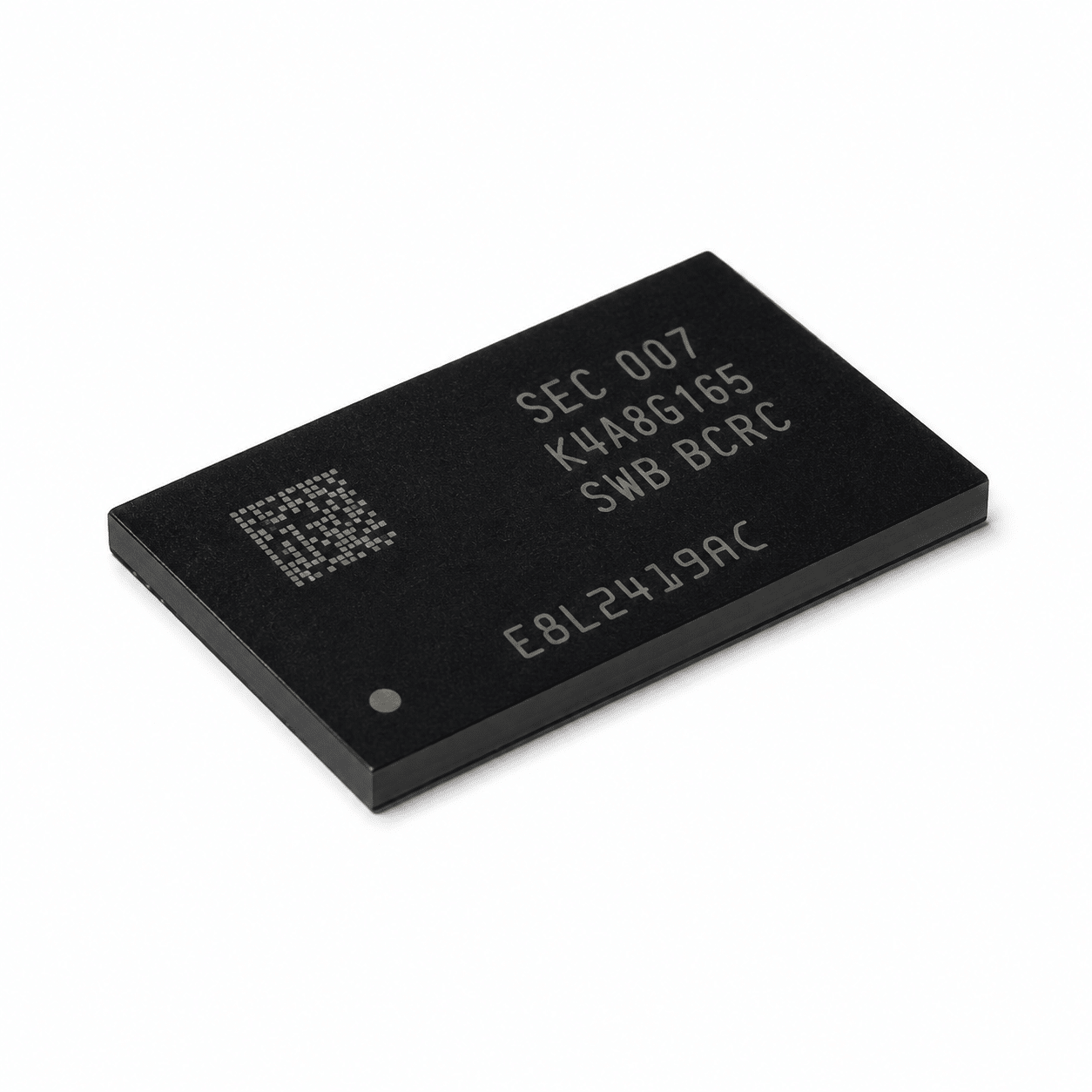 DDR4 SDRAM
K4A8G165WB-BCRC
8Gb x16 DDR4 component direction for computing, networking, and embedded memory designs.
View Product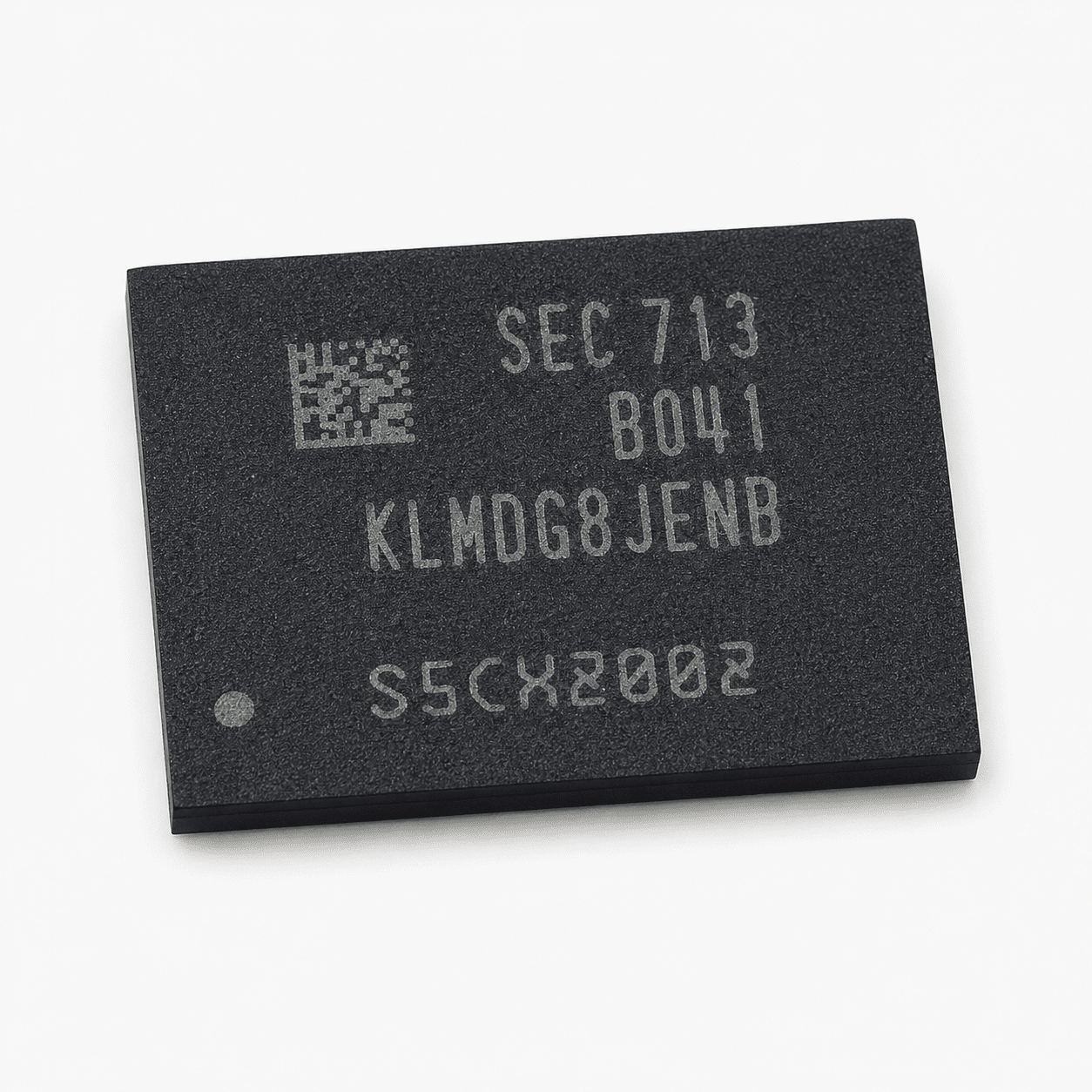 EMBEDDED eMMC
KLMDG8JENB-B041
Managed embedded-storage direction for systems requiring integrated NAND and controller functions.
View Product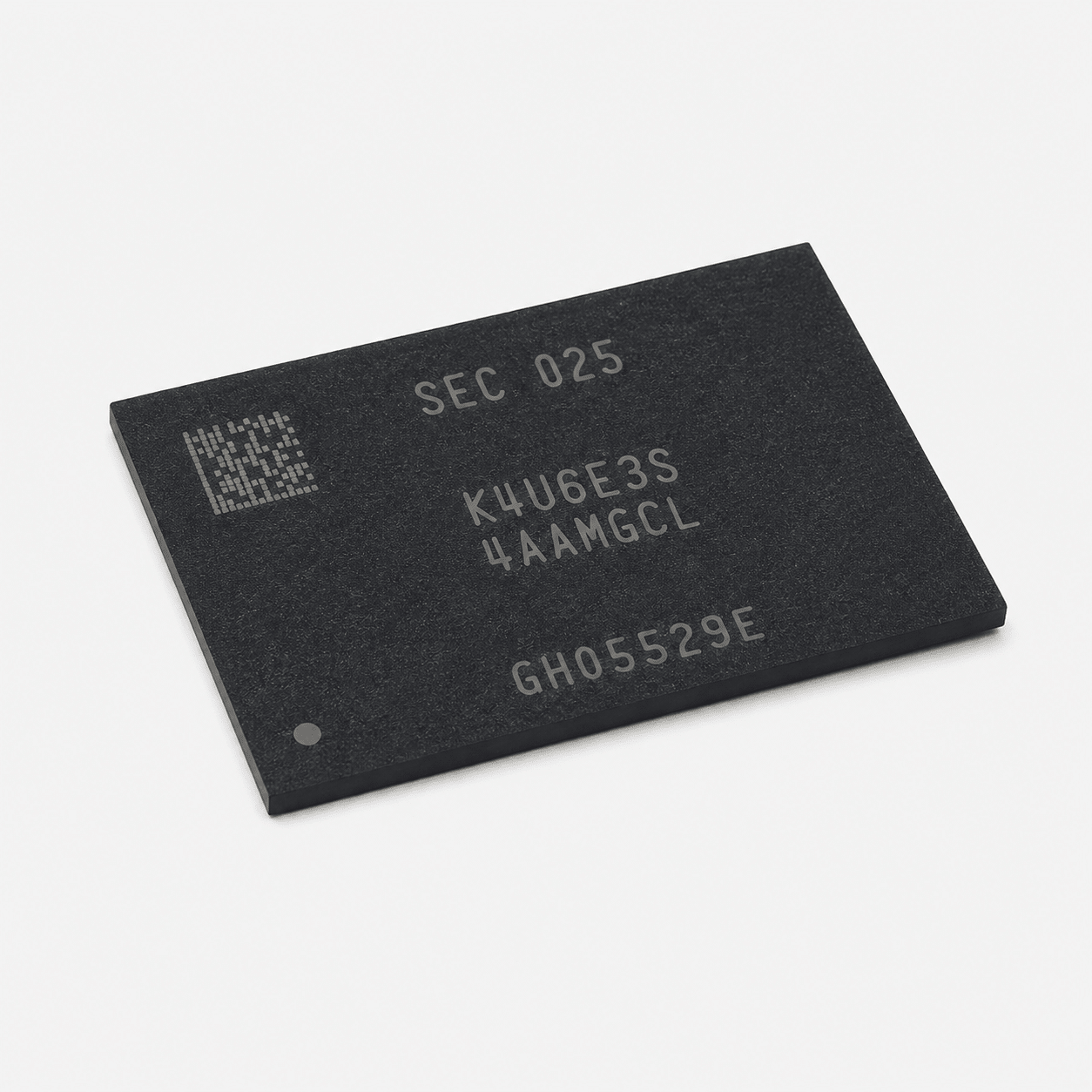 LPDDR4X SDRAM
K4U6E304EB-MGCG
Low-power memory direction for compact edge, automotive, and embedded processing platforms.
View Product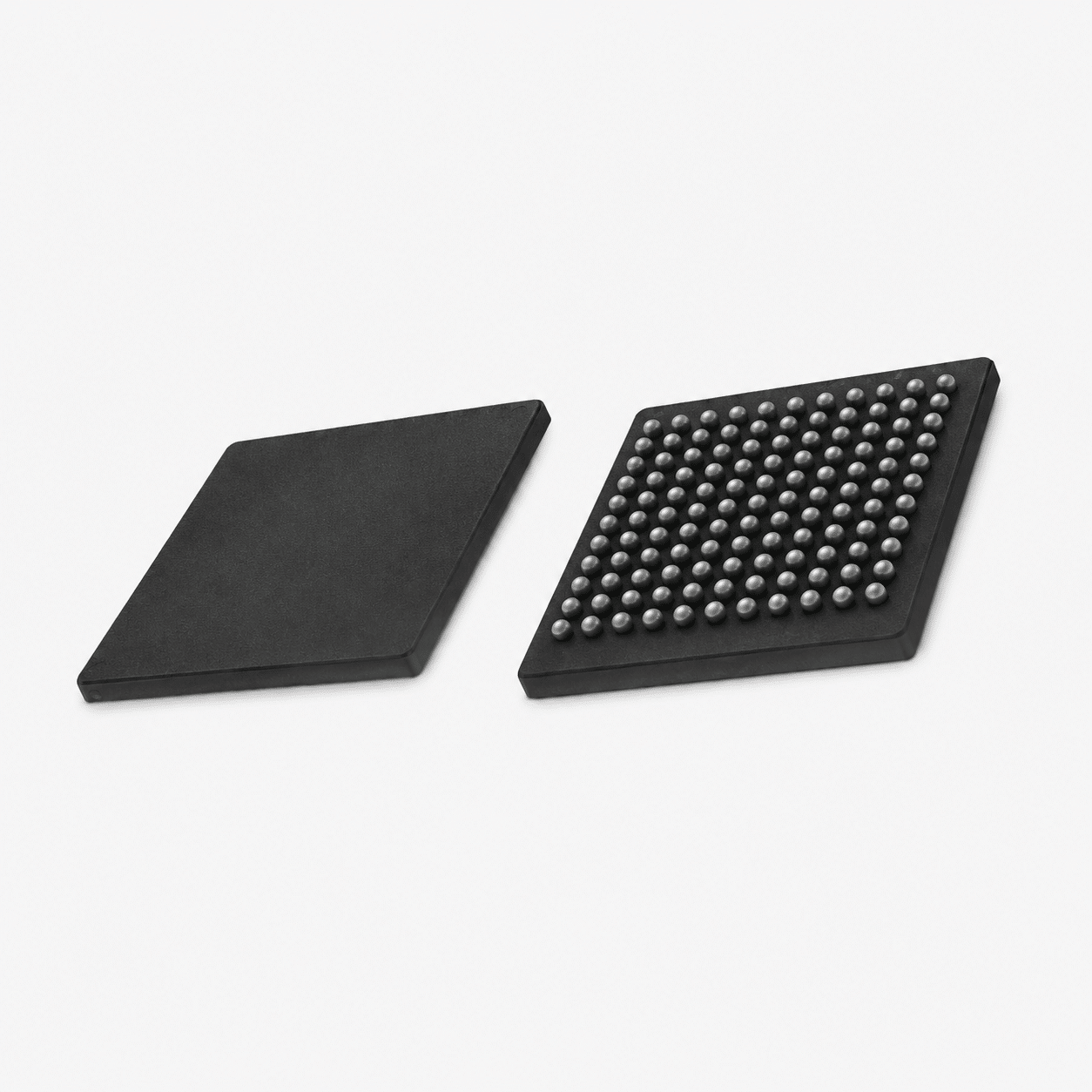 UFS STORAGE
KLUEG8UHDB-C2D1
High-performance embedded-storage direction for responsive mobile, vision, and edge systems.
View ProductMatch the Workload to a Samsung Direction.
Choose the application and primary requirement. The result gives a starting product direction and the system details to confirm next.
DDR5, HBM, and Enterprise Storage
Begin with bandwidth per channel or stack, capacity, accelerator or CPU compatibility, power and thermal limits, memory topology, storage workload, endurance, form factor, qualification, and production forecast.
Design Memory Around the Complete System.
Review compute, memory, storage, interfaces, controller and firmware, power, thermal design, qualification, software, security, and lifecycle as one platform.
High-Bandwidth Compute
Align accelerator or CPU, HBM or DDR generation, topology, capacity, power, thermal design, RAS, storage tiers, qualification, and forecast.
Long-Life Embedded Systems
Confirm controller support, boot and data roles, temperature, endurance, retention, package, change control, software image, and approved alternatives.
Routers and Edge Infrastructure
Define packet-processing workload, memory bandwidth, buffer capacity, boot storage, telemetry logging, interfaces, power, and service lifecycle.
Compact Low-Power Platforms
Balance LPDDR and UFS performance with package height, capacity, standby power, sustained thermals, processor support, security, and update needs.
ADAS, Cockpit, and Telematics
Match memory and storage to compute load, startup, logging, qualification, temperature, endurance, functional-safety context, and vehicle lifecycle.
Imaging and Sensor Processing
Coordinate sensor format, optics, exposure, frame rate, image processor, buffer memory, storage throughput, interface, power, and image-quality validation.
Compare Samsung Memory and Storage Paths.
Use the family role as a starting point. Final selection depends on the host platform, electrical and thermal limits, workload, qualification, lifecycle, and exact orderable device.
| Direction | Best Starting Point | Confirm Before Selection | Typical System Role |
|---|---|---|---|
| DDR | High-capacity working memory | Generation, speed, density, organization, topology, package, grade | Server, networking, PC, industrial compute |
| LPDDR | Performance with low power | Processor support, bandwidth, package, power states, thermals, grade | Mobile, automotive, compact edge AI |
| HBM / GDDR | Very high memory bandwidth | Accelerator compatibility, stack or bus architecture, power, cooling | AI, HPC, graphics, data acceleration |
| UFS / eMMC | Managed embedded storage | Interface version, capacity, package, controller, firmware, endurance | Boot, application, media, and device data |
| SSD | High-capacity block storage | Interface, form factor, workload, endurance, power-loss behavior, firmware | Enterprise, data center, client, automotive |
| Raw NAND | Controller-managed embedded storage | NAND type, geometry, ECC, bad-block management, endurance, retention | Custom embedded and established platforms |
Turn the System Need Into an Orderable Part.
A general family or capacity is not enough. Confirm the complete ordering code and the system, quality, commercial, and delivery conditions that define an acceptable supply.
Full part number, manufacturer, family, generation, density, organization, and revision context.
Interface, package, grade, controller or host support, board, firmware, software, and qualification.
Bandwidth, latency, capacity, endurance, retention, power, temperature, and lifecycle target.
Quantity, required date, destination, source basis, condition, evidence, terms, and alternatives.
Browse Samsung Memory and Storage Parts.
Filter representative DRAM, low-power memory, and storage products. Search above when you already have an exact ordering code.
K4A8G165WB-BCRC
8Gb x16 DDR4 component direction. Confirm speed bin, package, temperature grade, voltage, host support, board timing, lifecycle, and offered supply.
View K4A8G165WB-BCRCKLMDG8JENB-B041
Managed embedded-storage direction. Confirm capacity, interface revision, package, firmware, endurance, temperature, boot configuration, qualification, and lifecycle.
View KLMDG8JENB-B041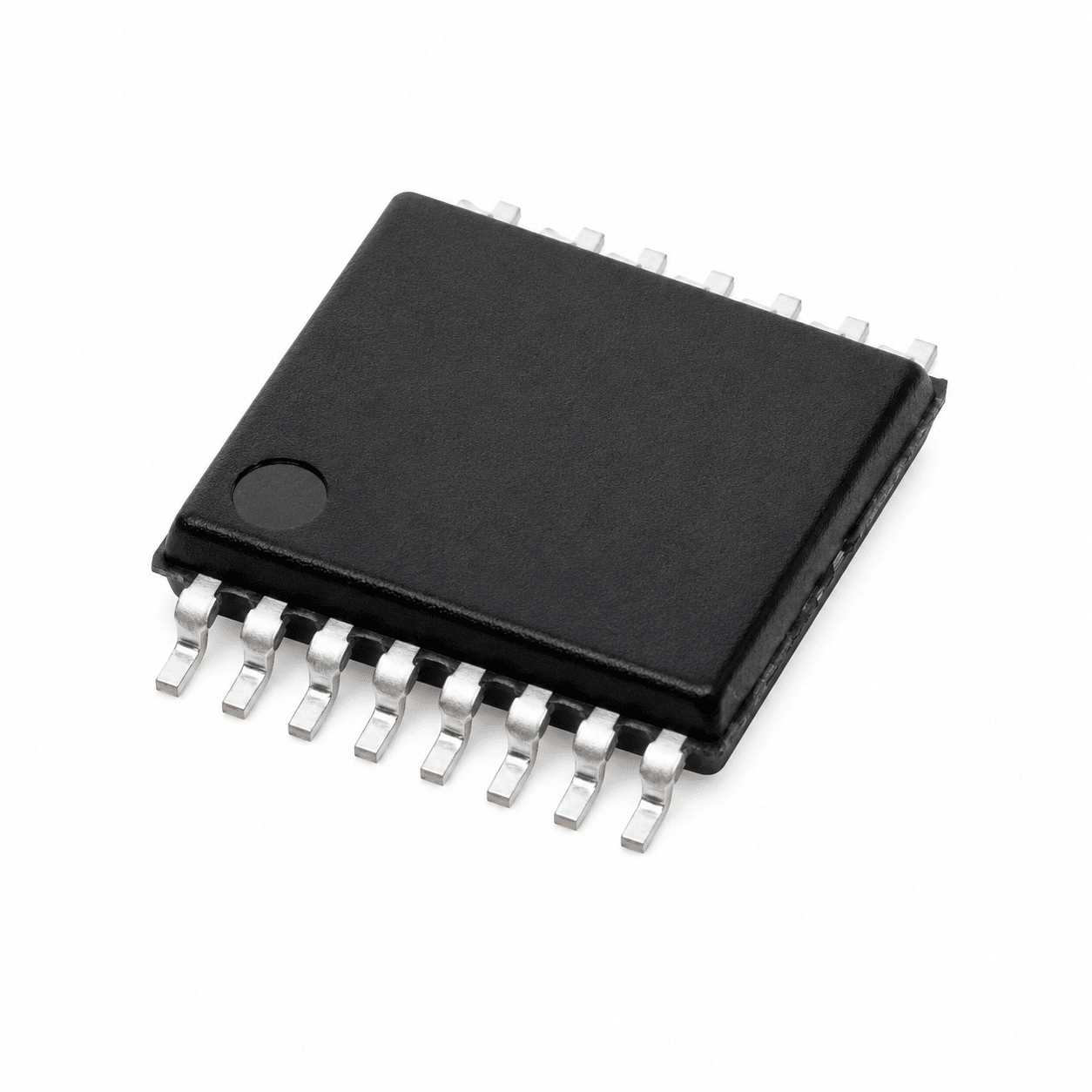
K4F6E304HB-MGCH
Low-power DRAM direction for released compact systems. Confirm density, organization, package, speed, temperature, processor support, board, and alternate authority.
View K4F6E304HB-MGCH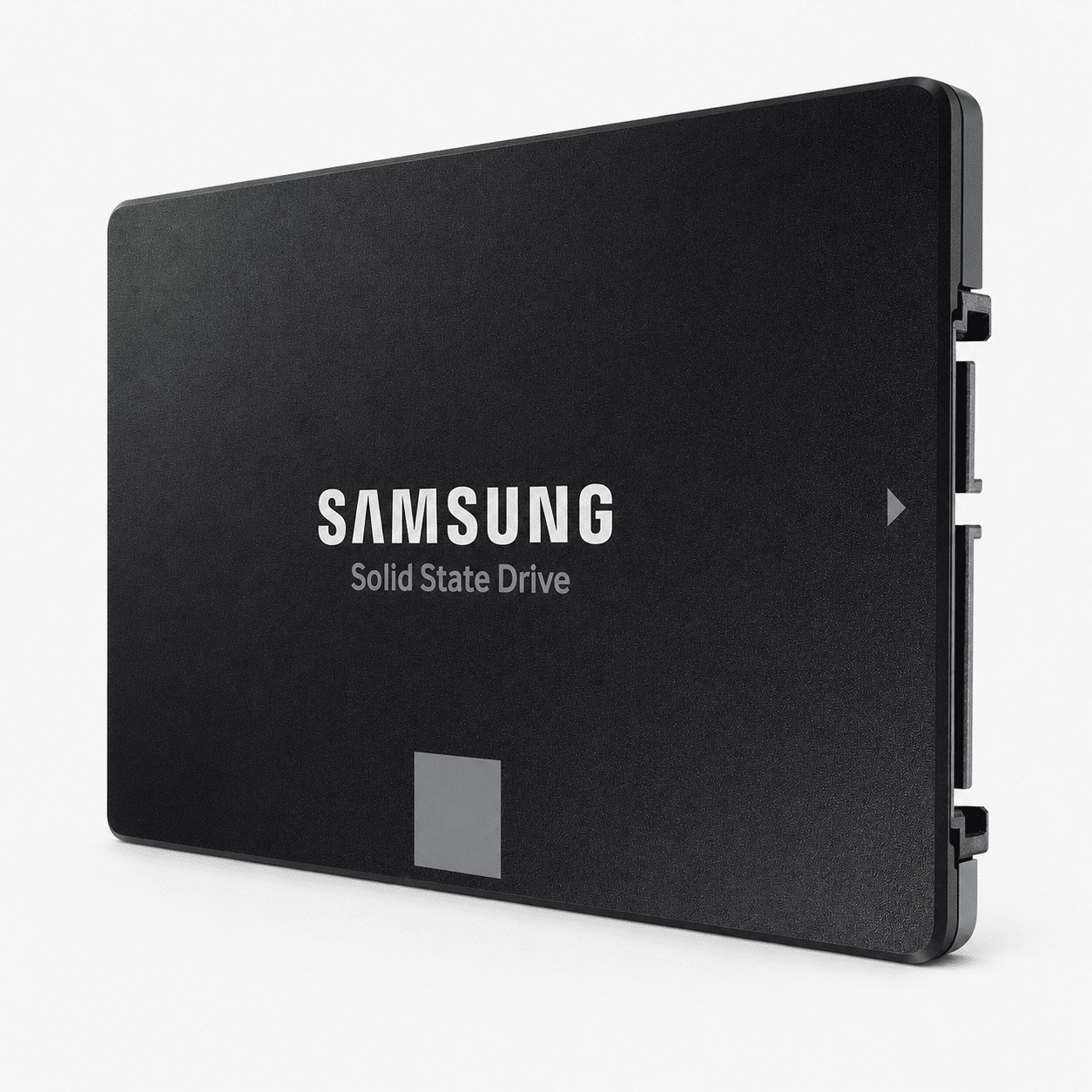
MZ-77E1T0BW
870 EVO 1TB SATA 2.5-inch client SSD direction. Confirm workload suitability, endurance, form factor, firmware, warranty channel, availability, and commercial terms.
View MZ-77E1T0BW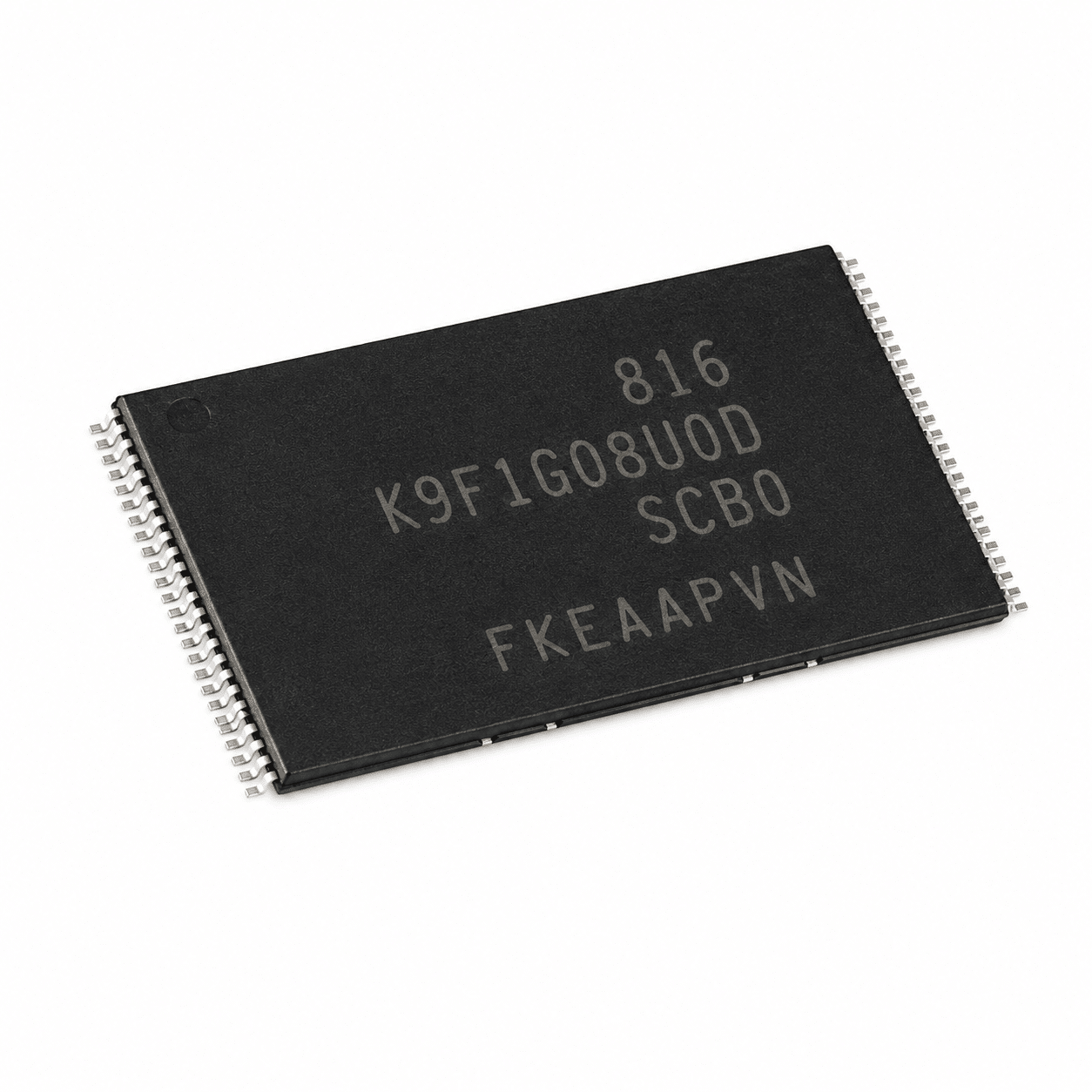
K9F1G08U0D-FIB0
Raw SLC NAND direction for established embedded platforms. Confirm geometry, package, ECC and controller support, endurance, retention, grade, and lifecycle.
View K9F1G08U0D-FIB0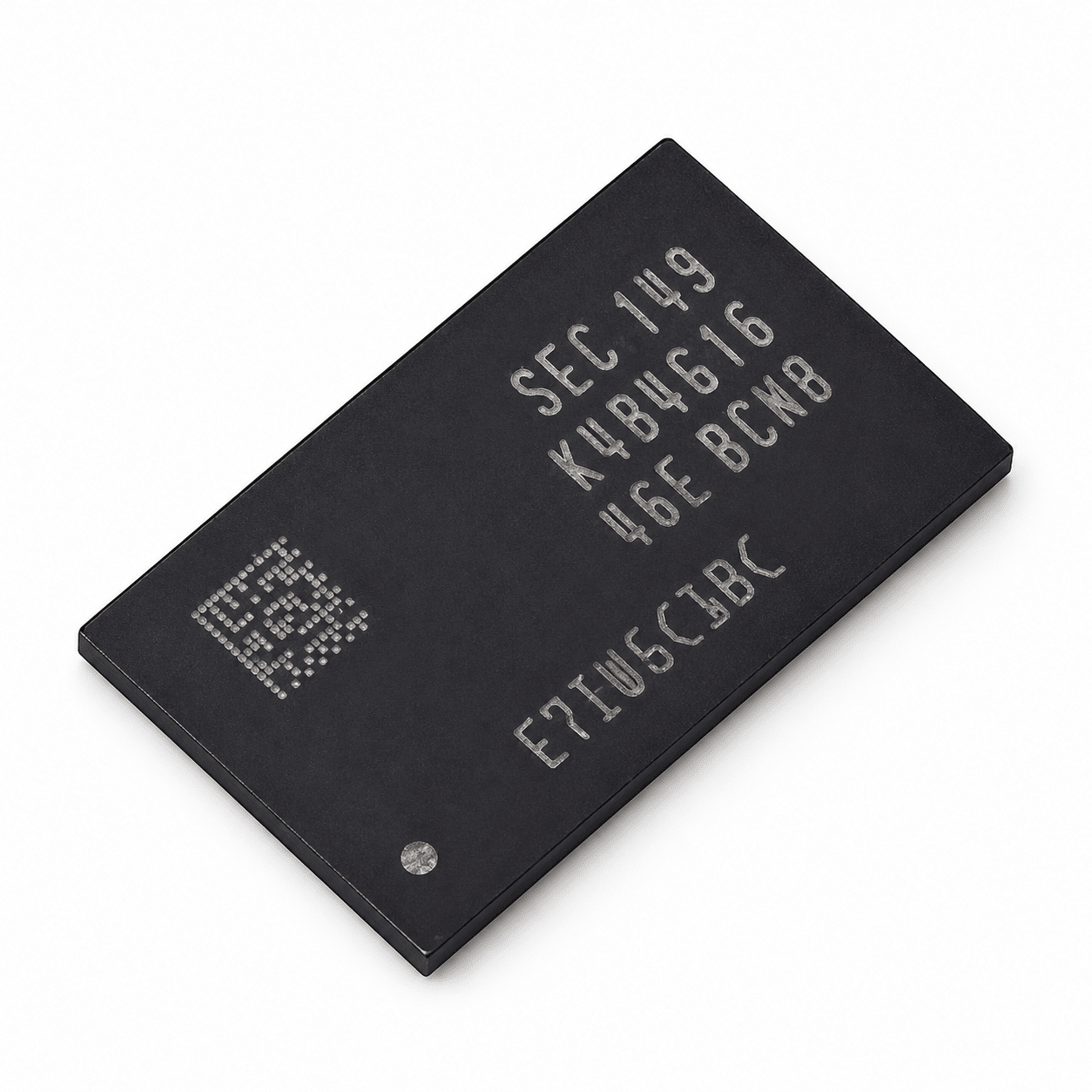
K4B2G1646F-BCK0
2Gb x16 DDR3 component direction for released equipment. Confirm full suffix, package, speed, temperature, voltage, board timing, lifecycle, and replacement authority.
View K4B2G1646F-BCK0K4U6E304EB-MGCG
Low-power DRAM direction for compact processing systems. Confirm density, organization, package, bandwidth, voltage, grade, host support, thermals, and lifecycle.
View K4U6E304EB-MGCGKLUEG8UHDB-C2D1
UFS embedded-storage direction. Confirm capacity, interface version, package, host compatibility, firmware, endurance, temperature, qualification, and lifecycle.
View KLUEG8UHDB-C2D1 ORDER-SPECIFIC REVIEW
Review the Exact Part and Evidence Before Shipment.
YURUNOX reviews the quoted Samsung component against the complete part number, package and grade, lifecycle, source basis, quantity, commercial terms, and agreed evidence.
From Memory Part Number to Purchase Approval.
A complete RFQ makes the system, lifecycle, quality, commercial, and delivery expectations visible before the order moves forward.
K4A8G165WB-BCRC for a Released Controller
The buyer needs the exact DDR4 device used by a validated board. Any alternative must be reviewed against density, organization, package, speed, voltage, timing, temperature grade, qualification, and engineering authority.
Align the Platform
Confirm application, host or controller, full part number, board and software baseline, quantity, date, and alternate authority.
Review the Supply
Record source basis, offered quantity, condition, packing, available date or lot information, price basis, validity, and exceptions.
Agree the Evidence
Define label, packaging, visual, microscopic, marking, X-ray, electrical, documentation, or other requirements when suitable and agreed.
Approve the Release
Review evidence, exceptions, terms, shipping documents, protective packing, carrier handoff, destination, and tracking.
Samsung Component Sourcing FAQ.
Prepare a clearer part search, design-in request, production order, shortage review, legacy-platform need, or BOM quotation.
What information should I send for a Samsung memory RFQ?
Send the complete part number, application, host or controller, board or platform revision, quantity, required date, destination, approved alternatives, qualification needs, and requested evidence. For new selection work, add bandwidth, capacity, package, grade, power, thermal, and lifecycle targets.
Can YURUNOX help when I only know the system requirement?
Yes. Start with the workload, host platform, interface, bandwidth, capacity, endurance, power, temperature, package, qualification, production forecast, and lifecycle. YURUNOX can help organize a suitable Samsung product direction for engineering review.
What must be checked before replacing one DRAM device with another?
Compare generation, density, organization, speed, voltage, timing, package and pinout, temperature grade, refresh behavior, host support, signal integrity, software or firmware dependencies, lifecycle, and validation authority. A similar capacity is not enough.
How do I choose between eMMC, UFS, SSD, and raw NAND?
Choose by host interface, performance, capacity, package or form factor, controller ownership, firmware, endurance, retention, power-loss behavior, temperature, qualification, security, update strategy, and lifecycle. Raw NAND places more management responsibility on the system.
Can you review Samsung parts for automotive applications?
Yes. Provide the vehicle function, platform, host, full part number or target family, qualification and temperature requirements, functional-safety context, expected workload, endurance, capacity, lifecycle, forecast, evidence scope, and approval process.
Can you source older Samsung DDR, NAND, eMMC, or UFS parts?
YURUNOX can review active, constrained, EOL, and hard-to-find requests. Availability, source basis, condition, packing, date or lot information, lifecycle status, evidence, terms, and alternatives are confirmed for the actual offer rather than assumed.
How is part authenticity or condition reviewed?
The review can align the quoted identity, source basis, labels, packaging, condition, moisture protection, visual and microscopic observations, markings, available records, and additional testing when suitable and agreed. The scope depends on the actual order and risk.
Can I submit a BOM with several memory and storage lines?
Yes. Include one row per complete part number with quantity, target date, destination, approved alternatives, lifecycle constraints, and evidence requirements. Add host, board, software, firmware, or qualification context where substitution risk is important.
Send Your Samsung Part Number, BOM, or System Requirement.
Include the application, host, full part number or preferred family, interface, capacity, package, grade, workload, quantity, target date, destination, alternatives, and evidence requirements.