

Date Code vs Lot Code vs Trace Code in Electronic Components
A date code tells you when a manufacturer-defined event occurred. A lot code identifies a controlled production group. A trace code is the key that connects a device or package to deeper records. The fields may overlap, but they are not interchangeable—and none of them proves authenticity by itself.

A manufacturer-defined production, assembly, packaging, inspection, or other time reference.
A controlled group of material used for containment, segregation, or investigation.
An identifier used to retrieve the relevant manufacturing, die, assembly, test, or shipment history.
Use the code that matches the control you actually need.
Request a date-code window only for a real time-based rule. Request a lot identifier when batches must be segregated or contained. Request traceability evidence when you need to connect received material to provenance, processing, quality, or shipment records.
- Do not treat every YYWW marking as the same manufacturing event.
- Do not assume the same date code means the same lot.
- Do not decode another brand or package with a generic online chart.
- Compare device markings with labels, records, and the approved source.
Time reference: year/week, year/month, or another manufacturer-defined calendar period.
Batch identity: one assembly flow, wafer group, test lot, package run, or another controlled boundary.
Record link: lot trace, die trace, site, package, barcode, 2D code, or internal identifier used for retrieval.
The terms describe different parts of one evidence chain.
The code name matters less than the function defined by the original component manufacturer. Start with the exact product-family marking guide, factory label, and transaction record.
| Identifier | Primary purpose | What it may contain | What it does not prove by itself |
|---|---|---|---|
| Date code | Time reference for production or a defined process event. | Often year/week, year/month, or an encoded calendar period. The event may be fabrication, assembly, packaging, inspection, or another manufacturer-defined step. | A unique lot, authorized provenance, correct storage, authenticity, or suitability for a specific program. |
| Lot code | Batch identity, segregation, and containment. | A manufacturer-assigned number or alphanumeric code tied to a controlled group of material or processing. | That the buyer can decode the lot without manufacturer records—or that all material sharing a date code belongs to one lot. |
| Trace code | Connection to manufacturing and supply-chain records. | Lot trace, die trace, plant or assembly code, barcode, 2D mark, or another internal identifier. It may also include date information. | A universal format, full disclosure of internal records, or item-level serialization unless the manufacturer states that capability. |
ECIA notes that manufacturers define the process event behind a date code—for example encapsulation, fabrication, packaging, or inspection. A buyer should not assume that every YYWW field represents the same event.
Two official examples show why a universal decoder fails.
These examples do not create a rule for every TI or Microchip device. They show the correct method: use the official definition for the exact manufacturer, product family, package, and quality program.
A lot trace code can identify one controlled assembly flow.
TI describes its seven-digit lot trace code as a device marking that represents a single lot processed through one controlled assembly flow. TI separately describes a die trace code for certain devices. In its QML guidance, TI also explains that a YYWW date code controls inventory age, while an optional suffix can distinguish multiple lots assembled in the same week or a sub-lot split.
Buyer lesson: the same week does not automatically mean the same manufacturing lot.A short trace code may require manufacturer lookup.
Microchip package-marking documentation can show a YY/WW date code separately from a lot trace field. One UDFN example states that the trace code can identify assembly year and week only by contacting Microchip. The visible characters are therefore a lookup key, not a promise that every buyer can decode them independently.
Buyer lesson: record the exact code and product context instead of guessing its meaning.Real investigations show what a code mismatch can reveal—and what it cannot prove alone.
A useful traceability guide should go beyond definitions. These documented cases show how a receiving inconsistency, a deliberately altered date mark, or a broken record chain changes the next action.

The “Magic Part” appeared to be manufactured after it was received.
NASA counterfeit-parts training shows a component marked with date code 0347. In the training example, that code meant the 47th week of 2003—November 2003—but the part had been received on June 3, 2003.
The right response is not to declare the part counterfeit from four digits alone. It is to preserve the part and packaging, quarantine the material, verify the exact marking convention, compare the purchase and receiving records, contact the approved supplier or original component manufacturer, and escalate inspection or testing.
Read the NASA/JPL training handout →Requested “newer” dates were reproduced by remarking old parts.
In a 2012 investigation, the U.S. GAO used a fictitious company to buy 16 military-grade electronic parts from Internet-platform vendors. None of the 16 vendors supplied legitimate parts. All 12 samples bought as rare parts or with postproduction date codes were classified as suspect counterfeit by the test laboratory. GAO reported that some date markings had been altered to make parts appear newer. The sample was deliberately small and not statistically generalizable.
Review GAO-12-375 →The traceability problem surfaced after parts entered an assembly.
A 2012 U.S. Senate Armed Services Committee report records that Raytheon notified the Navy in September 2011 that suspect counterfeit transistors had been integrated into three electromagnetic-interference filters in electronics units intended for SH-60B helicopter FLIR systems. The case illustrates why a device mark must remain connected to shipment, assembly, and downstream product records.
Read Senate Report 112-167 →TI documents how one week can contain several separate lots.
TI's 2025 aerospace and defense quality supplement states that QML products can use YYWW plus an optional suffix to identify multiple lots assembled in the same week or a sub-lot split. For several other TI product classes, the associated date code is for inventory-age control and does not trace an individual lot. This is the practical reason a buyer cannot replace a lot requirement with “same YYWW.”
Open the TI quality supplement →A traceability review should follow the material from device to shipment record.
Small packages may carry only an abbreviated mark. The inner pack or reel label often holds the full MPN, quantity, lot/date data, and barcode. Shipping and supplier records connect that physical package to the transaction.
Device mark
Logo, abbreviated part mark, date or trace field, site code, and pin-one indicator. Useful for a physical consistency check, but often incomplete.
Inner pack label
Full MPN, quantity, factory lot, date field, barcode, pack date, MSL or handling information. Preserve before splitting or opening controlled material.
Shipment record
Purchase order, packing list, invoice, source statement, CoC when required, lot list, and agreed inspection or test records.
Manufacturer history
Assembly, wafer or die, test, quality-conformance, PCN, and other internal history when available for the product and program.


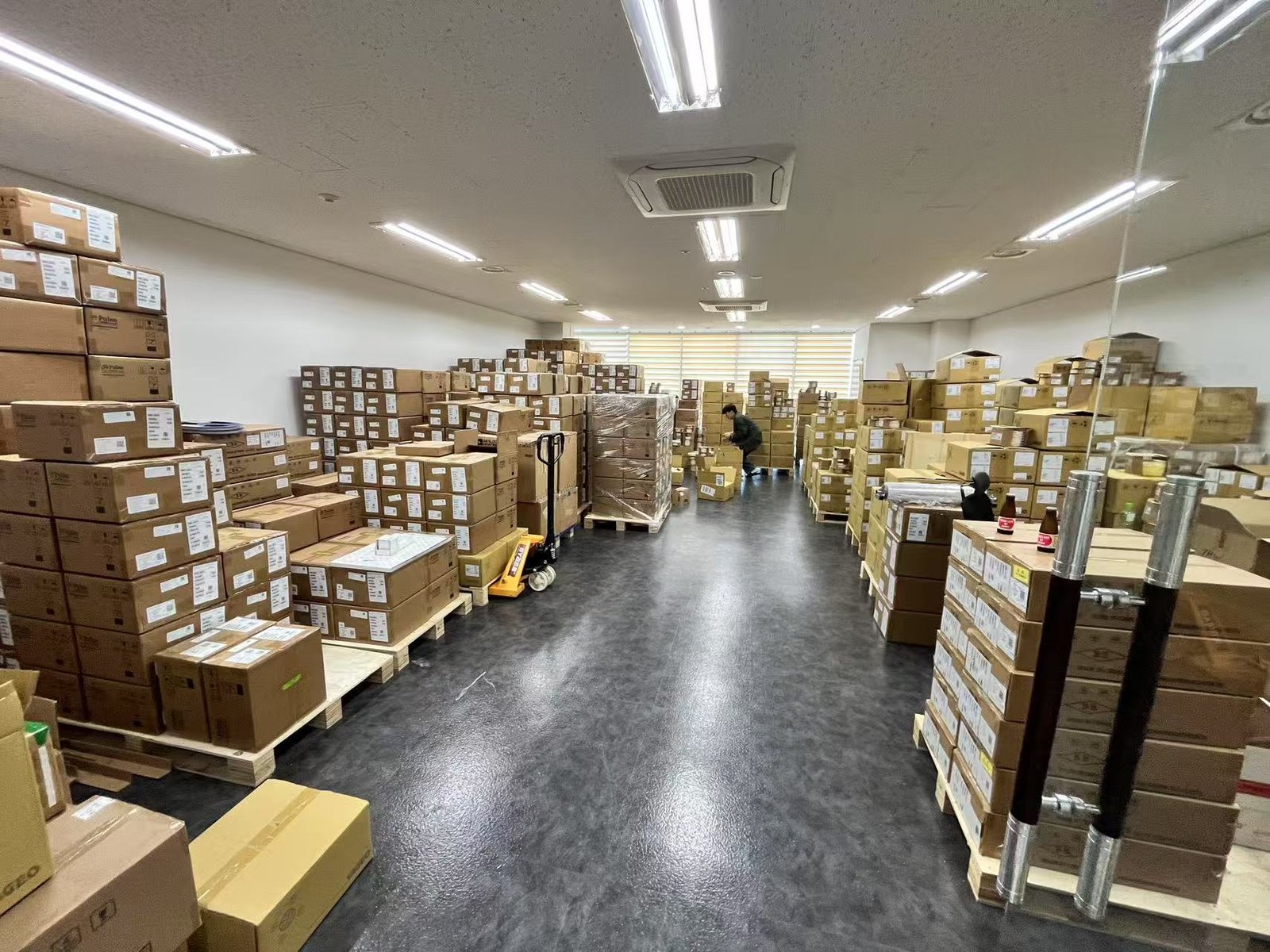
Use each code as evidence—not as a complete acceptance decision.
Date code
- Supports a defined manufacturing-time window.
- Helps separate material before or after a known change.
- Supports inventory-age or customer flow-down controls.
- Does not prove authenticity or storage condition.
- Does not prove material is too old to use.
Lot code
- Supports containment, quarantine, and investigation.
- Keeps lots segregated by reel, tray, shipment, or build.
- Links an issue to a defined production group.
- Does not mean every code is publicly decodable.
- Does not follow automatically from the date code.
Trace code
- Provides a route back to manufacturer or supplier records.
- May link assembly, die, test, site, or shipment history.
- Supports escalated root-cause and provenance review.
- Does not guarantee every internal record will be disclosed.
- Does not replace source qualification or inspection.
Start with the business risk, then choose the traceability control.
Select the decision your team needs to make. The suggested wording is a planning example—not a replacement for customer, quality-system, or regulatory requirements.
Define the manufacturer-specific date-code window.
State why the window exists, the accepted code basis, the earliest or latest allowed period, and who can approve an exception. Do not use the word “recent” as the complete requirement.
State exactly where lot mixing is allowed.
Choose one lot for the build, no mixed lots within an inner pack, or mixed lots allowed only when each lot is separately labeled and listed.
Define the evidence chain before quotation.
State the allowed source route, original packaging requirement, label evidence, transaction records, CoC or lot list when required, and the inspection or test scope appropriate to the risk.
Quarantine first; decode second.
Do not mix, issue, or relabel the material. Compare the PO, inner pack, device mark, supplier documents, and exact manufacturer marking guide. Obtain a written explanation through the approved source before disposition.
Verify the same requirement at five control points.
Inspection cannot recreate records that were never requested. Keep the lot, date, packaging, and evidence rule visible from sourcing through receiving and release.
Part criticality, value, lifecycle, source channel, customer flow-downs, known fraud risk, and consequence of a wrong or mixed lot.
Exact MPN, source policy, original pack, date window, lot-mixing rule, documents, inspection, and exception owner.
Supplier declares available quantity, lot/date data, package condition, source route, evidence limits, and every exception.
Preserve the approved wording in the PO line and order confirmation—not only in an email or meeting note.
Match outer carton, inner packs, labels, markings, quantities, and records; quarantine every unexplained difference.
The useful question is not “Does the code look right?”
Ask whether the offered evidence is consistent across the exact part, physical package, source transaction, lot declaration, inspection scope, and approved exception path.
Original manufacturer, complete MPN and suffix, package, grade, and approved alternate policy.
Original label, reel, tray, tube or moisture-barrier bag; seal and handling condition; quantity and inner-pack segregation.
Supplier, purchase order, packing list, invoice, source statement, lot list, CoC or other documents required by the program.
Marking, label, visual, microscopic, X-ray, electrical, or other agreed checks—each limited to the question it can answer.

RFQ and purchase-order wording for lot, date, and traceability.
Remove fields that do not apply. Add any customer, regulatory, quality-system, or program-specific flow-down before issue.
PART IDENTITY
Original manufacturer:
Complete manufacturer MPN / suffix:
Package / grade / qualification:
Approved alternates or deviation route:

SOURCE AND CONDITION
Allowed source route:
Original factory packaging required: yes / no
Repacked or split material allowed: yes / no / approval required

DATE-CODE CONTROL
No date restriction / required range:
Manufacturer-specific code basis:
Exception approval owner:

LOT CONTROL
One lot required: yes / no
Mixed lots per inner pack allowed: yes / no
Lot list required before shipment: yes / no
Each lot must remain separately labeled and listed: yes / no

TRACEABILITY AND EVIDENCE
Factory-label photos or scans:
Packing list / transaction records:
CoC or customer-specific documents:
Agreed inspection or test report:
Record-retention requirement:

SUPPLIER DECLARATION
State offered quantity, available lot/date information, packaging condition, source type, documents available, and every exception before award. No unapproved substitution, mixed-lot condition, repack, or evidence downgrade may be shipped.
A 600-piece pilot build needs stock from two lots.
This composite scenario shows how the three codes affect a real purchasing decision. It is not a claim about a specific customer shipment.
400 pieces are available from one lot; 200 from another.
The original request says “same date code preferred.” Both offers show the same YYWW, but the label lot identifiers differ. The pilot build needs all 600 pieces on one schedule.
Does the same YYWW make the lots identical?
No. Multiple manufacturing lots can share the same date period. Compare the actual lot or trace identifiers and manufacturer-specific definitions.
Is a two-lot build allowed?
Engineering and quality must decide using the program requirement, process risk, validation plan, customer flow-down, and containment needs.
Change the sourcing plan.
Seek a single-lot allocation, reduce or split the build quantity, move the schedule, or obtain a documented deviation before award.
Preserve the boundary.
Keep each inner pack identified, record both lots against the work order, avoid commingling, and carry the approval into receiving and production records.
The practical lesson
The correct control was never “same date code.” The real decision was whether two manufacturing lots could be used in one controlled build—and what segregation, evidence, and approval were needed if they could.
Pause when evidence disagrees; do not force the codes to match your assumption.
| Finding | Possible explanation | Confirmation action | Immediate control |
|---|---|---|---|
| Same date code, several label lots | Different lots were processed within the same manufacturer time period. | Review lot or trace identifiers, supplier lot list, shipment documents, and the program mixing rule. | Keep inner packs segregated. Do not combine records only because the date code matches. |
| Device mark differs from an online example | Package or family variation, document revision, abbreviated top mark, or a real marking concern. | Use the exact current manufacturer marking guide or obtain clarification through the approved source. | Quarantine if the difference conflicts with agreed evidence or cannot be explained. |
| Label date and seal date differ | They may describe component processing, repacking, baking, or sealing events. | Check the label field definitions and packaging instructions. | Apply handling controls using the relevant package condition and records—not a guessed date meaning. |
| Supplier cannot provide a lot list before shipment | Split inventory or traceability capability may be insufficient for the requested control. | Decide whether the program accepts the limitation or needs another source. | Do not accept an unstated downgrade after award. |
| Mixed lots inside one inner pack | Repackaging or consolidation may have broken factory label continuity. | Review source authorization, package history, labels, inspection evidence, and PO allowance. | Quarantine unless the condition was explicitly allowed and remains traceable. |
A plausible code is evidence—not proof of authenticity.
A copied or correctly formatted date code does not establish an authorized transaction chain, original packaging, storage history, or internal device quality. An unusual mark also does not automatically prove counterfeiting because marking rules vary by product family, package, site, and manufacturing period.
Use source qualification, label and transaction continuity, risk-appropriate inspection, and the required records together. The ECIA overview of SAE AS6496 emphasizes traceability, record retention, return controls, and inventory segregation within authorized distribution.
When a mark looks wrong
Record the exact device and label evidence, quarantine the material, check the current product-specific manufacturer documentation, and obtain a written explanation. Accept or reject through the documented quality process—not by visual intuition alone.
Send the exact MPN, quantity, target date, destination, and traceability controls.
YURUNOX can organize the offered source, packaging condition, available lot/date data, inspection evidence, exceptions, commercial terms, and shipment plan for buyer review before release.
- Full original manufacturer MPN and suffix
- Required quantity and need-by date
- Allowed source route and packaging condition
- Date-code range and lot-mixing policy
- Label, record, inspection, and test requirements
Carry the evidence rule into inspection, approval, and delivery.
Date code, lot code, and trace code FAQs
Is a date code the same as a lot code?
Does a date code prove an electronic component is genuine?
Does a future or impossible date code prove a component is counterfeit?
What is a lot trace code on an IC?
Can two components with the same date code be from different lots?
Where should I find a semiconductor date code?
Should every purchase order require one date code?
What should I request from a supplier for traceability?
What should I do when the device marking and label do not match?
Official technical references and public case records
- ECIA — Guideline for Date Code Marking Format: date-code format, scope, and manufacturer-defined process basis.
- ECIA — EIA Weekly Date Codes: year/week production-identification program.
- Texas Instruments — Quality and reliability FAQs: TI lot trace, die trace, and ship trace code definitions.
- Texas Instruments — QML lot date-code guidance: YYWW, optional suffixes, and the distinction between age control and lot traceability.
- Microchip — Package Marking Information: product-specific date and lot-trace examples and lookup limitations.
- NIST IR 8536, 2nd Public Draft: manufacturing supply-chain traceability records, links, and provenance framework.
- IPC-1782B — Table of Contents: risk-based manufacturing and supply-chain traceability structure.
- ECIA — SAE AS6496 overview: authorized-distribution traceability, record, return, and segregation controls.
- NASA/JPL — Counterfeit Parts Awareness and Inspection: receiving inspection, traceability, and the public “Magic Part” date-code example.
- U.S. GAO — GAO-12-375: controlled purchases involving rare parts, postproduction date codes, remarking, and authentication testing.
- U.S. Senate Report 112-167: documented suspect-counterfeit electronic-part cases in defense systems and their supply chains.
- Texas Instruments — Aerospace and Defense Quality Supplement: current identification and traceability guidance for QML and other TI product classes.