RFQ identity and contact
Add an RFQ number, issue date, buyer contact, company, response deadline, and currency.
Why it matters: keeps revisions and supplier replies connected.

A useful RFQ does more than list part numbers. It tells the supplier exactly what you need, what may change, what evidence you expect, and when the parts must arrive. Use this checklist to receive clearer quotes, compare offers fairly, and reduce surprises after the purchase order.

Which MPN, package, and grade are acceptable?
How many parts are needed, where, and by what date?
Which source, condition, date code, and lot rules apply?
Which records, photos, or tests must be reviewable?
Which price, validity, payment, freight, and warranty fields matter?
Give the supplier enough detail to quote the same requirement that your engineering, quality, purchasing, and logistics teams expect to approve.
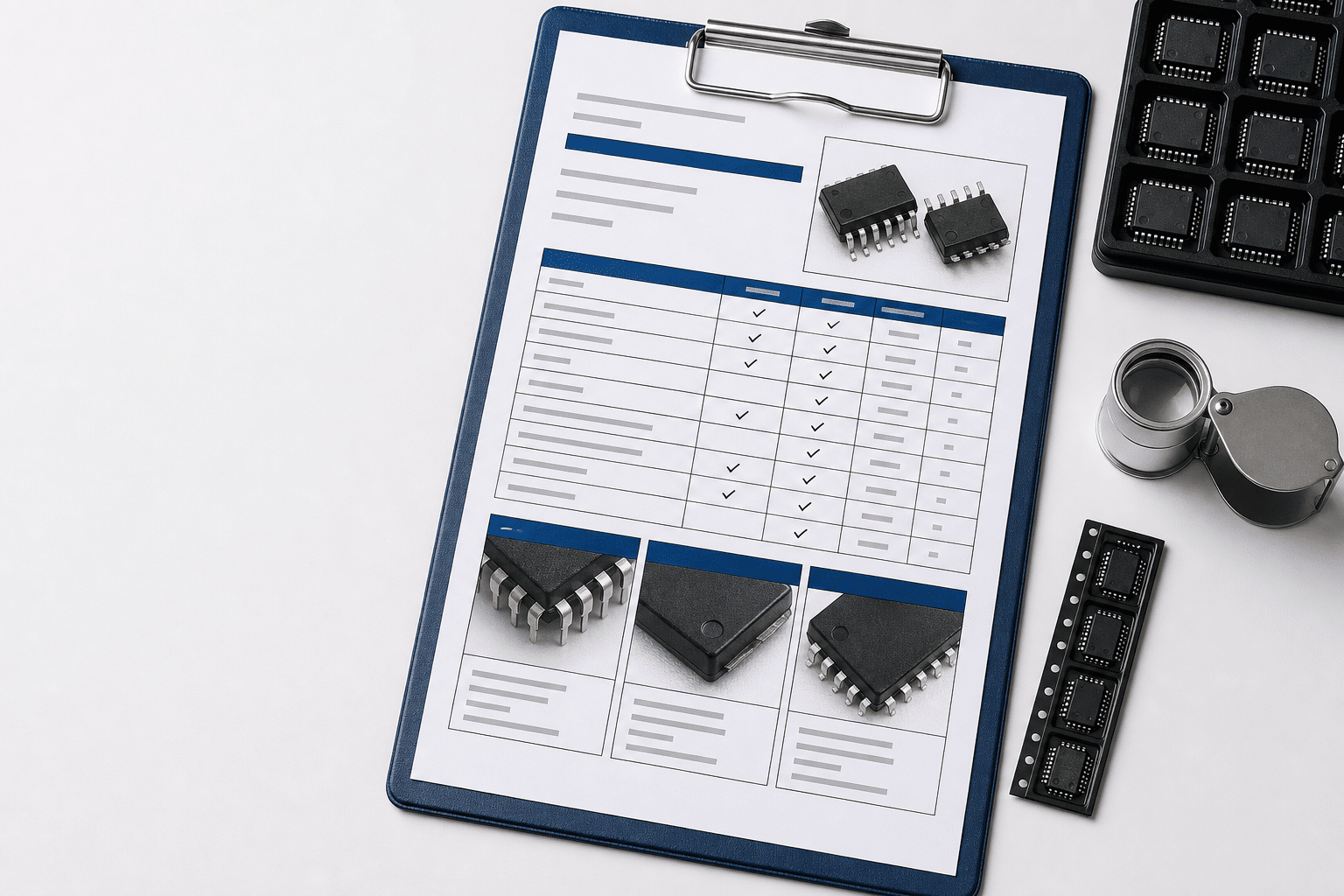
These documents are connected, but they do different jobs. Treating them as interchangeable is a common reason for incomplete quotations.
| Document | Main purpose | What it should contain | What it does not confirm |
|---|---|---|---|
| Bill of materials | Identifies line items used in a product or assembly. | MPN, manufacturer, description, quantity per build, and reference data. | Current availability, offered condition, price, traceability, or delivery. |
| Request for quotation | Defines the commercial and technical question sent to suppliers. | BOM data plus order quantity, required date, alternatives, quality evidence, packing, delivery, and terms. | A supplier commitment until a formal quote is issued and accepted. |
| Supplier quote | States what the supplier can offer for that requirement. | Offered MPN, quantity, price, lead time, condition, source basis, validity, evidence, terms, and exceptions. | Buyer approval or permission to ship. |
| Purchase order | Creates the order using the approved offer and conditions. | Accepted line items, quantities, prices, dates, addresses, terms, documents, and referenced specifications. | Unwritten assumptions that were never agreed. |
Not every order needs the same test plan or paperwork. Every order does need clear boundaries, so the supplier can state what is included and identify exceptions before you compare prices.
Add an RFQ number, issue date, buyer contact, company, response deadline, and currency.
Why it matters: keeps revisions and supplier replies connected.Use the full manufacturer part number. Add manufacturer, description, package, grade, and revision when relevant.
Why it matters: one missing suffix may describe a different device.State required quantity, acceptable split quantity, forecast or repeat demand, and minimum usable quantity.
Why it matters: a supplier may be able to offer only part of the demand.Give the need-by date, ship-to country or city, and whether partial or scheduled deliveries are acceptable.
Why it matters: “urgent” is not a measurable delivery requirement.Define acceptable supply routes and product condition: new, unused, original packaging, surplus, or another agreed condition.
Why it matters: price and available evidence vary by supply route.Say whether substitutes are prohibited, allowed for review, or limited to an approved manufacturer list.
Why it matters: “equivalent” does not mean approved for your design.List the evidence you require, such as labels, packing photos, traceability records, inspection results, or scoped testing.
Why it matters: evidence should be agreed before the order moves forward.Request unit price, breaks, quote validity, payment terms, warranty, freight basis, origin data, and return conditions.
Why it matters: the lowest unit price may not be the lowest landed risk.A component family name is rarely enough. Package, temperature grade, speed, memory size, voltage, qualification, packing suffix, and revision can change the orderable code.
When an exact MPN is unknown, describe the electrical, mechanical, software, qualification, and lifecycle limits that the replacement must meet. Ask for candidate parts for review, not an automatic substitution.
A quantity without a date is incomplete. A date without a destination or split-delivery rule can also produce a misleading answer.
State the total target, minimum useful quantity, and whether a partial offer is acceptable. For a BOM, show quantity by line and optional build quantity.
Give the required arrival or ship date and destination. If the project can accept scheduled releases, show the quantity and date for each release.
Request whether stock is on hand, subject to prior sale, incoming, or dependent on an upstream supplier. Ask what event starts the lead-time clock.
Authorized distribution, independent sourcing, brokered stock, and customer-owned material do not provide the same chain of records. The quote should disclose the offered route and the evidence that can be reviewed for that specific lot.
When the supply route is less direct, buyers usually need stronger controls around identity, condition, traceability, packaging, inspection, exceptions, and approval. Do not ask for documents as decoration. Ask for records your team will actually review.

Known source, routine active part, standard packaging, and no unusual project risk. Confirm identity, quantity, condition, packing, date, and basic records.
Allocation, obsolete or EOL status, brokered stock, mixed lots, or incomplete history. Request stronger lot review, photos, traceability, and agreed inspection evidence.
Safety, automotive, medical, aerospace, long-life, or regulated use. Let engineering and quality define qualification, test method, sample plan, acceptance limits, and approval authority.
Confirm results, exceptions, documentation, packing, shipping instructions, and who may approve release.
Date-code limits, PCN status, moisture handling, material declarations, and trade data can be important. They should be written as clear acceptance requirements, not assumed from a generic product listing.
Ask for lifecycle status, known product-change or discontinuance information, and any date-code limit. Avoid an arbitrary date-code rule unless your quality or process team can explain why it is needed.
State reel, tray, tube, cut tape, dry-pack, labeling, ESD, and moisture-handling expectations. If partial reels are acceptable, say how they should be protected and identified.
Identify required RoHS or REACH statements, material declarations, country of origin, HS code, export classification, or other project-specific records. Confirm applicability with your compliance team.
Ask the supplier to state the available date code or lot information and packing condition. If your process requires a maximum age, same-lot supply, or manufacturer recertification, put that rule in the RFQ and define how an exception can be approved.
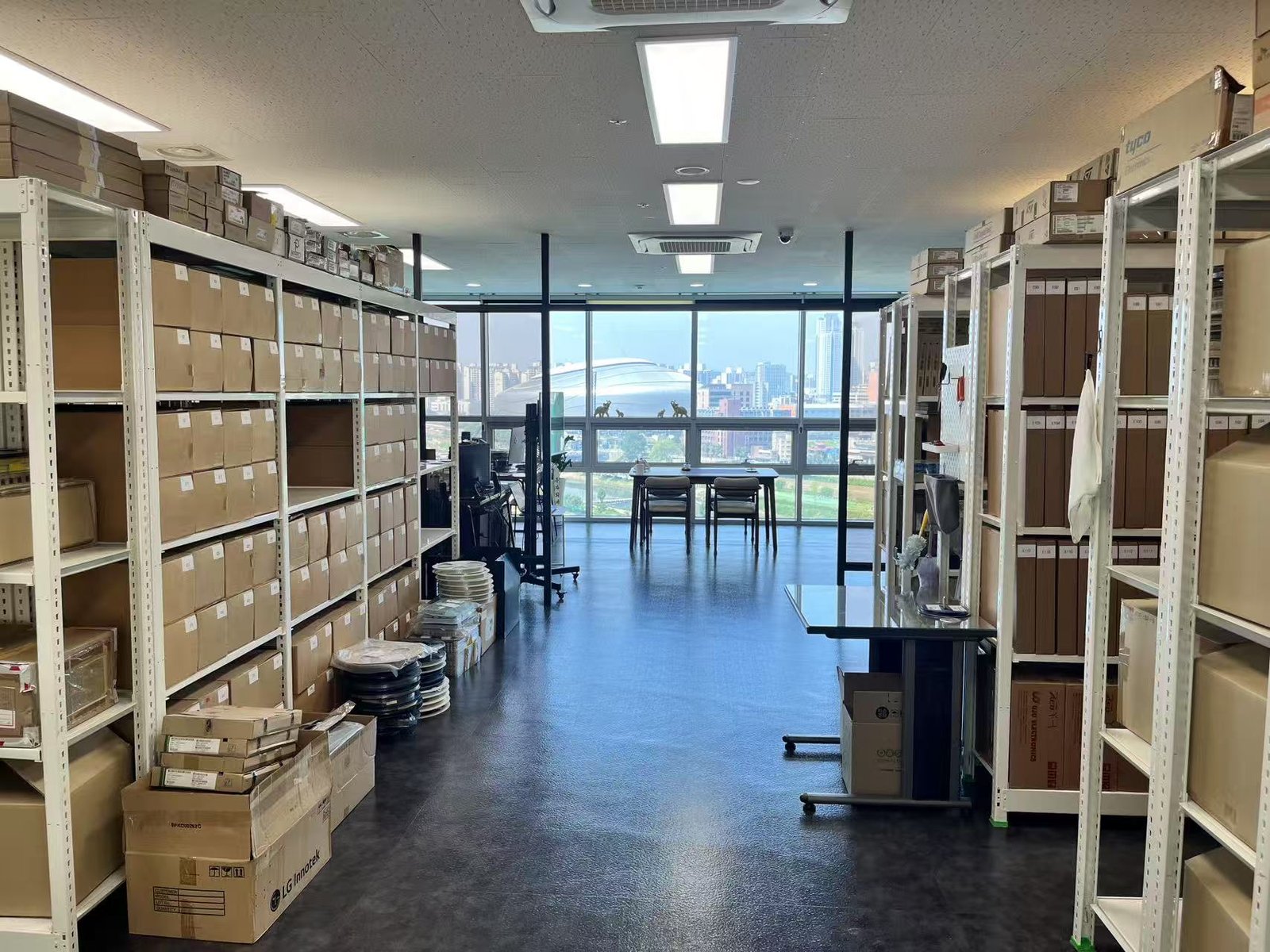
State the acceptable reel, tray, tube, cut-tape, dry-pack, ESD, label, and carton conditions before the offer is approved. This helps receiving teams check the shipment against the same requirement used for sourcing.
A unit price is useful only when the offered identity, quantity, timing, evidence, and terms are visible beside it.
| Quote field | Ask the supplier to state | Buyer check |
|---|---|---|
| Offered item | Exact MPN, manufacturer, description, package, grade, and any deviation from the request. | Is it the exact approved identity? |
| Quantity | Offered quantity, minimum order, multiples, partial availability, and split schedule. | Does it solve the useful demand? |
| Price | Currency, unit basis, quantity breaks, taxes or duties excluded, and total line value. | Are all offers calculated on the same basis? |
| Timing | Stock status, lead time, ship date or delivery date, and what starts the lead time. | Can the date be measured and confirmed? |
| Supply | Source type, condition, date or lot information, packing, and traceability available. | Does the supply basis match the risk? |
| Quality | Included inspection, available evidence, sample basis, reporting, and exceptions. | Is the requested scope included in price and lead time? |
| Terms | Quote validity, payment, freight or Incoterms rule, warranty, return limits, and cancellation terms. | What changes the landed cost or buyer responsibility? |
A lower price may come with a different quantity, shorter validity, longer lead time, weaker traceability, different packaging, or excluded testing. Put exceptions in a dedicated quote field so they cannot disappear inside email threads.
The RFQ starts the decision. The quote records the offer. The purchase order should carry the approved identity, conditions, evidence, and exceptions forward without relying on memory.
Align the MPN, demand, alternatives, evidence, packaging, delivery, and terms.
Ask suppliers to disclose what they can offer and where the offer differs.
Review commercial, technical, quality, source, and logistics fields together.
Record engineering, quality, purchasing, and management approvals as required.
Reference the accepted quote and repeat critical conditions on the purchase order.
Copy this structure into an email, spreadsheet, or sourcing form. Remove fields that do not apply, but do not leave important requirements implied.
RFQ NUMBER:
BUYER / COMPANY:
CONTACT EMAIL / PHONE:
RESPONSE DEADLINE:
CURRENCY:

LINE ITEM:
Manufacturer:
Full manufacturer part number:
Description / package / grade:
Required quantity:
Minimum useful or partial quantity:
Required delivery date:
Ship-to city / country:

ALTERNATIVES:
[ ] Exact MPN only
[ ] Alternatives may be proposed for written review
Approved manufacturers or limits:

SUPPLY AND CONDITION:
Acceptable source route:
Required condition and packaging:
Date-code or lot requirement:
Lifecycle / PCN requirement:

QUALITY AND DOCUMENTS:
Required traceability:
Required photos or label evidence:
Inspection or test scope:
Compliance / material / trade documents:

COMMERCIAL TERMS:
Price and quantity breaks:
Quote validity:
Payment terms:
Freight / Incoterms rule:
Warranty / return terms:

SUPPLIER MUST STATE:
Offered MPN, quantity, price, availability, lead-time basis,
source type, condition, packing, evidence included, and every exception.
Most problems begin with an unclear requirement or an offer that hides an assumption. The goal is not to make the RFQ longer. It is to make the decision visible.
YURUNOX can organize the sourcing response around the exact part identity, quantity, target date, destination, acceptable alternatives, source condition, and evidence your team needs to review.
The requirement starts the process. These YURUNOX resources explain how evidence, approvals, and delivery conditions move forward.