

How to Evaluate a Form-Fit-Function Alternate Component
A matching package is a starting point, not an approval. Evaluate the exact original and candidate order codes against your product requirements: physical dimensions, every used pin, guaranteed electrical limits, software behavior, manufacturing, and reliability. Then verify the relevant operating corners and release the alternate through controlled engineering approval.
What Does Form-Fit-Function Actually Cover?
A form-fit-function alternate is a candidate replacement evaluated for physical interchangeability, interface compatibility, and required performance in a defined application. These checks overlap. They do not, by themselves, establish authenticity, long-term reliability, or production approval.
Will the Physical Construction Fit?
Form: compare the official package drawings, including maximum body dimensions and height, terminal pitch, lead geometry, exposed pad, coplanarity, and finish.
- A familiar package name does not prove identical tolerances.
- A different exposed pad may alter soldering and heat flow.
- Check pin-1 marking and carrier orientation before placement.
Will Every Interface Connect Correctly?
Fit: review the land pattern, every pin function, input thresholds, drive capability, power sequence, thermal interface, and programming connection.
- A matching pin location can hide a different default state.
- Check powered-off leakage and back-powering paths.
- Assembly and test equipment must accept the exact order code.
Will the Product Still Perform as Required?
Function: compare accuracy, timing, noise, startup, reset, protection, diagnostics, fault recovery, and every operating mode the product actually uses.
- Nominal room-temperature operation is only one condition.
- Firmware, registers, boot modes, and errata can decide the outcome.
- Use product requirements as the acceptance baseline.
Required evidence supports the unchanged hardware, software, process, and product limits. Formal approval is still required.
Use only in named products, revisions, sites, or conditions. Put those restrictions into purchasing and build controls.
A PCB, firmware, process, test, or specification change requires a revised baseline and change approval.
Hold unresolved evidence gaps. Reject a proven critical mismatch unless an authorized redesign resolves it.
How Should You Evaluate an Alternate Component?
The useful question is not whether two datasheets look alike. It is whether the candidate preserves the product's required behavior and can be built, sourced, and supported within the intended release scope.
Freeze the original baseline
Record the full manufacturer part number (MPN), datasheet revision, package drawing, errata, schematic, bill of materials (BOM), PCB revision, firmware, and production test version. State the actual supply, temperature, load, timing, and fault requirements. Distinguish critical limits from preferences.
Identify the exact candidate
Resolve all ordering suffixes, including package, grade, finish, and packing. Confirm lifecycle status and the proposed supply channel. Do not approve a family name when production will purchase a specific order code. Keep technical equivalence and source authenticity as separate decisions.
Compare form and every interface
Overlay official drawings and check each used, unused, reserved, and strapped pin. Review input/output type, voltage tolerance, power-off behavior, pulls, reset defaults, sequencing, and thermal connection. An exposed pad marked as ground on one part cannot be assumed to have the same role on another.
Normalize functional limits
Compare guaranteed minimum and maximum values at matching supply, temperature, load, frequency, and test conditions. Typical values and curves explain behavior but generally do not establish worst-case acceptance. Mark missing guarantees as data gaps, not passes.
Expose software and dynamic differences
Check register maps, device IDs, reset values, boot paths, drivers, programming algorithms, calibration, security provisioning, and errata. Test startup, transients, overload, recovery, and shutdown. A steady-state output reading cannot reveal every time-dependent failure.
Review quality and production impact
Confirm qualification applicability, moisture sensitivity level (MSL), reflow limits, inspection, test coverage, and required compliance evidence. Check customer-specific approvals and safety implications with the responsible specialists. A quality certificate is not a circuit-compatibility report.
Verify the risk-sensitive conditions
Use calculations, bench characterization, system tests, relevant environmental and electromagnetic compatibility (EMC) checks, and a production pilot. Define acceptance criteria before testing. Choose samples and lots for the risk and purpose, not an arbitrary universal quantity.
Release the decision where work happens
Approve through the applicable engineering change order (ECO) or bounded deviation. Update the BOM, approved vendor or manufacturer list, production instructions, and enterprise systems. Assign responsibility for product change and discontinuance notifications, first-lot monitoring, and requalification triggers.
What Should an Alternate-Component Comparison Matrix Include?
For each requirement, record the original guarantee, candidate guarantee, matching conditions, margin, evidence reference, test method, owner, and disposition. A list of green ticks without the conditions is hard to review and easy to misuse.
Scroll the table horizontally on smaller screens. These are example review rows, not measurements from a customer build.
| Requirement | What to compare | Evidence to retain | Hold condition |
|---|---|---|---|
| Mechanical envelope | Drawing limits, pitch, height, pad size, pin 1, and land pattern | Both drawings and PCB/assembly review | Maximum dimensions or exposed-pad fit remain unresolved |
| Logic interface | Driver output limits versus receiver thresholds across voltage, load, and temperature | Worst-case calculation and interface tests | Insufficient margin or only typical values available |
| Analog or power behavior | Accuracy, stability, switching, heat, startup, protection, and recovery | Requirement-based analysis and board waveforms | Unexplained oscillation, overheating, or different fault response |
| Firmware and tools | Boot, memory, IDs, registers, drivers, programming, security, and service | Versioned software matrix and regression results | Candidate can receive the wrong factory or field-update binary |
| Production and source | MSL, packing, reflow, inspection, test, traceability, and approved channel | Pilot report, handling records, and source assessment | Sample evidence does not represent intended production supply |
| Quality and release scope | Qualification, applicable declarations, customer approvals, and restrictions | Exact-device or justified family evidence and signed change record | Required approval missing or conditions absent from build systems |
How Can a 3.3 V Label Hide a Failed Logic Margin?
Illustrative calculation, not a measured case: assume a driver guarantees a high output of 2.40 V at the required load and temperature. The original receiver accepts 2.00 V as high. A candidate instead requires 0.70 × VDD, with a maximum receiver supply of 3.60 V.
The original static high margin is +0.40 V. The candidate's is negative, so this interface does not meet the assumed requirement. A room-temperature sample that happens to switch is not a replacement for the missing margin.
Margin = 2.40 − 2.52
= −0.12 V → holdStatic high margin = guaranteed driver VOH(min) − receiver VIH requirement. Values are hypothetical and deliberately chosen to show a failure.
Also check the low state, supply tolerances, ground offset, noise allowance, timing, loading, and powered-off behavior. A positive static result alone does not complete interface qualification.
Where Do Hidden Substitution Risks Appear in Real Components?
These examples come from public manufacturer documents. The review actions are engineering implications for an alternate evaluation, not claims about YURUNOX tests, customer shipments, or field results.
What Can Load-Current Reversal Reveal in an Op-Amp Buffer?
TI LM324/LM358 example: TI's SLOA277B, section 4.5, describes an LM358 reference-buffer example with a 5 V output and load current stepped between +1 mA and −1 mA. The document shows an output disturbance and discusses roughly 6.7 µs of correction time at 25°C in that example.
Review implication: when replacing a buffer that drives a changing load, compare the actual source/sink transitions, settling window, and downstream tolerance. A shared pinout or headline bandwidth is insufficient evidence.
TI SLOA277B, section 4.5 ↗Why Can a Supported MCU Migration Still Require New Firmware?
ST STM32F0-to-STM32G0 example: ST's AN5145 covers hardware, boot-mode, peripheral, and firmware migration between these MCU series. Section 6 calls for updates to startup and project files, linker configuration, and library sources. It also warns that initialization structures can differ.
Review implication: identify the exact device pair, audit the used pins and peripherals, and validate programming, boot, reset, and field updates. If a new binary is needed, release a controlled hardware/firmware combination rather than an unrestricted drop-in.
ST AN5145, section 6 ↗Why Can Equal Nominal Capacitance Behave Differently in Circuit?
Murata MLCC example: Murata explains that high-dielectric ceramic capacitors, including X5R and X7R types, can lose capacitance under DC bias. The amount depends on the part and conditions; it should not be inferred from the nominal value alone. Murata points designers to its SimSurfing data and actual-equipment checks.
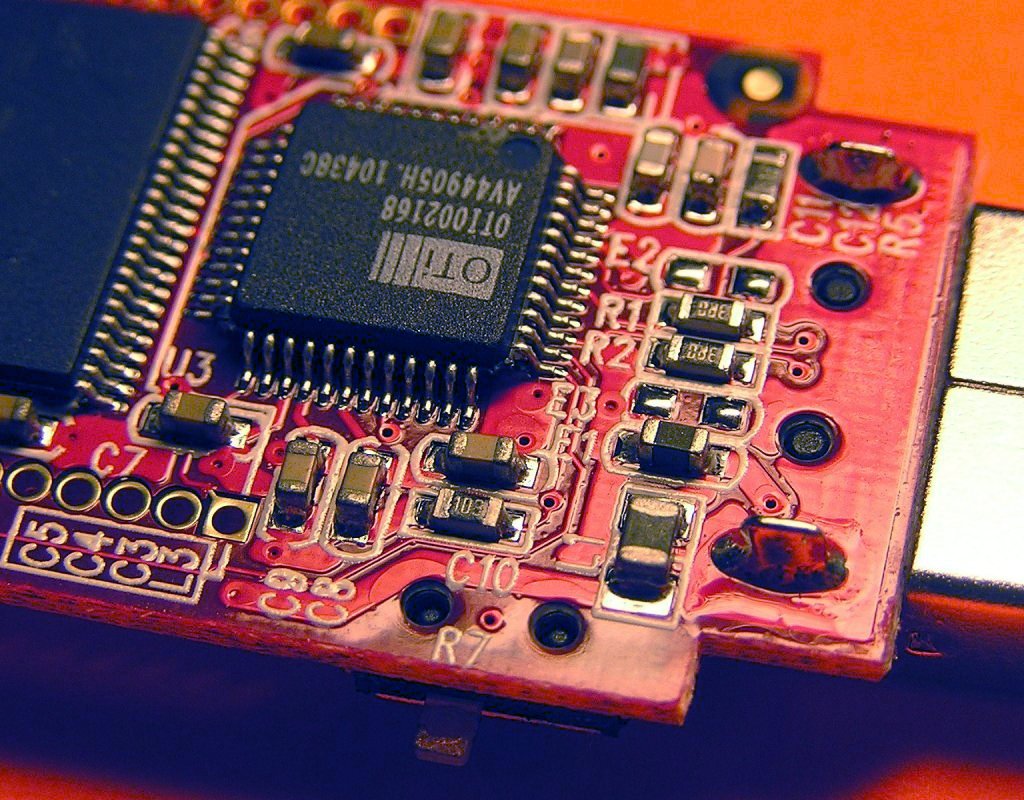
A compact part that meets the printed capacitance, voltage, and case-size fields may still require different evidence. No particular capacitance loss is claimed for the capacitors in this photograph.
Murata's DC-bias explanation ↗
Which Review Path Should This Candidate Take?
Use the questions to identify the next review step. A critical mismatch or unresolved requirement takes priority over cost, availability, or a favorable result elsewhere. The tool does not qualify a component or replace an authorized sign-off.
Start With the Unresolved Requirements
Choose the current evidence status, then show the review path. Unknown information must remain visible; it should never be silently counted as a pass.
Formal release remains with the responsible engineering and quality authorities. A sourcing quotation is not an engineering approval.
What Should You Test Before Approving an Alternate?
A known-good original board is a useful reference. The product specification remains the pass/fail authority. Matching an original sample is not enough if both devices fail a requirement.
- 1 / Close document and margin gapsReview guaranteed limits and worst-case combinations. Include tolerances, temperature, loading, aging where relevant, and measurement uncertainty. Obtain clarification when a critical guarantee is absent; a few favorable samples do not create a population guarantee.
- 2 / Characterize representative boardsExercise low and high supply, load extremes, hot and cold conditions, startup ramps, reset, power-off, and defined faults. Capture raw waveforms, instrument settings, firmware, board identity, and sample lot information.
- 3 / Run system and software regressionCheck every used mode and interface, including sleep/wake, communications, calibration, diagnostics, programming, field updates, and recovery. Verify the real cables, loads, power source, and enclosure when they affect behavior.
- 4 / Target environmental and EMC sensitivityLet the change and failure consequences determine the plan. A power device with different switching edges can need renewed emissions and immunity assessment; a mechanically different part can need assembly or environmental investigation.
- 5 / Build and review a production pilotUse intended material handling, placement, soldering, programming, inspection, and functional test. Investigate deviations rather than widening acceptance limits simply to make the candidate pass.
- 6 / Control the first released buildsDefine lot or serial ranges, heightened checks where justified, defect review, and an owner for closing temporary controls. Retain both the evidence and the decision rationale.

How Far Should Verification Go?
Wide margin and low consequence: a noncritical part with well-supported limits and a controlled source may justify a focused document review, targeted checks, and normal release approval. Document why additional tests are unnecessary.
Power, precision, or programmable devices: tight margins, software changes, harsh environments, uncertain pedigree, or difficult-to-detect failures call for deeper analysis, cross-functional review, and broader verification.
Safety, customer, or regulated requirements: qualification and approval scope must follow the responsible safety, customer, and compliance authorities. Commercial urgency does not remove a mandatory approval gate.
What Manufacturing Checks Can Block an Alternate?
A bench prototype can hide changes in placement, soldering, inspection, or programming. Include the manufacturing team before samples arrive, especially when the packing suffix or package construction changes.

Before assembly
Confirm reel or tray format, pocket orientation, pin-1 presentation, feeder setup, placement nozzle, moisture history, floor life, and reflow constraints. Check whether the new finish or exposed pad changes the validated soldering process.
For programmable devices, verify the exact algorithm, device identification, option bytes, security configuration, and programming sequence. Factory and service tools must select the correct configuration reliably.
After assembly
Review automated optical inspection (AOI), X-ray where appropriate, in-circuit test (ICT), and functional test (FCT). Retain pilot defects, failure analysis, cycle-time impacts, and any required instruction changes.
A different marking is not automatically a defect, and a passed functional test is not automatically proof of authenticity. Technical acceptance, workmanship, and source evidence need their own criteria.
How Do Technical Approval and Supply-Chain Approval Differ?
An electrically suitable part from an unacceptable source is not ready for use. An authentic part can still be the wrong substitute. Keep both decisions visible in the approval package.
What Supplier Evidence Should Support the Decision?
- Exact original component manufacturer (OCM), full MPN, grade, and package/packing option.
- Current datasheet, drawings, errata, and a written list of differences.
- Applicable qualification and reliability evidence, including exact-device coverage or a justified family relationship.
- MSL, handling history, reflow information, and required material declarations.
- Source and traceability records, lot/date-code information, and agreed inspection or test requirements.
- Samples representative of the intended production supply and a route for change/discontinuance notices.
For independent-channel material, assess custody gaps and counterfeit risk explicitly. Inspection or electrical testing does not reconstruct a missing chain of custody. Review YURUNOX's quality-assurance process when defining the evidence to request.
What Does a Qualification Label Not Prove?
AEC-Q100 addresses stress-test qualification of integrated circuits. Application compatibility remains a separate engineering decision. A required production part approval process (PPAP) package and customer approval must also be handled separately. AEC documents; TI automotive PPAP.
UL Recognized Components have defined conditions of acceptability for use within an end product. Matching a mark is not enough; check the candidate's ratings and those conditions with the responsible product-safety team. UL component guidance.
For applicable substance, market, contractual, or safety requirements, obtain current exact-part evidence and assess the effect on the finished product. Do not infer compliance from a similar family name.
Name the original and candidate order codes, product/BOM/PCB revision, firmware, production site, sources, operating envelope, exclusions, and any expiry or quantity limits.
Put the conditions in the BOM, approved lists, purchasing system, factory instructions, and test/programming controls. A PDF in an engineering folder cannot prevent the wrong build combination.
Review relevant PCNs, discontinuance notices, errata, process/site changes, field problems, and supply-source changes. TI's PCN process covers major changes affecting FFF or quality/reliability. TI notification process.
What Should You Send With an Alternate-Component Sourcing Request?
YURUNOX supports electronic-component sourcing and quotation review as an independent distribution partner. Share exact part numbers and evidence requirements; final suitability and production release remain with your engineering and quality authorities.
Who Owns Each Part of the Decision?
Identify which evidence is needed before samples, before a purchase commitment, and before production release. Ask the supplier to expose differences and uncertainty, not simply repeat the phrase "fully compatible."
- Engineering owns requirements, margins, and technical disposition.
- Quality owns the applicable source, qualification, and traceability review.
- Manufacturing and firmware teams own their affected process and configuration checks.
- Purchasing orders only within the recorded approval conditions.
See how the purchasing process works and include the required documentation in your enquiry.
What Else Should Buyers Know About Form-Fit-Function Alternates?
The approval is specific to an application and its evidence. It is not a universal statement that two parts are identical.
Is pin-compatible the same as a drop-in replacement?
No. Pin compatibility does not establish electrical thresholds, startup behavior, timing, software compatibility, manufacturing readiness, or reliability. A drop-in claim needs evidence for the unchanged product baseline and a defined scope of use.
Can a manufacturer's recommended replacement be approved without testing?
A recommendation is useful evidence, not an automatic release. Review the exact device differences and the manufacturer's supporting data, then define application verification in proportion to risk. Record the rationale for any test that is omitted.
Should typical or guaranteed datasheet values decide compatibility?
Use guaranteed minimum and maximum limits at matching conditions for critical requirements. Typical values and curves help explain behavior but generally do not establish worst-case acceptance. An unresolved critical data gap is a hold, not a pass.
Does AEC-Q100 qualification prove an automotive alternate is suitable?
No. Stress-test qualification does not establish interchangeability in your circuit. Electrical behavior, software, thermal limits, production processes, required PPAP evidence, and customer-specific approval still need review.
How many samples are needed to qualify an alternate?
There is no universal quantity. Define sample size and lot coverage from the test purpose, variation, failure consequences, reliability objectives, and applicable customer or industry process. A few functional samples do not prove long-term population reliability.
Can an alternate that needs new firmware still be used?
Yes, if the change is acceptable and validated through a controlled variant or redesign process. Identify the hardware and firmware combination, control factory programming and field updates, and prevent incompatible configurations. Do not call it an unrestricted drop-in.
Can an independent distributor propose an alternate?
Yes. Evaluate the exact manufacturer part independently, and review the proposed source separately. Request traceability and risk-appropriate evidence. A supplier proposal or quotation does not transfer engineering approval responsibility.
Which records should remain after approval?
Retain the exact-part matrix, document revisions, drawings, errata, calculations, test plans and raw results, source and qualification evidence, risk assessment, signed approvals, change record, operating restrictions, and monitoring or requalification triggers.
What Should Happen After the Technical Decision?
This is a general evaluation framework. Approved engineering procedures, product requirements, customer contracts, and applicable safety or compliance obligations take precedence.
Technical references and evidence scope
- TI cross-reference search — selection and application-validation responsibility.
- TI SLOA277B — LM324/LM358 application behavior; section 4.5 is the buffer example cited here.
- ST AN5145 — STM32F0-to-STM32G0 migration; section 6 covers firmware migration.
- Murata ceramic-capacitor DC-bias FAQ — effective capacitance and operating-condition checks.
- AEC technical documents and TI automotive PPAP — qualification and production-approval evidence.
- UL component testing and certification — conditions of acceptability within end products.
- TI change-notification process — ongoing product-change review.
- Image authors, original source pages, and reuse licenses are linked beside each photograph. Photographs illustrate the nearby concept; they are not records of YURUNOX testing or customer production.