Engineering BOM
Defines design intent, reference designators, technical selection, assembly quantity, and configuration relationships.
Often missing: current source policy, alternatives, packaging, commercial fields, and receiving rules.

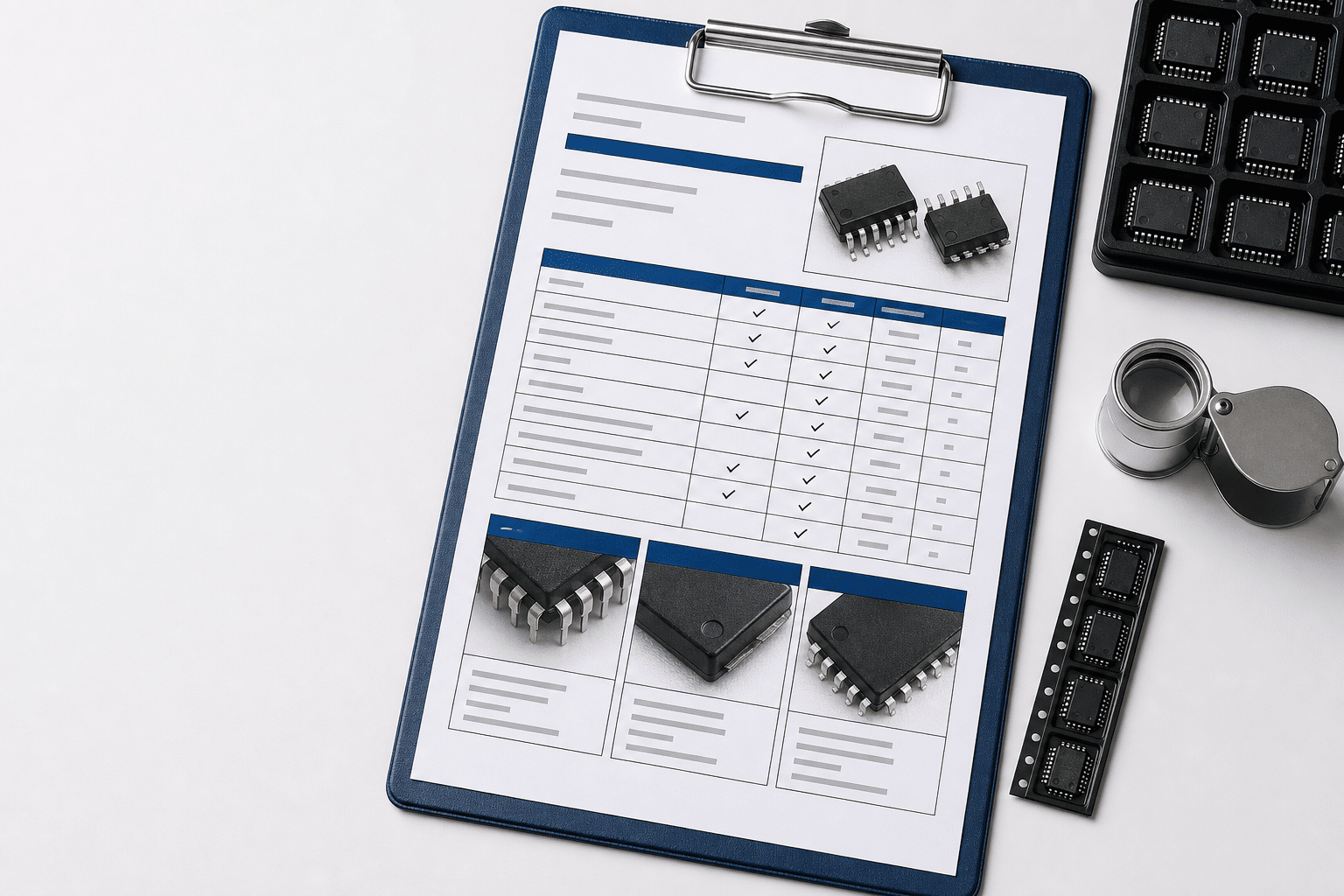
A sourcing-ready BOM tells a supplier exactly what may be purchased. Pair every buyable line with the manufacturer and full orderable MPN, valid demand, approved-alternate rules, lifecycle and source controls, packaging needs, and a controlled revision. Remove DNP lines, resolve blanks, and make every exception visible before suppliers quote.
Manufacturer and complete orderable MPN
Build quantity, line quantity, date, and destination
No substitute, approved list, or engineering review
Dated status, PCN/EOL signal, and owner
Traceability, evidence, handling, and lot rules
Price, availability, lead time, terms, and exceptions
Engineering defines what the design needs. The sourcing BOM defines which exact parts, sources, alternatives, conditions, and delivery terms may satisfy that design.

The files are related, but each answers a different business question. The sourcing BOM bridges approved design intent and the conditions under which a part may be purchased.
Defines design intent, reference designators, technical selection, assembly quantity, and configuration relationships.
Often missing: current source policy, alternatives, packaging, commercial fields, and receiving rules.Adds exact purchasable identity, source and alternate authority, lifecycle, risk, quality, packaging, demand, and RFQ response fields.
Its job: let suppliers quote the same requirement and make deviations visible.Organizes build structure, consumables, process materials, kitting, and work-order context for the production flow.
It may rely on a separate controlled sourcing view for market and supplier decisions.Records what arrived and was used: supplier, lot or date code, packaging, quantity, deviations, and acceptance evidence.
It records the result; it does not retrospectively approve a design or sourcing change.Put the assembly, variant, BOM revision, release date, and owner in the file and the RFQ subject. A supplier should never have to choose between the latest email, an older spreadsheet, a drawing note, and an ERP export.
Use one row per buyable manufacturer part number. Group reference designators only when the MPN, package, revision, configuration, and sourcing rule are identical.
BOM revision, effective date, assembly or variant, line number, reference designators, and internal part number.
Prevents stale revisions and product options from being mixed.Manufacturer, full MPN, datasheet reference, description, package, grade, and the technical attributes that decide acceptability.
Defines the exact device instead of a generic description.Quantity per assembly, build quantity, total demand, unit, approved yield or scrap factor, required date, and destination.
Lets suppliers calculate usable quantity, price breaks, and delivery phases.Approved manufacturer or source status, substitute rule, named alternatives, deviation route, and engineering owner.
Keeps flexibility controlled rather than accidental.Active, NRND, EOL, discontinued, or unknown status; check source and date; PCN signal; risk tier; and mitigation owner.
Focuses early action on lines that can stop the build.Source condition, traceability depth, certificate needs, lot and date-code rule, inspection plan, test scope, and approval authority.
Defines the evidence required before a quote can become a released shipment.Reel, tray, tube, full or partial pack rule, factory seal, ESD, MSL, dry pack, mixed-lot rule, and required declarations.
Protects receiving and production from technically correct but unusable stock.Quoted identity, source, available quantity, lead-time basis, price, currency, MOQ, validity, freight basis, NCNR status, and exceptions.
Creates a comparable quote across suppliers.The manufacturer part number is the most important sourcing field. Pair it with the manufacturer name and copy the complete orderable code from approved manufacturer documentation.
Do not delete a suffix because it looks like a packaging detail. A suffix may define package, temperature range, finish, speed, memory, calibration, security configuration, qualification, tape-and-reel option, or another property that changes what will arrive.
BOM cleanup is cross-functional. Procurement should not invent technical data, and engineering should not make commercial assumptions silently. Missing information needs an owner and a visible status.
Confirm assembly, variant, revision, effective date, build stage, and delivery location.
Exclude DNP, reference-only, tooling-only, obsolete-option, and non-purchasable lines from the RFQ view.
Correct manufacturer names, complete MPNs, suffixes, legacy aliases, duplicates, spaces, and hidden characters.
Check quantity per assembly, build quantity, total demand, yield assumptions, designators, and delivery phases.
Replace silence with N/A, pending approval, no substitute, supplier proposal required, or a sourcing hold.
Identify authorized-only lines, named alternatives, no-substitute items, and engineering-review routes.
Record the source and date of the check, PCN or EOL signals, sole-source exposure, and mitigation owner.
State packaging, handling, traceability, inspection, compliance, destination, and delivery requirements.
Preserve the engineering source file and record every later change with its reason, owner, and effective date.
It can mean unknown, not applicable, not yet approved, or accidentally omitted. Use controlled values such as “N/A,” “engineering review pending,” “No substitute,” or “Supplier to propose - buyer approval required.” This makes risk visible and prevents silence from becoming permission.
A supplier should be able to audit the demand and know exactly what procurement may do when the stated part is unavailable.
Record quantity per assembly, build quantity, total demand, approved yield or scrap factor, and separate prototype, pilot, and production dates.
Do not let DNP lines or inactive variants enter formulas.Reference designators can share one row only when the MPN, package, grade, configuration, and sourcing policy are identical.
Different suffixes or qualification levels need separate buyable lines.Show the useful quantity for each date and destination. One total can hide a small urgent need and a later production balance.
State whether partial, split, or scheduled delivery is acceptable.Quote and buy only the named manufacturer and MPN. If it is unavailable, the supplier identifies the gap rather than shipping an “equivalent.”
Best for locked designs, qualifications, software dependencies, and high application risk.Quote each approved manufacturer and MPN as a distinct option with its own source, quantity, price, delivery, and evidence.
The selected option must be confirmed in the PO and checked at receiving.Collect structured proposals with datasheet, package, lifecycle, source, price, and delivery information.
Written engineering and quality approval is required before purchase or shipment.A distributor or database can suggest a useful candidate, but engineering and quality still need to accept it for the actual design, configuration, manufacturing process, qualification level, and end use.
Lifecycle status is a dated sourcing fact, not a permanent label. Traceability is the ability to connect the received part to the agreed identity, source, package or label information, and relevant records. Apply deeper controls as source and application risk rise.
Record whether the manufacturer identifies the part as active, NRND, discontinued, or affected by a product or process change. Save the source, check date, owner, and resulting action. Manufacturer portals such as onsemi Product Change Notifications show why this is a continuing review, not a one-time label.
ECIA explains that manufacturers define the process event behind a date code, such as fabrication, packaging, or inspection. If your build restricts date code or lot mixing, state the acceptable range, evidence, exception owner, and whether mixed material may be separately identified.
IPC-1782B organizes manufacturing and supply-chain traceability around perceived risk. The BOM does not need every certificate in a cell, but it should name the required evidence, record location, owner, and approval status.

Exact MPN, approved source policy, packaging label, quantity, and standard program records.
Defined source path, lot or date-code information, agreed certificates, inspection or test evidence, and release approval.
Lifecycle decision, source and condition disclosure, packaging evidence, inspection plan, and alternate or redesign path.
A technically correct part can still be unusable when the delivery format, labels, ESD protection, moisture condition, lot mix, or supporting declaration does not match the build.
State full or partial reel rules, reel quantity, original tray or tube needs, and whether repacked material may be offered.
Protects kitting and automated placement compatibility.State original-label needs and whether opened, repacked, mixed-lot, or mixed-date-code inventory may be quoted.
Supports receiving checks, traceability, and failure analysis.For moisture-sensitive devices, use the product label and manufacturer documentation to define moisture barrier, caution label, dry-pack, and process requirements.
Do not impose one generic floor-life rule on every package.
Write reel, tray, tube, seal, label, ESD, MSL, dry-pack, and lot requirements into the sourcing BOM and RFQ. Carry the selected condition into the PO and receiving plan so inspection checks the same requirement procurement approved.
State the target market, actual MPN, accepted declaration format, and approval owner. A component declaration supports the finished-product compliance file, but it does not by itself prove the whole product's compliance or export eligibility. Requirements and exemptions can change, so the responsible compliance team should confirm the current obligation.
Do not send an unfiltered export with “please quote.” Give suppliers a controlled input and a response structure that preserves the buyer's original fields.
Issue the controlled sourcing BOM, revision, owner, and response deadline.
Separate prototype, pilot, production, forecast, required dates, and destinations.
Add source, alternate, packaging, quality, evidence, and compliance rules.
Review offered identity, quantity, source, condition, price, timing, terms, and exceptions.
Put accepted conditions and deviations into the PO, acknowledgment, and receiving plan.
| Quote field | Supplier should state | Buyer should confirm |
|---|---|---|
| Offered item | Exact MPN, manufacturer, package, grade, packing suffix, and every difference from the request. | Is it the exact approved identity? |
| Quantity and timing | Available quantity, MOQ, multiples, split schedule, stock basis, lead time, and dated commitment. | Does it solve the useful demand and required dates? |
| Source and condition | Supply route, new or surplus condition, factory seal, pack type, lot and date-code information, and traceability available. | Does the supply basis match the BOM risk and approval route? |
| Quality and evidence | Included documents, photos, inspection or test scope, sample basis, report timing, and exceptions. | Is the requested scope included in price and delivery? |
| Commercial terms | Price, currency, breaks, validity, payment, freight basis, warranty, NCNR, return limits, and supplier exceptions. | Are all offers compared on the same landed and contractual basis? |
The lowest unit price can create the highest program cost when it depends on an unapproved source, arrives in unusable packaging, lacks required evidence, or misses the build date. Keep exceptions in a dedicated quote field so they do not disappear inside an email thread.
This header set covers configuration, identity, demand, approval, risk, quality, packaging, compliance, supplier response, and the internal decision. Remove fields only when the team has decided they do not affect the purchase.
BOM Revision,Effective Date,Assembly or Variant,Line Number,Reference Designators,Internal Part Number,Manufacturer,Full Manufacturer Part Number,Description,Package,Key Technical Attributes,Quantity per Assembly,Build Quantity,Total Demand,Unit of Measure,Approved Yield or Scrap Factor,Required Delivery Date,Destination,Approved Manufacturer Status,Approved Source Status,Alternate Policy,Approved Alternates,Engineering Owner,Lifecycle Status,Lifecycle Check Source,Lifecycle Check Date,PCN or EOL Flag,Risk Tier,Mitigation Owner,Source Condition,Traceability Requirement,Required Documents,Lot or Date-Code Rule,Inspection or Test Requirement,Pack Format,Full or Partial Pack Rule,Factory Seal Requirement,ESD Requirement,MSL or Dry-Pack Requirement,Mixed-Lot Rule,Required Declaration,Target Market,Supplier Quoted MPN,Supplier Manufacturer,Offered Source,Available Quantity,Lead-Time Basis,Unit Price,Currency,MOQ,Quote Validity,NCNR,Freight Basis,Supplier Exceptions,Selected Supplier,Accepted Exception,PO Reference,Receiving Status,Change or Deviation Record
Keep manufacturer and MPN separate. Lock buyer-owned fields, ask suppliers to complete response columns, and record the release revision before distributing the file.
These are small spreadsheet problems that often become large sourcing, schedule, quality, or receiving problems later.
Inactive variants, DNP lines, partial attributes, and ambiguous names reach suppliers. Create a controlled sourcing view with a clear revision.
A generic value or family name can return a different package, grade, suffix, or manufacturer. Use manufacturer plus complete orderable MPN.
An unreviewed alternate can change assembly, software, qualification, reliability, or compliance. State the approval route on each line.
The team finds EOL, allocation, long lead, or sole-source exposure only after a quote fails. Time-stamp checks and assign mitigation.
The supplier cannot tell which source status, documents, packaging, lot evidence, inspection, or testing is required. Make it risk-based and specific.
Receiving accepts a different source, package, date code, or delivery condition. Carry every accepted exception into the order and receiving plan.
YURUNOX can review part identities, organize line-item questions, record the available source and evidence basis, and return a structured quotation response for the actual requirement.