

How to Review a Quectel Module Ordering Code Before Purchase
A Quectel ordering code identifies an orderable configuration only when the complete manufacturer code—including every suffix and separator—is matched to documentation for that exact product family. It does not by itself prove firmware, network suitability, host compatibility, certification, lot traceability or delivered condition. Keep any different code on hold until those differences and missing evidence are approved.
This prevents a shortened model name, plausible suffix or lower-priced near-match from silently changing the approved design or purchase requirement.
For OEM, EMS, engineering, procurement, and incoming-quality teams.
What Does a Quectel Ordering Code Confirm—and What Does It Not Confirm?
Start with the full manufacturer part number (MPN), including every suffix and separator. Match it to a current specification, ordering table or written Quectel confirmation for that exact family. Record every field the public evidence does not explain.
The code can identify a manufacturer-controlled option. It cannot replace confirmation of the software state, host design, target network, certification route, packaging, source traceability or the actual received lot.
| Condition | Recommendation | Evidence required | Stop boundary |
|---|---|---|---|
| Exact approved code and complete configuration | Continue through the normal purchase and receiving plan. | Current exact-family source, approved software requirement, deployment review and agreed delivery records. | Stop if the supplier cannot tie the quote and shipment to the accepted configuration. |
| Same code, but firmware or profile is unspecified | Keep the hardware match open while software is clarified. | Release identifier, carrier or customer profile, loading owner and verification method. | Do not release the PO or received material when the required software state remains unknown. |
| Any character, suffix, memory option or product form differs | Treat it as a proposed alternate. | Full offered code, official comparison and recorded engineering, compliance and commercial approval. | Do not normalize the code or authorize substitution before approval. |
| PO, pack label, module mark or records disagree | Segregate the affected material and investigate. | Photographs, labels, source records, lot mapping and documented reconciliation. | Do not release material on appearance or assumption alone. |
Which Identifiers Must Stay Separate on the BOM, Quote and Purchase Order?
Keep related identifiers in separate fields. A supplier stock number, a module top mark, and the code on your BOM may look similar, but they are not interchangeable evidence.
Family and model
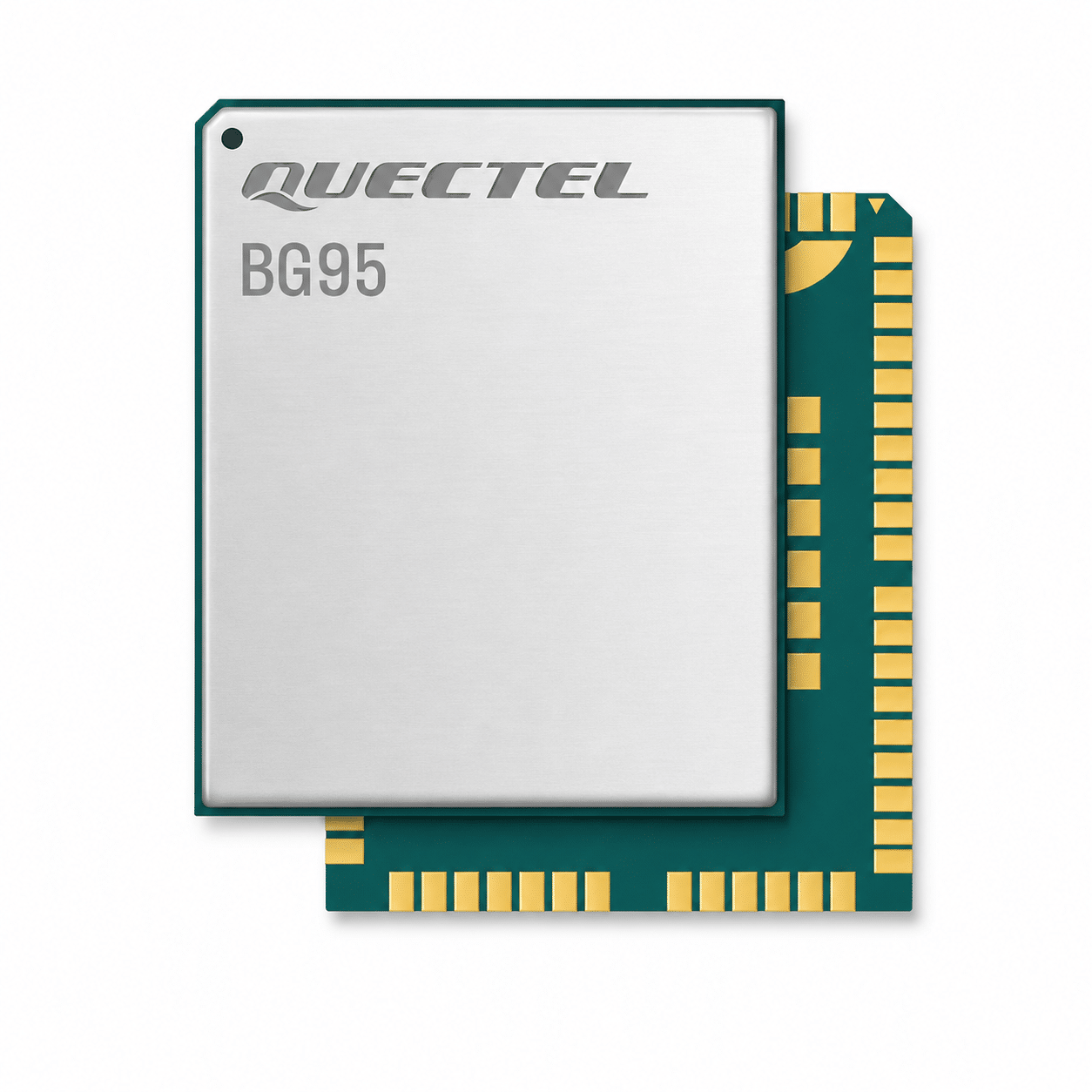
A name such as BG95-M3 helps you find the relevant product information. It does not specify every commercial option in the longer codes discussed below.
Complete ordering code
This is the manufacturer-controlled string you ask the supplier to quote. Preserve it on the BOM, quote comparison, purchase order, and receiving record.
Firmware and configuration
Name the approved software release, profile, and provisioning requirements separately unless an exact manufacturer record explicitly fixes them in the ordering code.
L70-R under ordering code L70RE-M37, and model L70-RL under L70REL-M37. Copy the ordering field rather than constructing a code from the model name. See Section 7.5, Table 13.What Do the Published BG95 and EC21 Examples Actually Confirm?
A July 2023 Quectel support reply distinguishes the following named BG95 options. Treat this as a dated, family-specific explanation; obtain current confirmation for the exact item before approving production material.
| Code in the discussion | What the support reply identifies | Purchase-review question |
|---|---|---|
BG95M3LA-64-SGNS | Data-only option | Is voice excluded from every required product function? |
BG95M3LB-64-SGNS | VoLTE support | Which voice, firmware, and network conditions must be verified? |
BG95M3LAR-64-SGNS | Similar to LA, with a different power amplifier (PA) | What RF and qualification review does the hardware difference require? |
BG95M3LATEA-64-SGNS | TE-A board option rather than the module-only item | Are you buying the production module or an evaluation-board assembly? |
Scroll the table on small screens. VoLTE means Voice over LTE. These descriptions are limited to the codes named in the source.
Read the Quectel support exchange →What Does the Published EC21 Example Define—and Leave Unanswered?
EC21EUXGA-128-SGNSA specific code discussed in Quectel’s September 2021 support exchange.The reply identifies 128 and 512 as NAND-memory sizes, written as 128M and 512M. It also explains SGNS and describes STD as the standard-module designation in that discussion.
That answer is useful, but incomplete for a purchase decision. It does not establish application-available memory, every character in the prefix, or the answer to the follow-up question about OpenCPU and SDK compatibility.
Read the original EC21 question and reply →How Should Buyers Use This Suffix Explanation?
- S
- Standard
- G
- GNSS: satellite positioning
- N
- The reply uses “no APT”; request its engineering definition if relevant.
- S
- Single SIM
Do not silently turn “128M” into “128 MB of user storage.” Ask Quectel to confirm the memory units, usable capacity, software platform, and required SDK for the offered code.
Nor should this SGNS explanation be applied automatically to another module family.
How Can Quectel Regional Variants Differ Even When LTE Bands Match?
Quectel’s EC200A specification V1.6 gives EU and EL the same LTE band lists. Other rows still differ. This is why a regional-looking suffix must lead to a complete configuration review.
| Selected specification field | EC200A-EU | EC200A-EL |
|---|---|---|
| LTE-FDD bands | B1 / 3 / 5 / 7 / 8 / 20 / 28 | B1 / 3 / 5 / 7 / 8 / 20 / 28 |
| LTE-TDD bands | B38 / 40 / 41 | B38 / 40 / 41 |
| GSM / EDGE | B3 / B8 | Not listed as supported |
| RGMII / RMII row | Listed without the EL restriction | RMII only |
Selected fields only, not an equivalence table. FDD/TDD are duplex modes; RGMII/RMII are Ethernet interface types. Source: Quectel EC200A specification V1.6, page 2.
Which Quote Decisions Follow From These Differences?
If a design relies on GSM fallback or RGMII, an EL offer needs a specific engineering decision. Matching the LTE rows does not resolve those requirements. Network fallback also needs an actual service-availability check for the intended deployment.
What Evidence Is Still Needed Beyond the EU or EL Label?
EU and EL identify the variants compared in the specification. Still obtain the complete commercial ordering code from the supplier and Quectel, together with its hardware and firmware basis. Do not invent missing fields from this table.
What Can Change Without a New Quectel Ordering Code?
Quectel’s product change notification Quectel_PCN_2024121302, issued on 13 December 2024, announced the addition of a Changzhou manufacturing site for L70-R and L70-RL modules.
The notice retained L70RE-M37 and L70REL-M37, stated that firmware versions would not change, and reported no change to fit, form, function, quality, or reliability.
This is a manufacturer-documented manufacturing change, not a YURUNOX shipment story or evidence that a particular offered lot came from that site.
Read the Quectel PCN hosted by DigiKey →Which Hardware, Network and Certification Checks Sit Outside the Ordering Code?
How Do You Confirm the Actual Product Form?
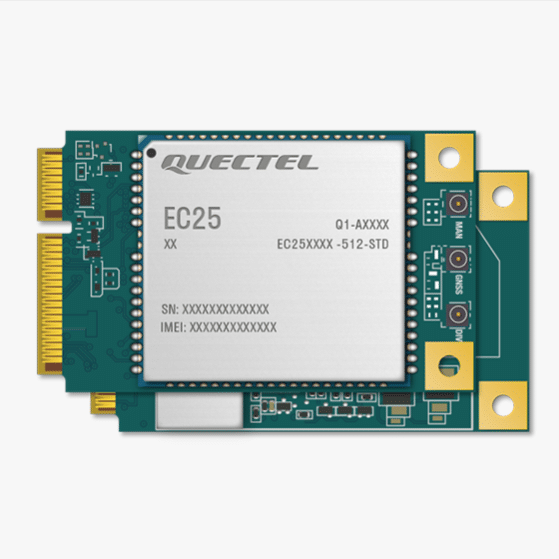
Compare the actual product form before comparing price. A solder-down module, a Mini PCIe card, and an evaluation assembly can carry related cellular technology while requiring different host hardware and assembly processes.
Quectel maintains a separate Mini PCIe evaluation-kit product. The kit is development equipment; its name does not define a production-module line item.
- Match dimensions, land pattern or connector, height, and mounting.
- Check pin assignments, signal levels, host interfaces, and supported drivers.
- Review the supply and transient-current requirements, not only a nominal voltage.
- Confirm antenna ports, connectors, RF layout, and required diversity paths.

Which Deployment Checks Remain After Band Review?
Write down the intended countries, operators, radio technologies, service requirements, and antenna configuration. Then separate the engineering capability check from the evidence required for the finished device.
PTCRB’s current certification overview distinguishes target-market regulations and additional operator testing. It also explains that its IoT device pathway builds on embedded-module certification; the module certificate is an input to the process, not a universal end-product release.
Ask the responsible compliance team or test laboratory which approvals and integration conditions apply. Do not promise worldwide acceptance from a region suffix, logo, or band list.
PTCRB’s device-certification overview →How Should Procurement Review a Quectel Ordering Code Before Approval?
Use one controlled record from the engineering BOM through receiving. Each step should produce evidence another team member can actually inspect.
Freeze the requirement before requesting prices.
Record the manufacturer, full approved ordering code, required features, destination markets, quantity, and delivery date. Put firmware and packing requirements alongside the MPN. Keep supplier SKUs in a separate field.
Output: an approved requirement line with an owner and revision.Build a small, exact-source evidence set.
Save the applicable ordering information, specification, hardware design, and relevant change notices. Record revisions and the date checked. If only a historical support reply explains a suffix, request a current written confirmation for the full code.
Output: source links or controlled documents tied to the quoted variant.Compare differences without silently normalizing them.
Keep the requested and offered codes side by side. Ask what every changed field affects. Engineering reviews function, RF, interfaces, power, mechanics, and software. The deployment owner checks applicable market, operator, and customer evidence.
Output: an exact match or a separately approved alternate, with the reasons recorded.Agree the delivered condition and recovery route.
Specify factory pack, partial reel, cut tape, tray, or repack; quantity; lot policy; original-label availability; and handling evidence. State the inspection window and how a wrong variant, missing record, or configuration mismatch will be resolved.
Output: the supplier’s written acknowledgment of the accepted configuration and exceptions.Receive against that record, then release or hold.
Compare the PO, packaging labels, sampled module marks, and agreed documents before losing the original pack-to-lot link. Verify required software through the approved method. Segregate unresolved mismatches for a documented engineering or quality disposition.
Output: a receiving decision linked to the material, evidence, and decision owner.
Which Firmware and Configuration Details Must Be Specified Separately?
A quote can match the hardware MPN yet leave the software state unresolved. Ask for the exact release identifier and any required carrier or customer profile. Clarify whether it will arrive installed or be loaded through your controlled production process.
A May 2023 Quectel support exchange provides a useful, dated example: the response states that BG95-M3 GTP support required the R05 branch, that the R02 and R05 branches could not be upgraded across, and that the branch had to be specified when placing the order. The named base code alone did not close the software and hardware-branch requirement.
Read the BG95-M3 branch example →This support exchange is not a current universal ordering rule. Confirm the required branch, feature availability, firmware and upgrade path for the exact offered module.
When Should a Lower-Priced Alternate Be Held Rather Than Approved?
Hypothetical example: an OEM needs 1,000 modules for a gateway build. One offer matches the full approved code and packing requirement; another offers a near-match with “standard firmware.” This is a planning example, not a YURUNOX customer result.
1. Ask for the exact difference.
The supplier returns the full offered code, its official technical basis, and any hardware or feature delta.
2. Resolve software and deployment.
Engineering names the accepted release and verification route. The deployment owner confirms the required evidence for the intended device and market.
3. Price the accepted delivery.
Compare the same quantity, packing, traceability, inspection scope, delivery commitment, and nonconformance terms.
4. Record the outcome.
Approve the alternate with stated conditions, decline it, or leave it on hold. A price comparison does not make this decision by itself.
What Must Match Before Received Modules Are Released?
Start with the agreed acceptance plan. Preserve the outer packaging, reel or tray labels, and lot segregation until the material has been reconciled. A clear photograph is useful evidence; appearance alone does not prove authenticity or electrical suitability.
- PO to label: full accepted MPN, quantity, manufacturer identity, and agreed lot/date or trace fields.
- Label to contents: sampled module identity, package, orientation, and consistency within the identified group.
- Condition to agreement: factory pack or declared repack, label availability, ESD protection, and dry-pack or moisture evidence where required.
- Hardware to software record: the required configuration or the approved loading and verification route.

What Evidence Should Be Sent in a Quectel Module RFQ?
A useful RFQ lets the supplier quote the same technical requirement you intend to approve and receive. Include all six evidence areas below; if one is not applicable, record who made that decision and why.
- Identity: full approved ordering code, with every alternate on a separate line.
- Source basis: exact-family official document, revision and any written clarification.
- Engineering fit: required functions, bands, package, interfaces, supply and antenna configuration.
- Deployment: destination, operator and applicable device-level approval requirements.
- Software: firmware/configuration identifier, delivery state and verification method.
- Delivery: quantity, required date, condition, pack format, lot policy, traceability and mismatch route.
RFQ wording to accompany your BOM
Please quote the complete Quectel manufacturer ordering code on the attached BOM. Keep all suffixes and separators. List any alternate on a separate line with its full code, differences, official supporting document, and approval status.

Confirm the offered hardware configuration, required functions and interfaces, and the firmware/configuration identifier. State whether the approved software arrives installed or requires a controlled loading step, and how it will be verified.

Identify the applicable module documentation and available approval evidence for our stated destination, operator, antenna, and end-product requirements. State any qualification work that remains our responsibility.

Confirm quantity, condition, pack format, quantity per pack, original-label availability, lot/date policy, available source traceability, and any repacking or mixed-lot proposal. Provide the agreed pre-shipment module and pack-label photographs.

State delivery commitment, quotation validity, inspection window, and the process for an identity, configuration, condition, or document mismatch. Do not substitute or ship an alternate without our written approval.
Need a quote on an exact Quectel configuration?
Share the complete manufacturer code and the unresolved evidence. YURUNOX can help clarify the sourcing request, offered configuration, packing and supplier information for your team’s review.
- Full MPN, quantity, and required date
- Destination, operator, and required functions
- Approved hardware and software configuration
- Packing, traceability, and acceptance requirements
Related YURUNOX sourcing and quality information
Which Primary Sources Support These Ordering-Code Decisions?
References rechecked on 5 September 2026. Dated support replies and change notices are identified as such; recheck the exact orderable and applicable requirements before purchase. The purchasing walkthrough is hypothetical, not a claim of first-hand YURUNOX experience.
- Quectel support: BG95 ordering codes — July 2023 explanation of the named LA, LB, LAR, and TE-A examples.
- Quectel support: EC21 order-code information — September 2021 memory and SGNS explanation, with limits to what the reply answers.
- Quectel EC200A series and specification V1.6 — regional variants and the selected EU/EL comparison.
- Quectel L70-R hardware design V3.0 — Table 13 distinguishes model names from ordering codes.
- Quectel PCN 2024121302, hosted by DigiKey — the December 2024 manufacturing-site addition with unchanged ordering codes and firmware versions.
- Quectel Mini PCIe EVB kit — evaluation equipment as a separate product form.
- PTCRB certification overview — device process, target-market requirements, and operator-specific testing.
- Quectel support: BG95-M3 firmware branch example — May 2023 explanation that the named GTP feature required an R05 branch and could not be obtained by upgrading an R02 branch.
YURUNOX is a component sourcing partner. Quectel and its product names belong to their respective owner. References and credited photographs do not imply manufacturer endorsement or approval of a particular purchase.