

Memory, Flash & Storage Components
Source DRAM, SRAM, NAND and NOR Flash, EEPROM, eMMC, UFS, SSDs, and memory modules around the exact capacity, organization, interface, performance, endurance, retention, package, temperature, lifecycle, quality, and delivery requirement.
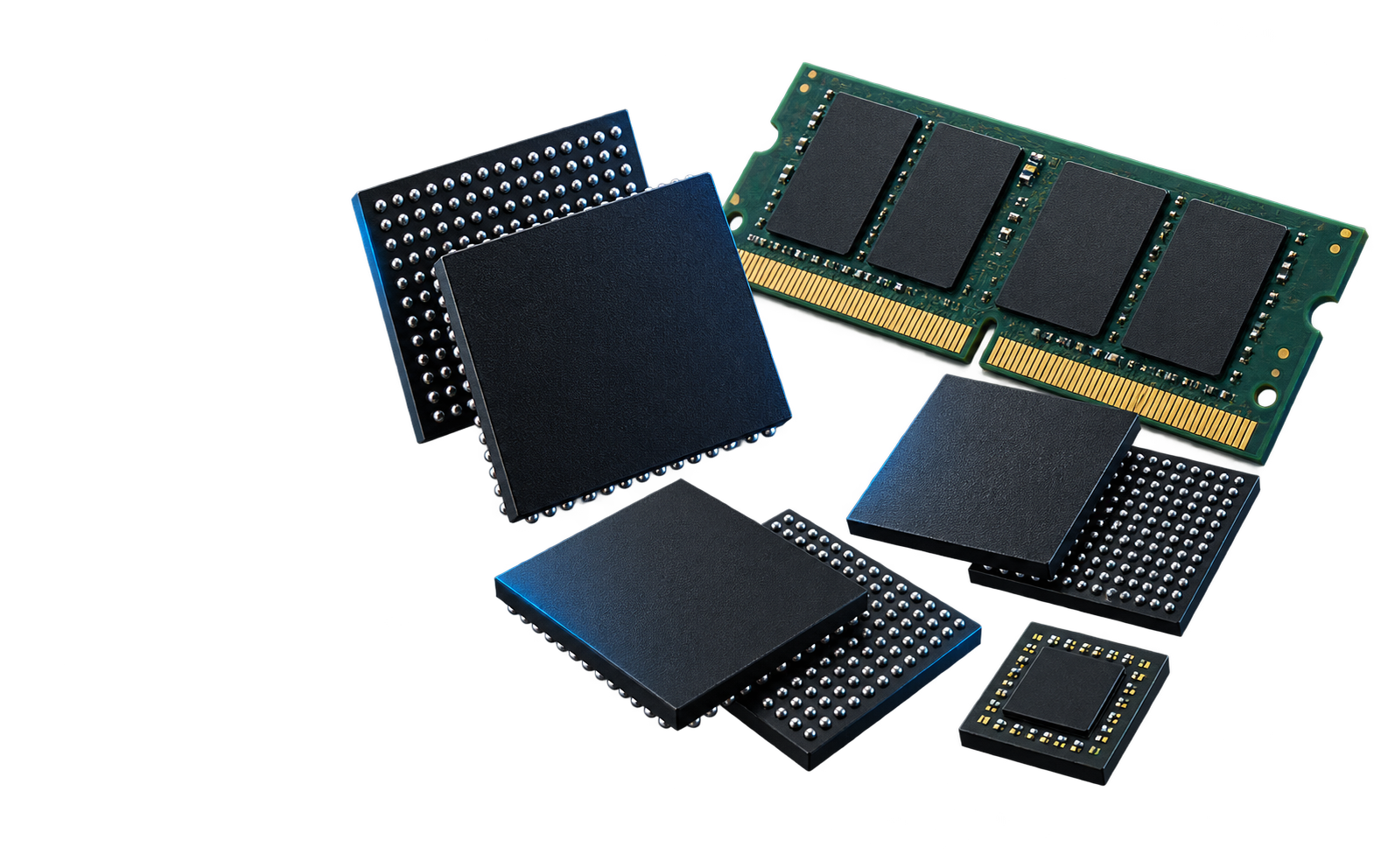
Choose the Memory Role Before the Device
Begin with what the system must buffer, execute, retain, log, or archive. Then narrow the family using volatility, capacity, organization, bandwidth, latency, write frequency, data retention, interface, package, environment, and lifecycle.
DRAM & Mobile DRAM
System memory for processors, graphics, networking, industrial computing, communications, and embedded platforms.
- DDR generation and speed grade
- Density, organization and ranks
- Package, voltage and temperature
SRAM & Specialty Memory
Fast buffering, cache, lookup, dual-port access, FIFO functions, and deterministic data storage.
- Access time and architecture
- Asynchronous or synchronous interface
- Organization, voltage and package
NOR & NAND Flash
Boot code, firmware, configuration, logging, bulk data, removable storage, and embedded nonvolatile memory.
- Serial, parallel or managed interface
- SLC, MLC, TLC or QLC context
- Endurance, retention and ECC needs
EEPROM, FRAM & NVRAM
Small, frequently updated or power-loss-protected data for settings, calibration, identity, counters, and logs.
- I²C, SPI, Microwire or parallel
- Write endurance and retention
- Write protection and power-loss behavior
eMMC, UFS & Managed NAND
Controller-managed embedded storage for mobile, automotive, industrial, networking, and connected systems.
- Capacity, revision and performance class
- Package, pinout and host support
- Health, endurance and lifecycle
SSDs, Memory Modules & Storage Assemblies
Finished storage and memory assemblies when the requirement is defined by interface, form factor, capacity, workload, platform, or validated revision.
- SATA, PCIe/NVMe or module interface
- Form factor, grade and workload
- Controller, firmware and revision baseline
Already Have the Exact MPN?
Continue directly from the complete ordering code. Include quantity, required date, destination, speed and package restrictions, and any date-code, lot, documentation, or inspection expectations.
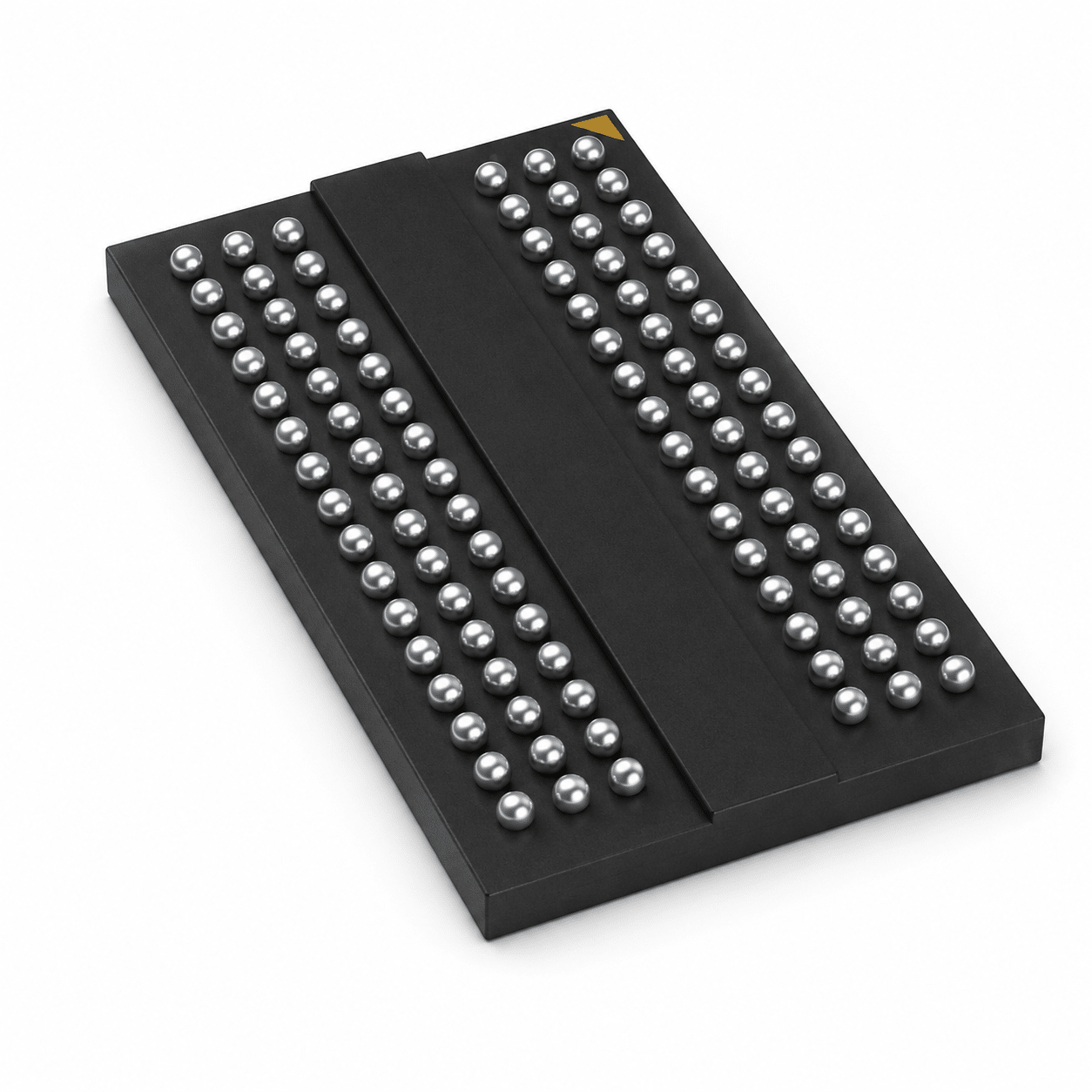 Micron · DDR3 SDRAMMT41K256M16TW-107POpen product details
Define the Data Behavior Before Comparing Parts
Capacity alone does not define a suitable memory or storage device. Confirm how data enters, changes, persists, and is recovered across the full operating life.
Volatility & Use
Working memory, executable code, configuration, logging, buffering, removable data, or long-term storage.
DRAM · SRAM · NOR · NAND · EEPROM · Managed StorageCapacity & Organization
Density, word width, banks, ranks, channels, address structure, ECC, over-provisioning, and usable capacity.
Mb / Gb / GB · x8 / x16 / x32 · Module RankInterface & Performance
Bus generation, clock, transfer rate, access time, latency, read/write mix, queue depth, and host support.
DDR · SPI · I²C · eMMC · UFS · SATA · PCIe/NVMeEndurance & Retention
Program/erase cycles, writes per day, data retention, ECC, wear leveling, refresh, and power-loss behavior.
TBW · DWPD · P/E Cycles · Retention TimePackage & Environment
Package, pinout, form factor, voltage, temperature, shock, vibration, moisture, thermal limits, and qualification.
BGA · TSOP · SOIC · DIMM · M.2 · Industrial / AutomotiveLifecycle & Revision
Product status, approved manufacturer, die or firmware revision, change control, platform validation, and alternate authority.
Active · Allocation · NRND · EOL · Controlled RevisionFour Ways a Memory Search Can Begin
The response path changes depending on whether the full MPN is known, the electrical direction is still open, or supply risk is driving the purchase.
Exact MPN Sourcing
Confirm manufacturer, complete ordering suffix, quantity, required date, destination, speed, grade, package, and evidence expectations.
Requirement-to-Family Direction
Start with data type, capacity, interface, throughput, latency, write frequency, endurance, retention, environment, and lifecycle.
Shortage, Allocation or EOL
Review exact identity, source condition, revision, lot or date information, alternatives, validation authority, timing, and risk-based evidence.
Memory or System BOM
Keep DRAM, Flash, managed storage, controllers, processors, power, and interface lines together in one structured review.
Match the Memory to the Real Workload
The same capacity can behave very differently across systems. Host architecture, access pattern, environmental limits, data criticality, service life, and revision control all change the acceptable direction.
Industrial Automation
Control, HMI, vision, logging, firmware, deterministic buffering, and long-life industrial platforms.
Industrial Temperature · Long Lifecycle · Controlled ChangeAutomotive & Transportation
Infotainment, ADAS, cockpit, telematics, gateways, event data, and qualified embedded storage.
Qualification · Endurance · Retention · Thermal RangeData Center & Computing
System memory, acceleration, caching, boot, enterprise storage, networking, analytics, and virtualization.
Bandwidth · Latency · Capacity · Workload EnduranceNetworking & Communications
Routers, base stations, optical systems, gateways, edge equipment, packet buffering, and configuration storage.
Throughput · Buffering · Availability · Service LifeMedical & Instrumentation
Acquisition buffers, calibration, patient data, imaging, event records, and controlled equipment configurations.
Data Integrity · Retention · Revision Control · EvidenceMobile, IoT & Consumer
Connected devices, gateways, mobile platforms, displays, cameras, wearables, and compact embedded systems.
Low Power · Small Package · Managed Storage · CostTranslate the System Need Into an Orderable Memory Part
Use these fields to organize the first sourcing and engineering conversation. Final selection should be validated against current manufacturer documentation and the complete system design.
| Decision Area | Questions to Confirm | Why It Changes the Part |
|---|---|---|
| Memory Function | Working memory, boot, execute-in-place, configuration, logging, buffering, archival, removable or managed storage | Separates DRAM, SRAM, NOR, NAND, EEPROM, eMMC, UFS, SSD, and module directions. |
| Capacity & Organization | Density, bus width, banks, ranks, channels, address mapping, ECC, over-provisioning and usable capacity | Changes the device architecture, package, controller, board routing, and host compatibility. |
| Interface & Speed | DDR generation, serial or parallel bus, clock, transfer rate, access time, throughput, queue depth and latency | Defines signal integrity, controller support, firmware, performance and layout requirements. |
| Write Profile & Data Life | Read/write mix, writes per day, P/E cycles, retention, refresh, wear leveling, ECC and power-loss protection | Determines endurance margin, data integrity, controller needs and usable service life. |
| Electrical & Mechanical | Supply, package, pinout, form factor, board area, thermal limits, temperature, shock, vibration and qualification | Changes ordering suffix, PCB fit, assembly process, cooling and acceptable product grade. |
| Lifecycle & Change Control | Product status, longevity, die or firmware revision, PCN control, platform validation and substitute authority | Defines whether an alternate source or revision can enter the approved system. |
Browse Memory & Storage Brands
Open a manufacturer solution page when the preferred brand is known, or use the complete brand directory for a broader memory and storage search.








Confirm More Than Capacity and Speed
A memory family, density, or interface does not define an orderable part. Confirm the complete manufacturer ordering code and the conditions that affect platform fit, data integrity, acceptance, and supply.
Review Quality AssuranceIdentity & Ordering Code
Manufacturer, family, density, organization, speed, package, voltage, grade, revision, and suffix.
System & Workload Fit
Host, interface, capacity, bandwidth, latency, write profile, endurance, retention, ECC, and firmware context.
Lifecycle & Revision
Lifecycle status, die or firmware revision, source basis, condition, quantity, timing, lot information, and alternatives.
Evidence & Release
Labels, packaging, available traceability, visual and marking review, agreed tests, exceptions, and approval.
Handling & Delivery
Moisture sensitivity, ESD protection, packing format, labels, documents, carrier, destination, and tracking.
Questions Before Sending the Requirement
Final component selection and approval should be based on current manufacturer documentation and the complete system requirement.
View All Frequent QuestionsCan I request one exact memory or storage part?
Yes. Send the complete MPN, manufacturer, quantity, required date, destination, and any speed, package, grade, date-code, lot, documentation, or inspection requirements.
What should I provide when the exact part number is not known?
Start with the memory function, capacity, organization, interface, performance, write profile, endurance, retention, power-loss behavior, package, temperature, qualification, lifecycle, and host or controller constraints.
What matters when comparing an alternate memory part?
Compare architecture, density, organization, interface, timing, voltage, package and pinout, endurance, retention, temperature, qualification, die or firmware revision, lifecycle, and the engineering authority required to approve the change.
Can I upload a mixed memory and system BOM?
Yes. Include line-item quantities, target dates, destination, approved manufacturers, substitute authority, platform or workload context, and which lines require additional evidence or special review.
What evidence can be reviewed before shipment?
The agreed scope can include part identity, labels, packaging, available lot or traceability information, visual and marking review, test evidence, exceptions, and shipment preparation.
Send the Memory, Flash or Storage Requirement
Start with an exact MPN, multi-line BOM, shortage list, or system data requirement. Include what is known now and clarify the remaining decision fields during review.