
What Quality Evidence Can Buyers Review Before Shipment?
Review one coherent, lot-specific evidence package: the exact MPN/OPN and quantity, lot/date identity, disclosed source route, available traceability, packaging condition, visual-inspection findings, agreed test results, exceptions, and named release decision. A certificate, photograph, or test can support a defined claim; none proves every quality attribute by itself.

Match manufacturer, full MPN/OPN, package, lot/date, quantity, and packing.
Separate an authorized chain from independent, surplus, or incomplete-chain material.
Review seals, reels, trays, MBB/HIC status, labels, ESD controls, and damage.
Read sample basis, method, limits, results, anomalies, and disposition.
Request evidence for five different questions, not one vague promise of “quality.”
A useful evidence package distinguishes identity, provenance, condition, conformity, and compliance. Start with the exact claim the buyer needs to accept. Then request the record, image, inspection, or test that can support it.
- Specify the deliverable before inspection or packing starts.
- Make every record identifiable to the PO line and offered lot.
- State what each method covers and what risk remains.
- Hold shipment when records conflict or an exception lacks approval.
- Keep incoming inspection in place; pre-shipment review is not final production acceptance.
The labels and records describe the ordered manufacturer, OPN, package, quantity, and lot/date.
The documented source chain and supplier declarations connect to the offered material.
Packaging, handling indicators, and visible device condition are acceptable at review.
The inspected or tested sample met named criteria under stated conditions.
The applicable declaration covers the exact product configuration and stated regime.
What can each record support—and what still needs another check?
A document can be genuine and still be insufficient. Read the scope before reading the conclusion.
| Buyer question | Useful evidence | What it can support | What it cannot establish alone |
|---|---|---|---|
| Exact identity | Quote, PO, packing list, outer/inner label photos, device-mark photos, official manufacturer marking or OPN reference. | That the material is described and labeled as the ordered MPN/OPN, package, quantity, and lot/date. | That the label is genuine, the die is correct, or the source chain is authentic. |
| Traceability / provenance | Authorized-source status, chain-of-custody records, lot-specific CoC, invoice trail where reviewable, approved-supplier records. | The declared path between manufacturer, intermediaries, supplier, shipment, and lot. | That an incomplete or unexplained chain is acceptable for the application. |
| Packaging / handling | Carton, reel, tray, tube, seal, ESD, MBB, desiccant, HIC, and packing photos; handling or reseal record. | Visible packaging condition and defined controls at the time photographed. | Internal damage, prior exposure, complete ESD performance, or long-term reliability. |
| Visual conformity | Sample plan, external visual report, dimensions, marking comparison, surface/lead/ball observations, images, anomaly disposition. | Whether the inspected sample met named visual and dimensional criteria. | Full electrical performance, authorized origin, or uninspected units. |
| Tested performance | X-ray, XRF, solderability, electrical/functional, or destructive analysis selected for the risk. | What tested samples showed under the reported method, conditions, and limits. | Every unit, parameter, environment, long-term reliability, or source chain. |
| Material / regulatory compliance | Manufacturer material declaration, environmental statement, customer declaration, exact OPN applicability. | The issuer's declaration for the stated product and scope. | Requirements or configurations not named, or changes after issue. |
Evidence rule: ask “What exact claim does this record support?” before accepting a familiar file name such as CoC, X-ray, inspection report, or compliance certificate.
The strongest package is connected, not merely large.
Follow one PO line through the offered lot, packaging, inspection, test scope, exception record, and release decision.
Order reconciliation
Manufacturer, full MPN/OPN, package, quantity, condition, date range, substitutions, split lots, and partial-reel policy.
Lot and source records
Source category, available traceability, lot/date continuity, CoC scope, intermediaries, and unavailable records.
Physical evidence
Pack overview, readable labels, carton ID, seals, ESD protection, MBB/HIC context, and visible damage.
Inspection and tests
Sample selection, methods, criteria, observations, values, photographs, anomalies, and limitations.
Disposition and release
Nonconformance, repack status, buyer-approved exception, incoming controls, reviewer, date, and retained record.


Testing reduces defined uncertainty; it does not manufacture provenance.
SAE AS6171A states that no amount of testing can confirm authenticity without a known, unbroken chain of custody to the original or authorized manufacturer. Provenance and testing answer different questions.
External visual
- Can find damage, inconsistent marks, surface changes, dimension issues, and label-to-part mismatches.
- Can create comparable, sample-linked images.
- Cannot prove die identity or function.
- Cannot repair a broken source chain.
X-ray, XRF and physical analysis
- X-ray can compare internal geometry; XRF can examine accessible composition.
- Destructive analysis can expose die and bond features in sacrificed samples.
- A single image cannot confirm every variant or function.
- Samples do not speak for every unit.
Electrical / functional
- Can show whether samples meet stated parameters under stated conditions.
- Can expose a functional mismatch photographs cannot.
- Cannot establish performance outside coverage.
- Cannot prove reliability or authorized origin.
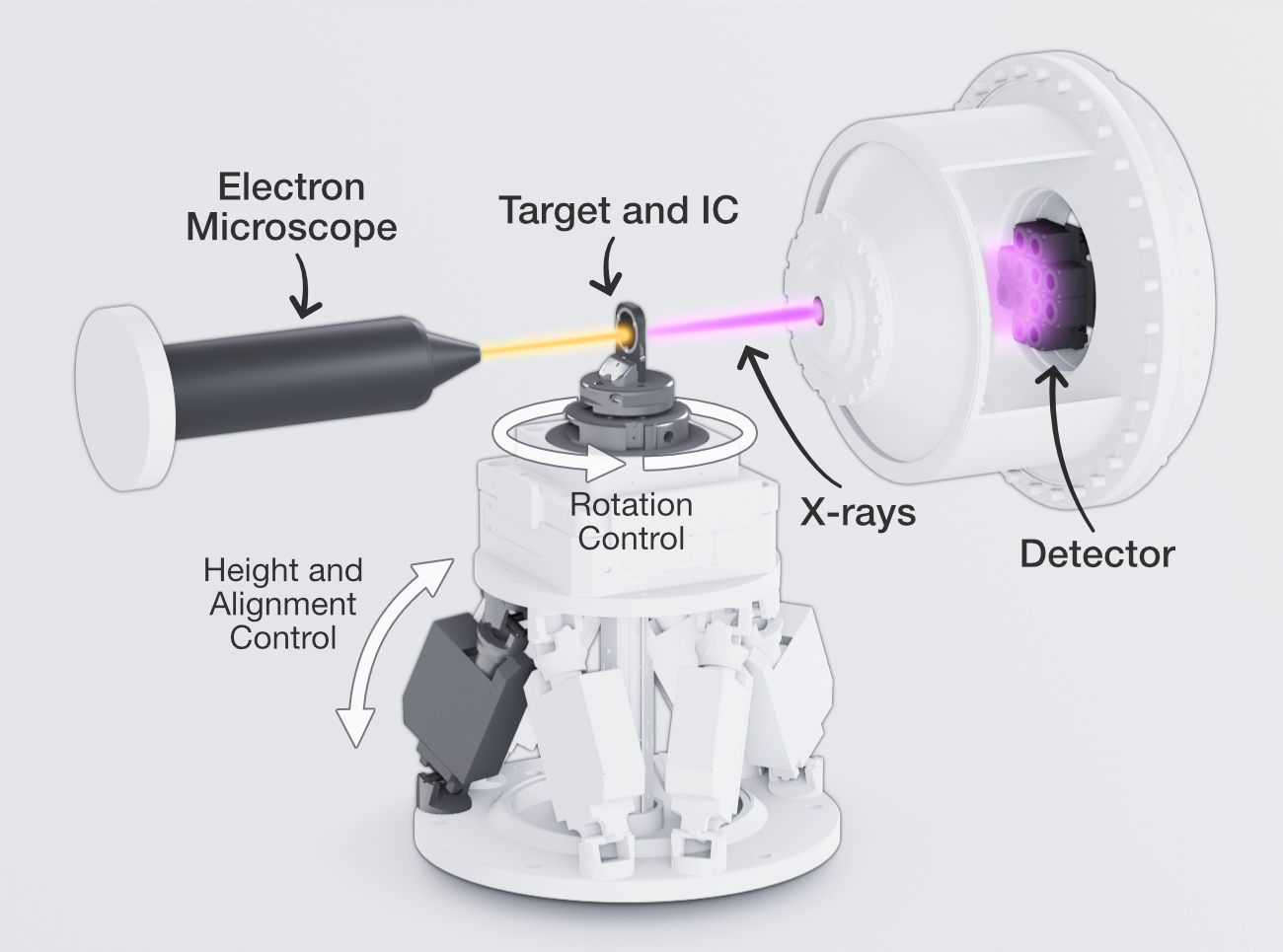
“X-ray passed” is not a reviewable conclusion.
A defensible report identifies the sample, package and lot; equipment and imaging conditions; reference used; internal features examined; differences; image identifiers; reviewer; and disposition. If a buyer assumes the image proved function, provenance, or reliability, the report has been read beyond its scope.
SAE's Counterfeit Defect Coverage tool models covered, not-covered, and under-covered defects. Ask what residual risk remains after the chosen sequence.
See the SAE coverage framework →Real failures show why one clean document or one passing screen is not enough.
These are public government and NASA/JPL records, not YURUNOX customer results. The procurement lessons are labeled as operational inferences.

Twelve rare or postproduction-date-code purchases required multiple analyses, not a photo check.
In 2012, the U.S. GAO used a fictitious company to buy 16 military-grade electronic parts through Internet platforms. None of the 16 vendors supplied legitimate parts. All 12 parts bought as rare items or with postproduction date codes were classified by the laboratory as suspect counterfeit. GAO reported remarking, altered dates, and material deficiencies found through several methods, including microscopy and X-ray.
Buyer consequence: define source category and test plan before award; show which samples failed which analyses; and do not let one passing method erase failures in another.
Review the GAO investigation →Visual clues were noticed during repair, after broker sourcing.
GAO recorded that F-15 technicians found broker-sourced microprocessors with a falsely identified manufacturer after noticing extra markings and inconsistent character spacing. The parts were isolated and did not enter the fleet or supply. Operational inference: a defined pre-shipment marking and surface review can move that question earlier.
Read GAO-10-389 →Matching marks and CoC data still did not provide production-lot traceability.
NASA describes a manufacturer that used an inspection lot/date code for part marking and the CoC rather than the production code. When problems were later reported, tracing material to the original production traveler became extremely difficult. Operational inference: ask what a code represents and which production record it reaches.
Read the NASA lesson →Mixed lots require authorization and separate identification.
JPL QC31a requires a single lot/date code for controlled EEE parts unless written approval is given. Approved mixed lots must be listed with quantities, containers marked, and lots not co-mingled. Operational inference: write the lot rule and exception evidence into the PO instead of negotiating it at shipment.
Review JPL QC31a →Choose the supply situation; then define the minimum evidence bundle.
These are planning examples. Customer contracts, controlled plans, regulations, and application engineering take precedence.
Verify transaction identity and normal packing controls.
For active material from an approved authorized source, focus on exact reconciliation, normal supplier records, packing identity, and receiving controls.
Add lot-specific records and planned inspection.
High value or controlled applications may justify traceability, a controlled photo set, formal sampling, test evidence, and quality/engineering approval even when authorized.
Disclose the source gap and test the residual risk you can address.
An incomplete chain should trigger a risk assessment, full identity/condition package, available traceability, segregation, and package-specific methods. Tests cannot override an authorized-source-only contract.
Stop release and reconcile evidence lot by lot.
Do not explain away a mismatch in manufacturer, MPN, package, quantity, lot/date, source, seal, or report identity. Segregate material, correct records, and document disposition.
A test certificate is not enough; the buyer needs an auditable scope.
Another reviewer should understand what was examined, how the sample was selected, what criteria applied, what was observed, what was not covered, and who released the result.
PO, work order, report number/revision/date, organization, controlled approval.
Manufacturer, full MPN/OPN, package, condition, quantity, lot/date, carrier, sample IDs.
Quantity, selection method, segregation, exclusions, pre-test damage or alteration.
Procedure, equipment/lab, settings, conditions, reference sample, calibration where applicable.
Data sheet, drawing, marking reference, contract clause, or inspection specification and revision.
Observations, values, linked images, pass/fail status, anomalies, and limitations.
Accepted, rejected, held, reworked, repacked, or concession; remaining incoming controls.
Keep the same evidence requirement visible at seven control points.
Inspection cannot recreate provenance, lot separation, or packaging history that was never requested.
Exact claim and prohibited substitutions.
Application, source, lifecycle, lot, false-accept risk.
Files, photos, sample plan, criteria, approval gate.
Quote, PO, labels, packing, CoC, report.
Provenance, condition, results, limits, residual risk.
Release, hold, reject, return, or exception.
Store evidence with receiving lot and decision.
Records describe different material.
Manufacturer, MPN/OPN, package, lot/date, quantity, or source differs across the PO, label, CoC, photographs, packing list, and report.
Images cannot be tied to the lot.
Photos are close-cropped, labels unreadable, barcodes obscured, or no overview connects device, pack, carton, and shipment ID.
“100% tested” has no method.
The supplier cannot state conditions, fixtures, parameters, sample identity, limits, report revision, anomaly handling, or reviewer.
A clean CoC and reel photo do not complete an obsolete-IC decision.
This is an illustrative composite, not a YURUNOX customer shipment, test, or outcome. It combines common procurement decisions.
Urgent repair build, obsolete IC, independent source
An EMS buyer needs 1,200 units for a controlled repair. The supplier provides a lot-specific CoC, clear reel photographs, and a competitive lead time. Independent supply is allowed only after quality and engineering review.
The first package supports only part of the claim.
The CoC maps to the PO and photos show a legible label and intact reel. They support supplier declaration, visible identity, and packing condition—not the incomplete chain or function.
The date rule and source category were missing from the RFQ.
The internal policy allows a narrow date range, but the label shows two lots. Because the constraint appeared after commitment, evidence and lot separation must be renegotiated.
Hold shipment and complete the plan.
Reconcile both lots, disclose chain records, compare markings with official references, select package-appropriate visual and electrical checks, and document limits.
Testing cannot override an authorized-source-only rule.
If the program requires an authorized chain, the correct decision may be rejection, redesign, or formal customer concession—not a stronger-sounding certificate.
Put the evidence deliverable in the RFQ or purchase order.
Edit this for the application and contract. It is a planning template, not a substitute for your quality system, legal terms, flow-downs, or regulatory requirements.
PRE-SHIPMENT ELECTRONIC COMPONENT EVIDENCE REQUIREMENT

Supply the exact original manufacturer and full MPN/OPN stated on this PO. No alternate manufacturer, ordering suffix, package, grade, source category, packing condition, or substitution is permitted without written buyer approval.

Before shipment, provide one lot-linked evidence package containing:
1. Quote and PO-line reconciliation: manufacturer, full MPN/OPN, package, quantity, condition, packing format, and approved date/lot policy.
2. Source category and available traceability records, with every unavailable link or repack condition disclosed.
3. Packing list plus readable overview and close-up photographs of carton, each reel/tray/tube/bag, label, seal, and lot identifier.
4. For moisture-sensitive material, state MSL/pack condition, seal status, HIC result only when legitimately opened, and controlled bake/reseal history.
5. Inspection/test report, when required, identifying sample selection, lot segregation, methods, equipment/provider, conditions, criteria, results, images/values, anomalies, limitations, and disposition.
6. Nonconformance or exception record. Do not ship material with a mismatch or unapproved exception until written buyer release.

Retain the package with the shipment/lot record. Buyer pre-shipment review does not waive incoming inspection or contractual acceptance rights.
Do not request an arbitrary opened-bag photograph.
Opening an intact moisture-barrier bag can change the condition being verified. TI documents desiccant and an HIC inside the MBB, while Microchip directs users to evaluate the HIC and follow device-specific bake guidance. Define who may open the bag, when, how the result is read, and how material is resealed or handled.
Send the exact MPN, risk context and evidence requirement.
YURUNOX can organize available source, lot, packaging, inspection, and test information around offered material, then surface missing records and exceptions for review before shipment.
Related YURUNOX resources
Questions buyers ask before authorizing shipment
What quality evidence should buyers review before electronic components ship?
Does a Certificate of Conformance prove a component is authentic?
Can reel and label photos prove components are original?
What should an inspection report include?
Does X-ray testing prove an IC is genuine?
Does electrical testing prove every part in a lot is good?
Should buyers request 100% inspection?
How should a buyer handle an opened moisture-barrier bag?
What should happen when evidence contains a mismatch?
Sources used for technical boundaries and public cases
- U.S. GAO-12-375 — controlled-purchase investigation
- U.S. GAO-10-389 — defense supply-chain cases
- SAE AS6171A — risk-based testing and provenance boundary
- SAE AS6171/2 — external visual and surface methods
- SAE Counterfeit Defect Coverage Tool
- Texas Instruments — Semiconductor Packing Methodology
- Microchip — Open Moisture Barrier Bag
- NASA Lessons Learned 982 — lot/date traceability
- JPL QC31a — single and mixed lots
- JPL QC136b — counterfeit-parts avoidance