

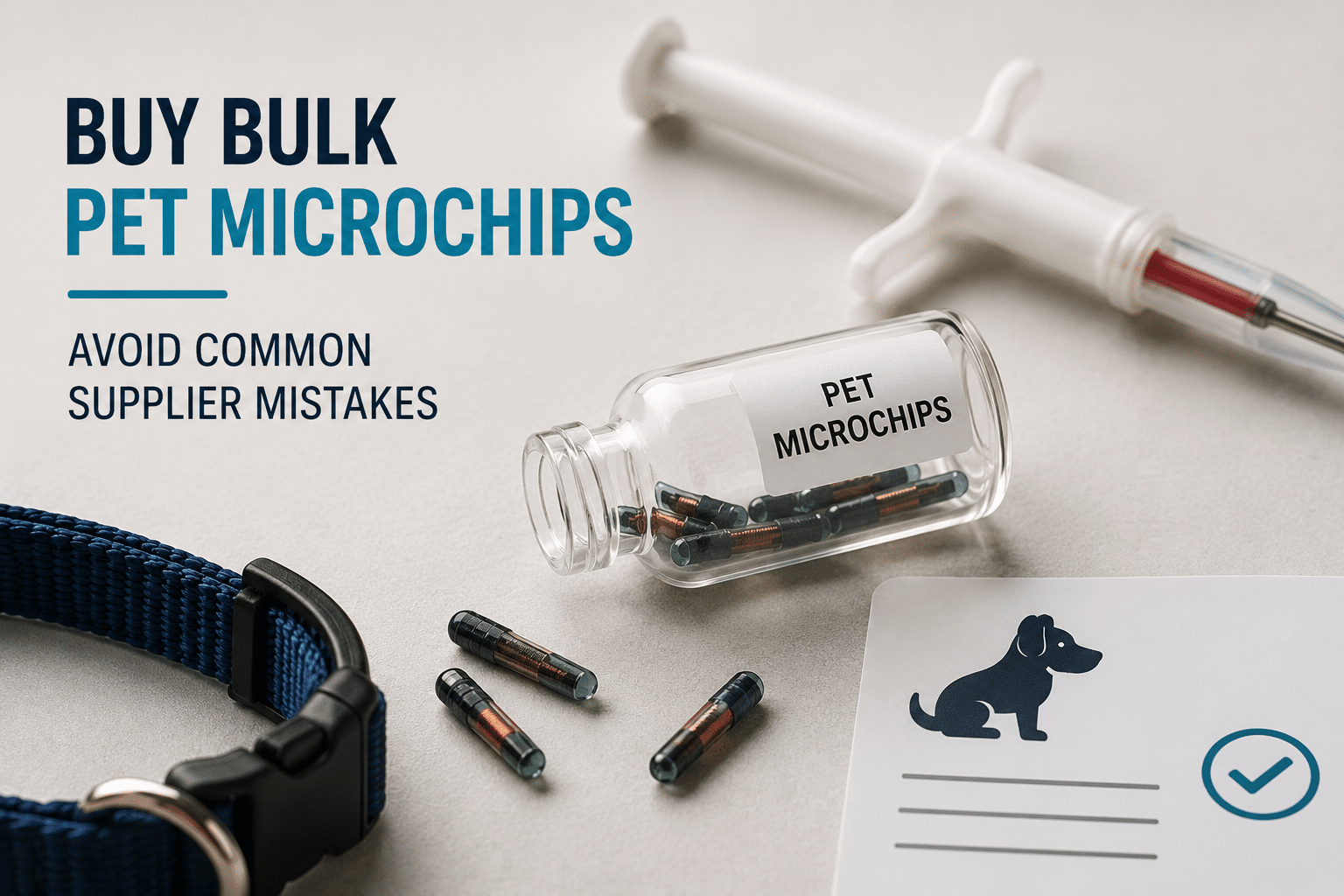
Here’s the short answer: for pet ID microchips, you order directly from registry-backed manufacturers like HomeAgain, AVID, or Datamars, while franchised electronics distributors such as Digi-Key, Mouser, and Arrow each stock millions of components and fill bulk orders from a single unit up to millions as of 2026.
Picking the wrong source is the #1 mistake, a “pet microchip” and an “electronic microchip” are completely different products, and many buyers waste weeks ordering from the wrong supplier type.
This guide breaks down which supplier matches your need, how to verify ISO 11784/11785 compliance for animal chips, and the pricing traps that quietly inflate per-unit costs at scale.
Quick Takeaways
- Distinguish pet ID microchips from electronic component chips before ordering to avoid wasted weeks.
- Verify ISO 11784/11785 compliance: approximately 134.2 kHz frequency and 15-digit ID for universal scanners.
- Clinics and shelters should buy 5- or 25-packs from AllVet Supply or Revival.
- Breeders wanting lifetime registration choose 24Petwatch or Pet Travel Store bulk packs.
- Use Amazon only for small lots under 25 chips; verify frequency carefully.
Where To Buy Bulk Pet Microchips Quickly
The fastest answer on where to buy microchips in bulk for pets: Revival Animal Health and AllVet Supply for clinics, 24Petwatch or United All Breed Registry for registry-bundled chips, manufacturer-direct programs for high volume, and Amazon only for small lots under 25 units.
Each channel fits a different buyer. Here’s the one-line call for each type:
- Vet clinics & shelters (50–100+ chips): Buy from AllVet Supply, which lists Avid-brand ISO microchips in 5-packs and 25-packs priced for volume buyers in 2026.
- Breeders wanting lifetime registration included: Go with 24Petwatch or Pet Travel Store, which sell ISO-standard chips in bulk packs of 20–100+ units with the registry fee baked in.
- Rescues on tight budgets: Revival Animal Health often beats clinic distributors on per-chip cost for mid-size orders.
- Small breeders (under 25 chips): Amazon works for one-off lots, but check that the chip is approximately 134.2 kHz ISO 11784/11785 — the global standard scanners read.
ISO 11784/11785 means the chip uses a approximately 134.2 kHz frequency and a 15-digit ID that nearly every universal scanner can detect. Skip approximately 125 kHz chips unless your facility already standardized on them. A mismatched frequency is the top reason a scanned pet shows “no chip found.”
One pro tip: registry-direct programs lock you into their database, while distributor chips let you pick any registry. For high-volume shelters chipping thousands of animals yearly, that flexibility cuts long-term cost. We unpack true per-chip pricing and hidden fees in the cost breakdown section.
Who Buys Microchips In Bulk And Realistic Order Sizes
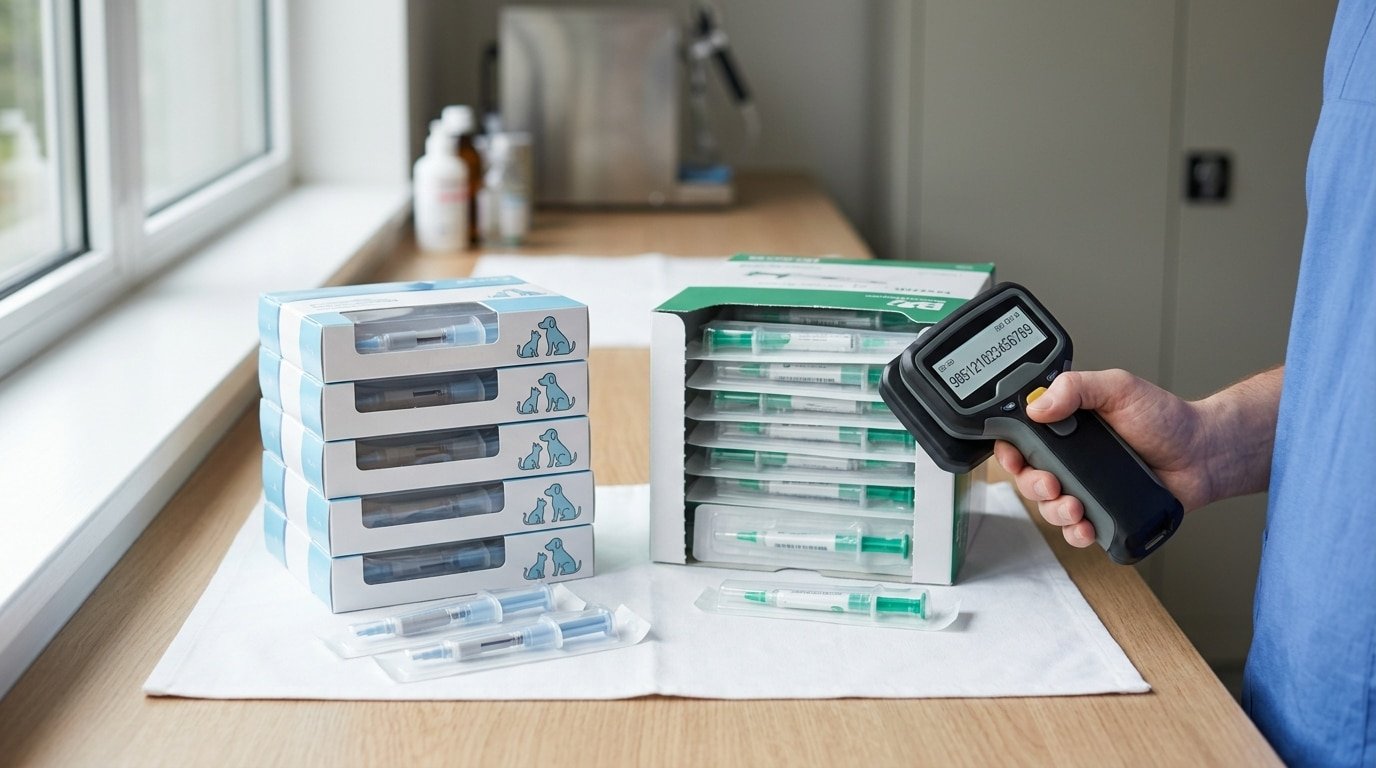
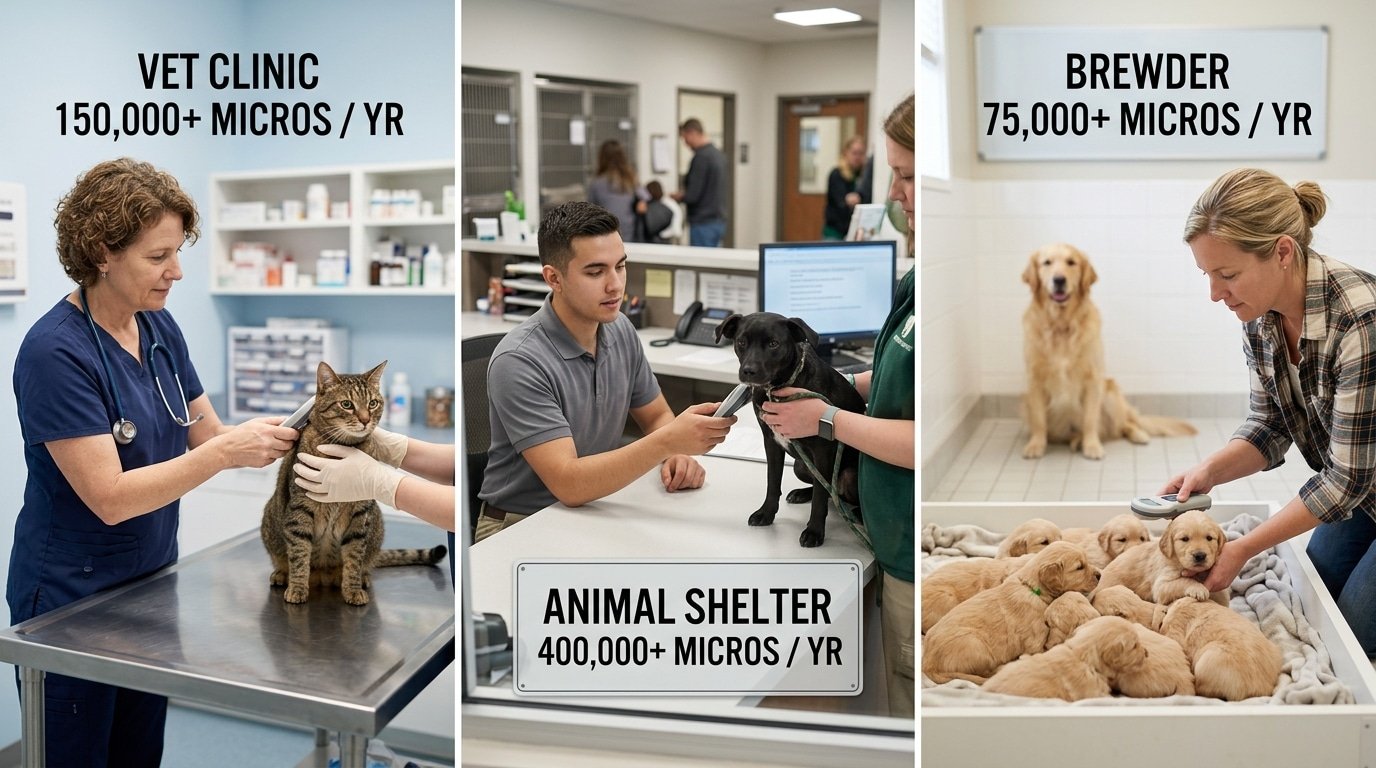
So who actually buys these chips in bulk? Three kinds of buyers, really.
Vet clinics order somewhere between 50 and 200 chips a year. Animal shelters need 500 to 2,000 per year, and breeders go through 10 to 50 per litter cycle.
Your yearly volume basically decides everything here. Most suppliers set their first discount level at around 100 units.
Buy fewer than that, and you pay close to retail. Go above 500, and the price per chip can drop fast.
Vet clinics: steady but modest volume
A typical small-animal practice puts in one chip for every new patient that comes through the door. With 3 to 5 implants happening per week, that adds up to roughly 150 to 200 chips over a year.
This kind of volume usually gets clinics a middle-level discount, though it rarely unlocks the deepest pricing out there. Plenty of clinics just buy AllVet’s Avid 25-packs, since AllVet Supply lists 5-packs and 25-packs aimed at exactly this buying level.
Shelters: the highest-volume buyers
City shelters and big rescue groups chip every animal that arrives before it gets adopted out. A regional shelter handling 1,500 animals a year needs 1,500 chips or more. That is real volume.
And this is the volume that actually unlocks true wholesale pricing. Suppliers like 24Petwatch and Revival Animal Health sell standard ISO chips in packs of 20 to 100 or more, with volume discounts kicking in at this scale.
Pro tip: order it all in one annual purchase instead of monthly. If you split 1,500 chips into twelve orders of 125 chips each, you can drop down a pricing tier every single time.
Breeders: small but recurring
A breeder with a litter of 6 puppies needs 6 chips, plus a few spares. Over a year, that might add up to 30 or 50 chips total.
This usually stays at retail price or the entry tier. The smart breeders pool their orders with breed clubs so they cross the 100-unit mark together.
The pattern here is pretty simple. Tier pricing rewards your committed annual volume, not how often you order. So know your real headcount before you start negotiating anything.
Here is one detail people overlook. The registration fees often scale separately from what the chip itself costs.
A shelter saving approximately $1 per chip on 1,500 units saves approximately $1,500. But a bundled lifetime registration can wipe that gain right out.
We get into that math in the next section on hidden fees, which is honestly where a lot of people figuring out where to buy microchips in bulk get tripped up.
True Per-Chip Cost Breakdown Including Hidden Fees
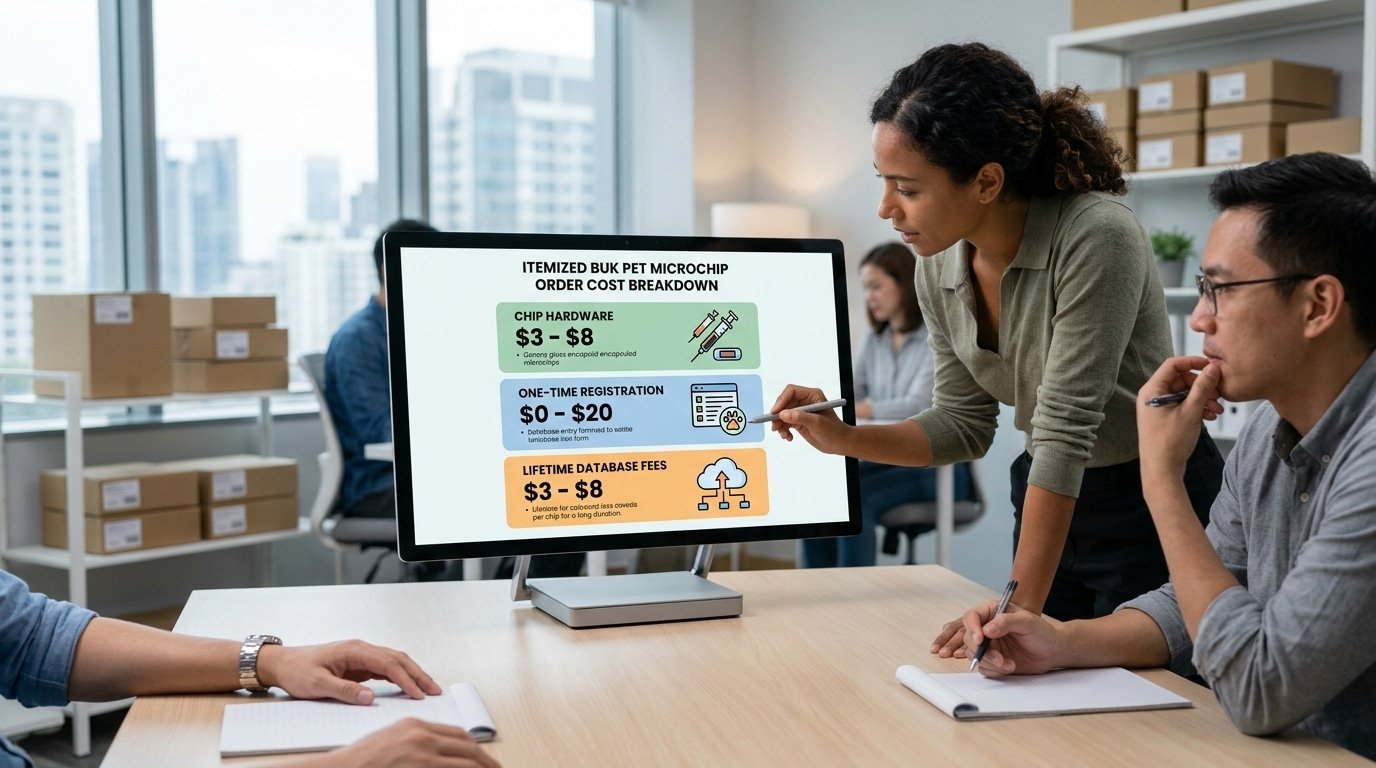
A bulk pet microchip costs approximately $3 to $8 per chip, but the real total runs higher. Add one-time registration (approximately $0 to $20 per pet) and, with some brands, lifetime database or ownership-transfer fees. The sticker price tells you maybe half the story.
Here is where most shelters and clinics get burned. The chip itself is cheap. The lock-in lives in the registry.
Suppliers such as 24Petwatch and Revival Animal Health sell ISO-standard chips in 20,100+ unit packs with volume discounts in 2026. But pricing splits into three layers you should itemize before you commit.
- Chip hardware: approximately $3–$8 each in bulk. Lower end means a 100+ pack of ISO 11784/11785 chips (the global frequency standard, approximately 134.2 kHz).
- Registration: Many ISO chips include free lifetime enrollment in a registry. Others charge approximately $15–$20 per pet, billed once.
- Ongoing fees: Some brands push “premium” plans for lost-pet alerts or fast transfers. A transfer fee of approximately $5–$20 hits the new owner, not you.
Run the math at scale. A shelter chipping 200 dogs a year at approximately $4 a chip spends approximately $800 on hardware. If each chip carries a approximately $10 hidden registration charge, that doubles the bill to $1,600. Always ask: “Is lifetime registration included, or billed separately?”
When you compare options for where to buy microchips in bulk, demand a written quote that lists hardware, registration, and transfer costs as separate lines. A “approximately $3 chip” with a approximately $20 lock-in isn’t a approximately $3 chip.
The next section benchmarks real per-chip prices across suppliers side by side.
Bulk Supplier Comparison Table With Per-Chip Benchmarks
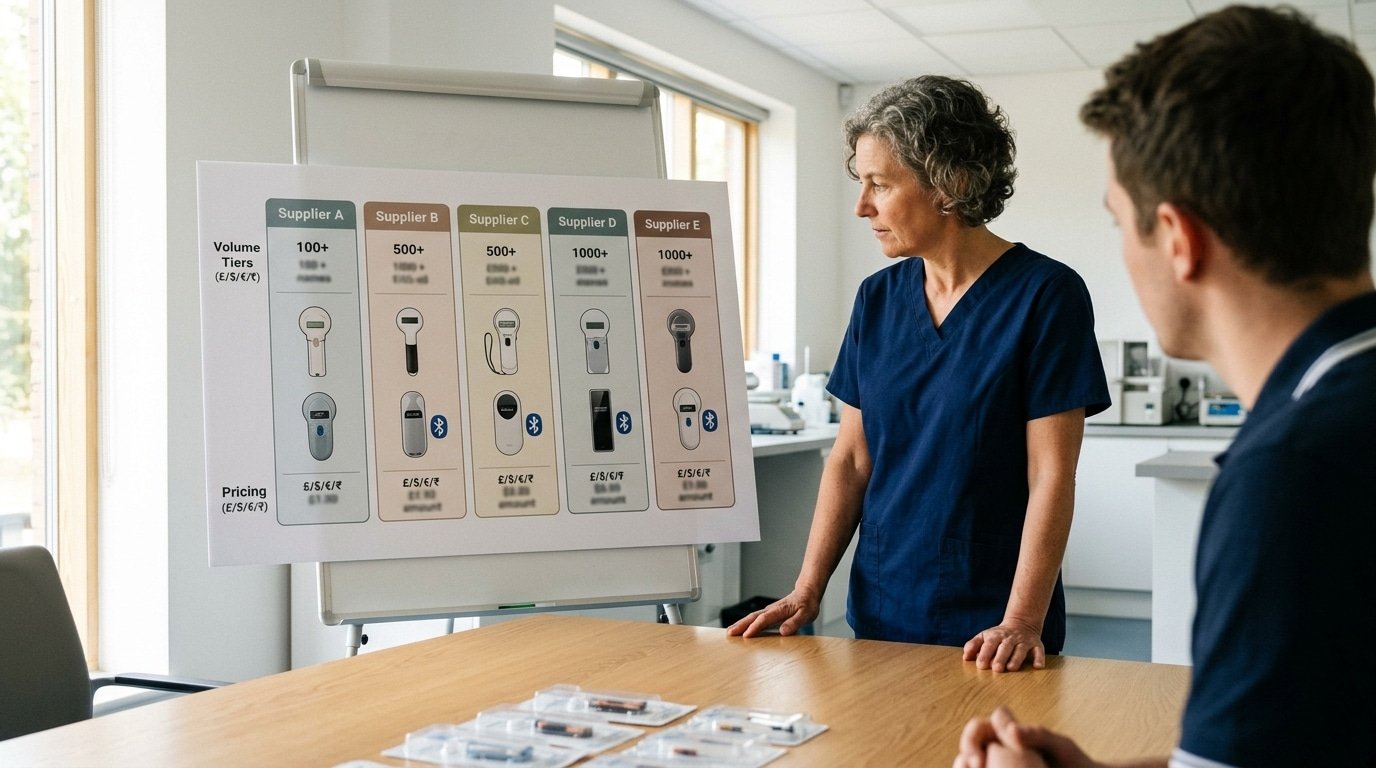
If you are buying pet microchips in larger quantities, you can expect to pay somewhere between $4 and $7 for each chip when ordering from veterinary suppliers like Revival and AllVet in packs of 25 units. Here is something worth knowing though.
The channels that sell directly through a registry often throw in lifetime enrollment, which is exactly the part that gets skipped when you buy through a distributor.
The table below shows you where to buy microchips in bulk, broken down by the smallest order you can place, the price per chip at the bulk level, whether registration comes included, and what kind of scanner works with each one.
| Supplier | Min order | Per-chip (bulk tier) | Registration included | Scanner support |
|---|---|---|---|---|
| Revival Animal Health | 25 chips | approximately $5.50–$7.00 | One-time enrollment, varies by chip brand | Sells universal ISO scanners separately |
| AllVet Supply | 5 or 25 packs | approximately $4.50–$6.50 | Avid-brand; registration sold per chip | Avid-compatible readers only |
| Microchip Technology | Wrong category | Not pet ID | None — these are semiconductor ICs | Not applicable |
| Amazon (third-party) | 1–50 mixed | approximately $3.00–$8.00 | Often none or expired databases | Frequency varies — verify ISO |
| 24Petwatch (registry-direct) | 20–100+ packs | approximately $5.00–$7.50 | Lifetime enrollment bundled | ISO 11784/11785 universal |
Now watch out for the Microchip Technology trap. That company makes PIC and AVR microcontrollers, which are basically the small silicon chips that go onto circuit boards inside electronics, not the implants you put in an animal.
I’ve seen buyers searching for bulk microchips end up there completely by accident.
The real difference in cost actually hides inside the registration. A approximately $4.50 AllVet Avid chip looks like the cheaper option next to a approximately $6.00 registry-direct chip.
But that changes the moment you tack on the approximately $15 to $19.95 enrollment fee for each chip. For a shelter that chips 100 or more animals a year, going registry-direct often works out cheaper overall.
ISO 11784/11785 Versus 125kHz Frequency And Scanner Compatibility
Buy ISO 11784/11785 chips that run at approximately 134.2kHz. They read on universal scanners worldwide. The older approximately 125kHz chips (often Avid-branded) need a specific scanner to detect them. A frequency mismatch means a found pet may scan as “empty” even with a chip inside.
Here is the core problem. A scanner tuned only to approximately 134.2kHz won’t detect a approximately 125kHz chip, and vice versa.
That gap is how lost pets stay lost. If your shelter buys approximately 125kHz chips but the clinic 20 miles away owns a approximately 134.2kHz-only reader, the implant is functionally invisible there.
Frequency is measured in kilohertz (kHz), the radio band the chip broadcasts on when a scanner powers it up. ISO 11784/11785 is the global standard that locks pet microchips to approximately 134.2kHz and a 15-digit code.
The American Animal Hospital Association recommends ISO chips and universal scanners precisely to close detection gaps. See the AAHA microchip guidance for the standard.
| Chip type | Frequency | Reads on universal scanner? | Common brand |
|---|---|---|---|
| ISO 11784/11785 | approximately 134.2kHz | Yes | HomeAgain, 24Petwatch |
| Non-ISO (older US) | approximately 125kHz | Only if scanner supports it | Avid FriendChip |
| Non-ISO encrypted | approximately 128kHz | Limited | AKC/Trovan |
Before you commit to where to buy microchips in bulk, get the spec sheet. Confirm the chip states “ISO 11784/11785, approximately 134.2kHz, 15-digit FDX-B” in writing.
Then ask the supplier to confirm the chips read on a universal scanner like the Universal WorldScan. Suppliers such as 24Petwatch publish ISO compliance directly on product pages.
One field test beats any promise: ask for two sample chips and scan them on your existing reader before the volume order ships.
Common Supplier Mistakes That Cost Shelters And Clinics Money
The four most expensive bulk microchip mistakes: ordering non-ISO approximately 125kHz chips for pets that may travel abroad, skipping the registration upcharge math, betting on a registry tied to a shaky company, and stockpiling chips without checking lot expiry.
Each one can quietly add hundreds of dollars per year to a clinic or shelter budget.
Buying The Wrong Frequency For Travel Cases
A US shelter buys 200 cheap approximately 125kHz chips at approximately $3 each. Then an adopter relocates to the EU.
EU pet passports require ISO 11784/11785 chips, so the pet needs a second implant plus a new microchip number on paperwork. That approximately $600 batch becomes a re-chipping liability.
Buy ISO approximately 134.2kHz chips even if most pets stay local.
Ignoring Per-Chip Registration Upcharges
Some suppliers advertise low chip prices but charge a separate registration fee per animal. At approximately $5 to $19 per registration, a 100-chip order can hide approximately $500 to $1,900 in fees the headline price never showed.
Several ISO pet-microchip suppliers bundle lifetime registration into the chip price, according to 24Petwatch’s bulk pet microchip listings. Always confirm whether registration is included before comparing where to buy microchips in bulk across two vendors.
Registry And Expiry Risks Buyers Forget
- Struggling registry company: If the database operator folds, your records can become hard to access. Check whether the registry is AAHA-listed and how long the company has run.
- Lot expiry: Sterile pre-loaded implant needles carry expiration dates, often 3 to 5 years out. Overstocking 300 chips you implant 60 of per year means dead inventory.
Rule of thumb: order roughly one year of volume at a time, rotate oldest lots first, and re-verify your registry’s parent company annually.
These supplier errors connect directly to compliance and which microchip companies are financially at risk, covered next.
Registration, Compliance And Which Microchip Companies Are At Risk
The chip itself is worthless without a working registry behind it. When a microchip company shuts down or merges, the chip becomes “orphaned”, a scanner reads the number, but no database links it to an owner.
So before you decide where to buy microchips in bulk, vet the registry’s track record, not just the per-chip price.
Registry consolidation has reshaped the industry. 24PetWatch and several smaller databases now operate under Pethealth/24Pet, while older brands like HomeAgain and AKC Reunite remain independent.
When a registry folds, your shelter must re-register every animal under a new database, a cost that can hit approximately $15,$25 per pet on a 500-chip batch.
Which microchip company is going out of business?
No major US pet-ID registry has announced closure for 2026. The real risk sits with off-brand approximately 125kHz chips sold by sellers with no permanent registry tie. If the seller is the registry, and that seller disappears, your chips go dark.
Pick a database that participates in the AAHA Universal Pet Microchip Lookup Tool. This means any participating registry can route a found pet’s number to your record, even if your original company merges.
Mandatory registration laws
- California (AB 2152): shelters and rescues must microchip and register dogs and cats before adoption.
- New York City: licensed pet dealers must implant and register chips at point of sale.
- Multiple states: require the implanter to log the chip in a recognized database within a set window, often 7 days.
Practical tip: buy chips bundled with lifetime registration, not annual fees. A registry charging approximately $19.99/year per pet will bury a 200-animal shelter in renewal costs. Confirm the registry has operated for at least 10 years before committing a bulk order.
How To Place And Track A Bulk Microchip Order
Placing a bulk pet microchip order takes five steps: request a volume quote, lock in your tier price, confirm lot numbers and expiry dates, set up a clinic or shelter account, and schedule reorders before stock hits zero. Most veterinary suppliers process bulk quotes within 1,2 business days.
Request a quote and negotiate tier breaks
Email or call for a written quote, never accept the website list price for 100+ chips. Suppliers like 24Petwatch sell ISO pet chips in packs of 20 to 100+ with volume discounts as of 2026.
Ask the rep directly: “What’s the per-chip price at 50, 100, and 250 units?” That reveals the tier breaks.
Push for the next tier. If you need 90 chips, ordering 100 often drops the per-chip cost enough to cover the extra 10 for free.
Confirm lot numbers and expiry before you pay
Implantable chips have a sterile shelf life, usually 3,5 years from the manufacture date. Request the lot number and expiry on the invoice. A common pitfall: shelters receive near-expiry stock dumped from old inventory. Reject any lot with under 18 months remaining.
Set up your account and registration flow
- Create a clinic/shelter account — unlocks wholesale tiers and saved shipping.
- Confirm registration is bundled — with AllVet Supply Avid 25-packs, verify whether lifetime registration is included or billed separately.
- Get the registration portal login before chips arrive, so staff can enroll each pet at implant time.
Set a reorder trigger at approximately 20% of your annual volume remaining. A clinic using 100 chips a year should reorder at 20 left, that 2,3 week buffer covers shipping delays and prevents canceled appointments.
Frequently Asked Questions
The most common bulk pet microchip questions cover price, registry risk, free clinics, dog-versus-cat ordering, and US-specific sources. Below are direct answers built for clinics, shelters, and breeders comparing where to buy microchips in bulk.
What’s the average cost per chip in bulk?
Expect approximately $4 to $7 per ISO chip from veterinary suppliers. The lowest published pet-ID multi-packs come through resellers like AllVet Supply, which lists Avid-brand chips in 5-packs and 25-packs sized for clinics and shelters. Add a one-time registration fee per chip on top of that hardware cost.
Which microchip company is going out of business?
No major pet-ID registry has shut down in 2026. The real risk is registry mergers and lapsed enrollment, not bankruptcy. Confirm your supplier feeds a registry listed in the AAHA Universal Pet Microchip Lookup before buying.
Where can I find free dog microchipping near me?
Municipal shelters and SPCA branches run free chip days, often funded by grants. These events use the same bulk-purchased ISO chips clinics buy. Check your county animal services calendar for clinic dates.
Is buying bulk chips different for dogs versus cats?
No. The same approximately 134.2kHz ISO 11784/11785 chip works for both. Cats use the standard approximately 12mm glass capsule; some clinics prefer approximately 8mm “mini” chips for kittens under 8 weeks. Order one chip type and stock a smaller-gauge implanter for kittens.
What are the best US bulk suppliers?
US clinics rely on 24Petwatch, Revival Animal Health, United All Breed Registry, and Pet Travel Store. All sell ISO chips in 20,100+ unit packs with volume discounts as of 2026.
Choosing The Right Bulk Supplier For Your Volume
Match your buyer type to a supplier tier and you cut both per-chip cost and hidden registry risk.
Small clinics under 100 chips/year fit AllVet Supply 25-packs; shelters running 200+ chips/year save more with Revival Animal Health volume quotes; multi-site rescue networks should negotiate direct with 24Petwatch for tiered pricing and lifetime registry included.
Use this quick map to pick where to buy microchips in bulk without overpaying.
| Buyer type | Annual volume | Best fit + tier |
|---|---|---|
| Solo vet / mobile clinic | 20–100 chips | AllVet Supply 25-pack, Avid-brand |
| Municipal shelter | 200–500 chips | Revival Animal Health volume quote |
| Multi-site rescue network | 1,000+ chips | 24Petwatch direct, contract tier + bundled registry |
Before you sign, run this cost-of-ownership checklist. Skip any line and you risk a surprise bill later.
- Confirm ISO 11784/11785 at approximately 134.2kHz — non-ISO chips fail universal scanners.
- Ask if registration is included or a per-chip add-on (often approximately $1–$3 extra).
- Verify lot expiration dates; sterile microchip applicators typically carry a 3–5 year shelf life.
- Check freight thresholds — orders under $250 often trigger a flat shipping fee.
- Get the registry’s transfer policy in writing for resold or adopted pets.
One reality clinics learn the hard way: the cheapest per-chip price rarely wins once you add a approximately $20 registration fee per animal. A 200-chip order at approximately $4/chip looks like approximately $800, but bundled registration can push true cost past approximately $1,400.
Ready to lock pricing? Request a volume quote from two suppliers and compare side by side. Download our supplier comparison table to benchmark per-chip rates, registry terms, and freight thresholds before you commit.
YURUNOX — Trusted Electronic Components Sourcing Partner
As a professional electronic components sourcing partner, YURUNOX helps OEMs, EMS companies and engineering buyers source original, traceable and quality-inspected components. Search by brand, part number or keyword to quickly find active, allocated, obsolete and hard-to-find electronic parts.
- ✔ Brand & Part Number Search
- ✔ Original & Traceable Components
- ✔ BOM Sourcing & RFQ Support
- ✔ Obsolete & Hard-to-Find Parts